
Carl Bonde Jr. in about 1928, destined for college, then the infantry, then death by German torpedo.
by Daniel Struckman
Prologue: Ellen Bonde
Winter, 1967
The doctor leaned in, his voice loud: “Ellen, do you want to die? Is that it?”
She suffered in silence, a Norwegian. My grandma had often said she didn’t trust doctors and I knew she didn’t trust this one. The one who prescribed the mercury tablets to help her kidneys. Our house stank. Mother had boiled some eggs that Grandma then vomited. The house always smelled like cigarette smoke.
Why am I telling you this? Our family has secrets. This one concerns this poor woman’s child who apparently vanished.
Well, his demise wasn’t totally unexpected because in 1944 our country was at war with Germany and Japan. He was a soldier. I never met him, but everyone called him Buddy. Nobody seemed to know what became of him.
My grandma was ill. I was a high school senior. My mother was an assistant professor at the college up the street. After the doctor left, we three were in the front room of our house, flowery wallpaper, royal blue carpet, jade green fireplace, brown overstuffed chair. Smell of cigarette smoke and stench of vomited eggs. Grandma had fallen in the bathtub and hit her head.
In 1967, in Dillon, Montana, doctors still made house calls.
We tried to make sense of things. We talked about fixing up a hospital bed in our front room because Grandma was too weak to make it up the winding stairway.
Oh, I could have carried her up, but she disliked me. I was a jock, a football player, a track runner, a drunk.
Ellen didn’t trust me. Said I stole her kitchen utensils. Well, of course I did. Also, I used to pawn her projector screen and camping stove for beer money.
I carried her up the stairs to her room on a Sunday when the Beatles were on Ed Sullivan.
When I got home from school the next day I learned that Mother had called an ambulance. Grandma was in Barretts hospital.
It was two and a half blocks away, so a friend and I walked over to see her. Grandma and I didn’t get along. Hell, we usually fought. She got mad and called me a “little piece” and a “puke.” In turn, I had called her a “nasty old bitch.” The abuse was all verbal. I don’t know who started it.
In the hospital, I was surprised she was glad to see me. With me she was sincere. “I give it to you straight from the shoulder,” she had said.
However, I noticed Grandma was shy around strangers, often passive when she didn’t like what they said. Not always. Once I heard her argue with a policeman who wanted to give her daughter a traffic ticket. I thought she was always sad.
At the hospital: After a few pleasantries, she said, “You’re a good boy. Your Grandma said so. Hand me my purse. Here.” She reached into her purse and gave me five dollars. Hurt my feelings. I didn’t visit her so that I could get five bucks. I was her grandson, after all. I wanted to cry. Even so, I soon bought a case of beer with the five.
The next day when I got home from school I learned that Grandma was in Park View Nursing Home, across town. I got to drive her 1965 Ford Fairlane 500.
The nursing home looked much like such institutions do now. Elderly people in wheelchairs hollered nonsense near the front desk. Others sat silent, waiting to die, I supposed. Some drooled.
When mom and I visited Grandma, the skin on her eyelids looked swollen and greasy. Her breathing was labored. Her half-closed eyes had a kind of wild look as she surveyed us. Even so, I’m not sure she knew who we were. If either one of us spoke to Grandma, I’m not sure what we said.
The next day we found out she died in the night. She had reached a goal she sometimes mentioned: She had made it to 80 years old.
However, never found out what happened to her handsome 21-year-old son or her blue-eyed Siamese cat.
Both disappeared, entrusted to others for their well-being. Neither returned. No bodies were recovered.
The last twenty-three years, Ellen had seemed to me to be bitter and depressed. Her only son, her joy, Carl Ralph Bonde, Jr., had been named after her brother, Ralph Wichstrom, a talented artist. A painter.
Carl had gone into the army, destined for the European war.
Her Siamese cat? She disappeared while in my care.
One day her son had been in England, writing letters, telling her about “limeys,” then . . . nothing. He was gone. Her Christmas letter to him was returned as undeliverable. A month later she got a telegram from the War Department stating he had been missing in action.
Now Ellen had died without learning what had happened to him.
Her cat? I had taken it for a walk in a makeshift rope harness. A block away from home, I tied it to a tree so I could visit my friend who often peed in his basement drain. An hour later, only the harness remained. Grandma didn’t believe me when I told her.
“I think you did away with my cat,” she said.
How it began: Carl R. Bonde, Jr.
Monday, 7:30 p.m., September 16, 1929, Kalispell, Montana
The bathwater was reasonably warm this time. Carl had gotten a dog and a scooter yesterday for his birthday. Oh yes, and a wooden boat. He lay down in the tub and swam the few inches from where he could push off with his feet on the drain end, to where his head touched on the round end. He did this again and again, pretending to be swimming. He couldn’t swim.
In another part of the house he could hear his mother’s agitated voice: “Well, I’m going to have it annulled,” she shouted. Buddy didn’t know what that meant, but he knew it had to do with his oldest sister, Corinne, who had eloped. His mom’s voice dropped and Buddy could make out no more.
Even though he had his sixth birthday the day before and he felt entitled to a long bath, came an insistent knocking on the door, heralding a big sister. It was Helen, two years younger than Corinne.
He thought about his dog, his German shepherd puppy. His warm, fat puppy, named Prince. His dog. His father had also given prince a leather collar, too large for the puppy. Buddy could hear his puppy race about the house, down the hall that connected the bathroom with the parlor where his dad liked to sit and smoke his pipe, his cigarettes, and his cigars. Everyone smoked except him and his mother.
The house they rented in Kalispell had most of the amenities of the day, but that included the one bathroom for parents, three daughters, and the youngest, their son.
To save hot water, Buddy wasn’t allowed to have more than three or four inches of water in his bath, nor was he given much time to play with his new wooden boat. It was solid wood, homemade, about five inches long, three inches wide, painted yellow on the hull, green on the cabin. It floated crookedly. Probably too much weight up above, he thought.
The knocking on the door changed to pounding, so Buddy sighed, climbed out of the tub, wrapped a towel, and unlatched the door. His high school-age sister Helen barged in.
Buddy, modest about his nakedness, no longer let his doting sisters dry and powder him.
He put on his pajamas after Helen shut him out of the bathroom. Then Helen opened the door and demanded he give her back the towel.
In pajamas, Buddy crept barefoot up the hall so he could hear his parents.
“I think it’s a crime the way he lured Corinne with that. . . that motorcycle,” his mother said.
“It would be a good idea for her to stay away from him, but she likes him,” his dad said, mildly.
“If you ask me, he’s a — a little piece!” his mom said. Buddy hadn’t heard his mother swear before.
“That’ll do.” His father didn’t usually confront his mother in such a direct way. He spoke in a soothing way, with a Norwegian accent.
Carl Sr. was seated in an overstuffed chair; Ellen was pacing back and forth, clearly upset that Corinne had married Gordon Smith.
The father sold groceries wholesale to stores. He restocked them using a notebook, writing up the store’s orders in a flowing, ornate style of penmanship. You see, in business college in North Dakota, he had studied penmanship from the master, himself: Austin Palmer of the Palmer Method.
Thus, Carl Bonde, Sr. had secured his profession with his beautiful and legible grocery orders, written longhand in pencil, duplicated by means of heavy purple carbon paper. Carl’s fluency in Norwegian was decisive. Many of the grocers and other commercial people in Northwestern Montana were Norwegian immigrants or children of immigrants who spoke little or no English.
Even though they still lived in town, Prince still could roam freely because there was no leash law. He was protective of Buddy and trotted along most everywhere with the six-year old boy.
Buddy’s birthday was September 15, so he didn’t start first grade until he was seven. One day later and he’d have been a first grader. This gave him a year to explore Kalispell with his any kids who got up as early as he did, and of course, his dog.
Ashley creek rolled silently through the edge of town, changing to noisy rapids by the time it made a bend and flattened out until it reached the sawmill, out of bounds to the curious children. The boundary was a practical one; it was just damned hard to get to the sawmill, so it was never a place Buddy routinely visited when he made the rounds with his dog.
First Grade
Saturday, September 20, 1930
Twinkle twinkle chocolate bar
Your dad drives a rusty car.
Pull the lever, push the choke,
Drive away in a trail of smoke.
Twinkle twinkle chocolate bar
Your dad drives a rusty car.
Buddy’s friend Teddy lived across the road. The two first-graders played soldier whenever they got together. Buddy and he also experimented with poking their fingers into each other’s butts during slack times when they weren’t shooting tin cans with Buddy’s .22 rifle. Life was good for Buddy. Not for Teddy, because his dad didn’t own five acres, but just a house and yard down the hill and across Fifth Avenue. But, on the other hand, he had old rusty cars to play in.
“Hey!” shouted Teddy, spying Buddy hiking down the hill toward the bridge. The morning was bright, no hint of autumn, save the narrowest brown on the edges of the leaves of the apple trees that dotted the hill.
“Hoo,” returned Buddy. “Go to hell!” What a thrill to shout a swear word his mother would likely spank him for. If she had heard him.
“You go to hell!”
“Asshole!”
Buddy had to slip out of the house early on weekends to stay clear of his three sisters who would dominate him if they caught him. Oh, they went swimming in the pool at the park, but too often the teenage girls just ended up downtown at Norm’s News, hanging out with high school boys. Buddy soon learned to get up earlier than his sisters.
As they usually did, Buddy, Prince, and Teddy met at the barn at the foot of the hill. The door was almost always open and the air was cool in the shade of the interior. It always smelled sort of like oily rags. The two sat on a bench that went with a picnic table that served as catch-all for tools. Teddy looked expectantly at Buddy.
“Here they are,” said Buddy, producing a pack of Pall Mall cigarettes.
“Gimme one,” demanded Teddy. “Gotta light?”
Here Buddy produced a silvery Zippo. He expertly flicked it open and, after a couple of tries, lit it. Teddy held the cigarette to his mouth and leaned in to light it on the flame Buddy had produced. “Ah,” Teddy said. “Outstanding! And they are mild.” Of course he was reciting the Pall Mall ad from the radio.
“Go ahead and inhale!” Buddy said.
Teddy did, but began coughing. “I’d rather puff,” he said, once he caught his breath.
What I did last summer
For Sophomore English Composition
September 19, 1938
by Carl R. Bonde, Jr.
Daddy and Mummy took me and my sisters Crummy and Hummy to Glacier Park on holiday. On our way there we stopped for elephants, to ride them, and to chase a few grizzly bears. I chased a grizzly bear into the lake where the water hung over our heads like an atmosphere.
The sun shined brightly all summer except for the days it rained and it rained all the time, every day.
That is what I did last summer. That was the first day. After that we had a picnic, caught a fish, made a camp, slept out a night, picked a vegetable, peeled a squash, bled a beet, fed the dog, fed the chickens.
After that I got back to high school and wrote a 100 word essay about what I did last summer.
The End
Carl R. Bonde, Jr.’s high school junior year
Thursday, November 2, 1939
Carl turned over in bed after peering at his alarm clock. Eleven-fourteen. Worse luck! He had forgotten to wind it again. Carl had a pretty good idea of the time. He had heard his older sister Carol clumping downstairs in her fashionable shoes. Jesus it was cold! Their bedrooms were upstairs, unheated, freezing, except for whatever came up the long straight stairs. In the basement was a home made furnace that heated the air that came up the register in the living room. The house smelled like pine smoke.
He pulled the wool quilt to his chin. He could see his breath in the dim light of dawn. The windows were translucent with frost. Carol will take at least half an hour in the bathroom, he thought. He had to pee. Other mornings he would go downstairs, run out the kitchen door and take a leak against one of the trees. It was too damn cold.
Carl pulled the coffee can from under the bed, got up, pissed, pushed it back under, jumped back under the covers. Just a little piss on his underwear. Didn’t matter what he did after he peed, some urine always dribbled out.
Anyhow, he got almost warm again after thrashing his legs back and forth a couple of times. Not as warm as he needed to get, so he got up, pulling on a couple of layers of clothes. Long handles, then denim pants lined with flannel. Socks.
His parents were up and his mom had fixed oatmeal. He wanted a cigarette, so he hunkered over the heat close to where his dad sat in his overstuffed chair and lit up. He loved talking about hunting with his dad. They would certainly go out next weekend. The light snow made stalking deer easy.
Author’s note: Carl’s sexual preference was ambiguous. One of those who signed his year book was a boy who wrote, “Dearest Carl.” Another advised him to “Leave the wimmin alone.” For the sake of more fun, we can suppose he was gay. In 2010, I asked Carl’s army buddy, Bill Moomey, if Carl had a sweetheart somewhere, but apparently he didn’t. Bill just said, nope. Bill told me about a gay sailor he encountered on the USS George Washington in November, 1944. Bill said at that time, it was his first exposure to an openly homosexual man. That tends to rule out that Bud, who he had known intimately through nearly a year of rigorous outdoor infantry training, was gay.
He had a propensity for clowning, disrupting — the usual stuff of high school boys. Carl later scored near genius on an army intelligence test.
Carl walked to high school down to the dirt road, then four blocks more. He was on time, as usual, but he wasn’t much concerned. He knew that his sisters had been high achievers in high school. Band, orchestra, excellent grades, after school jobs. Buddy had no time for that. He liked to hunt and fish. He was applying to work as a fire lookout in Glacier Park.
End of Carl’s Junior Year
Monday, June 17, 1940
Buddy didn’t get much more than a weekend off after school let out for the summer until he had to report to West Glacier Park Station before close of business, June 15. He was lucky his dad was able to give him a ride to the entrance of Glacier National Park in his Packard. Bud had a packsack filled with his clothes, boots, extra warm clothes, and his rifle. Everything he would need for his first summer as a Park Service fire lookout. His dad took him past Columbia Falls, past Hungry Horse, and let him off at the West Glacier Ranger Station. Bud clumped in through the front screened door onto the wood floor. He noticed that someone had walked into the room with corked boots because of the black spike holes in the deck. Even for that, the place smelled like new wood.
Nobody was there. He thumbed through the display of maps and other amenities offered to the tourists from all over the world who visited Glacier National Park. A wall map captured his attention on the other side of a counter. Bud walked around to study it. He located West Glacier, then followed the North Fork of the Flathead until he reached a horseshoe bend where he found Huckleberry Mountain. That would be his job this summer: to man the lookout and watch for fires.
“Hey! Anybody home?”
Still nobody came, so Bud walked through to the back door and onto a sort of broad gravel yard flanked by warehouses and garages with huge touring cars — Jammers, he would come to find out later.
He heard a voice coming from a nearby warehouse. He poked his head in and saw a young uniformed man, Ralph Fulp, speaking to a group of mostly youths approximately his age. Bud recognized about half of them: There were the Huck twins, Leslie Cornelius, Rob Jystad, Art Anderson and Don Bolton. Also a much older man. In those days the women were hired separately and always got office jobs. Everyone in the group was headed to work on a fire lookout tower. Leslie Cornelius, the only one who lived in the Park year around at the railroad station at Essex, was assigned to Swiftcurrent Mountain. Bolton got Waterton Lake; Anderson, Hornet Peak; Jystad, Hubbart Mountain; the Huck twins: Don got Scalplock Mountain and Dean got Loneman; an old-timer, Scotty Beaton, got Numa Ridge as he had for the previous 17 summers. Carl got Huckleberry Mountain, as I said.
By the end of June they would all be itching to get to their towers. They will have slept in the bunkhouse with some of the guys who ran the Jammers and some firefighter reserves. They wouldn’t get to know the Gear Jammers because they were gone all day driving. They got to know a couple firefighters, a guy everyone called “Smiley,” an immense man with a slow wit, and another named Kevin.
They would not be manning their fire lookout towers until after July first, Fulp said. First they had to train how to read maps and use a compass, how to use and maintain the wires for the battery operated telephone systems, basic first aid and safety, and how to locate and extinguish forest fires. Fulp told them about the pack train of mules to supply them about every two weeks.
The warehouse at West Glacier Park Station had a lot of old excess army gear from the Great War. Europe was again in turmoil with the rise of the Nazis in Germany, but so far, the U.S. had managed to avoid trouble.
One night, the boys in the bunkhouse were playing cribbage in the main room when Smiley came out of the kitchen and asked, “Hey! Does anyone know where I can get a funnel?”
Kevin shouted at him, “Just use your head!”
Smiley gave out a sort of grunt or yell and ran at Kevin, knocking him down from his seat on a bunk. Kevin rolled, howling in mock pain, then ran out the bunkhouse door, the screen clacking after him. Smiley was in hot pursuit, but Kevin was faster. After a while Smiley returned. He didn’t know where Kevin went. Later, Bud and the others found out Kevin had climbed a tree and spent the night there.
Was it the sweaty smell? Something about Smiley offended the others. He was just creepy. He kept a loaded .22 pistol in his footlocker. “Uh hope I never have to use it,” Smiley said.
Smiley also kept a stick he whittled with a nail sticking out of it, another weapon. He kept that one under his bed until one of the other men stole it and threw it out into some bushes.
“Hey Smiley,” the boys could hear Kevin’s voice in the dark after they had all laid down in their bunks to sleep. “Hey Smiley!” he repeated.
No answer from Smiley.
“Smiley, I hear you got a girlfriend,” Kevin said.
“Noooooooo,” moaned Smiley. The others could almost feel the heat from Smiley’s embarrassment.
“Yeah, I hear you got a girlfriend, and your peter has a festering sore on it,” continued Kevin.
“No I don’t,” protested Smiley.
“See? You need to go into Columbia Falls and see a doctor,” said Kevin. “He’ll put a bag on your dick, kind of like a Bull Durham tobacco bag, but filled with medicine. Then he’ll tie it on with the strings.”
No answer from Smiley. Things got quiet and stayed that way, except for the snoring.
Tuesday, July 2, 1940
The day started at 3 a.m. when they went to open up Huckleberry Mountain Lookout. The rain had turned to a light snowfall and Bud wondered how a fire could ever burn when the woods had snow like this.
His dispatcher’s name was Jackson Miller, an amiable old guy with a hawk nose. And half of one foot missing. You could tell by the way his logging boot looked when he walked. The toe region of his left foot was obviously empty because the boot crease went down to the sole. Jackson was also the outfitter and leader of Bud’s first trip to Huckleberry.
The wranglers, Garvin and Virgil, had already brought four mules and six horses to the warehouse area where they were tied to a long line across. Four saddle horses had bridles; the rest of the stock had halters. The pack animals had sawbucks for packing. The mules, in addition, had straps that reached around their butts and withers to prevent their loads from shifting front or back.
Bud didn’t know about pack animals, so he studied how they were rigged. He was a bit more, but minimally, acquainted with saddle horses.
He watched as the wranglers and Jackson prepared the mules and pack horses. Bud’s gear was divided up and piled in the center of each square of canvas, called a “maynee.” Jackson asked Bud to gather up the corners and heft the loads to get them approximately the same weight so they wouldn’t shift to either side once loaded on an animal. Each animal could carry about 200 lbs of gear: food, clothing, bedding, water in milk cans, a rifle and ammunition, and other supplies for the summer. Especially six volt telephone batteries. The big kind. The size and shape of a can of beer. Dozens and dozens of them in wooden boxes.
Once the loads were about equal, the wranglers folded the maynees like envelopes: left, right, bottom, top, and tied them shut with a diamond hitch using a 15-ft length of rope. After all of the 12 maynees were fixed up, the wranglers hoisted each load up high on the sawbuck, drew a rope beneath it and back up onto the saddle, and secured it with several wraps around the load and then tied it off.
Bud was impressed how quickly the mules and pack horses were loaded. Then the wranglers saddled up their horses and Bud’s. Jackson saddled his own horse and led the way. The wranglers rode on either end of the pack string. A good thing because a couple of times the animals bolted and dodged off the trail.
They made the first five miles of the trip by lunch time because the trail was flat. Bud tried to peer through the fog to see which mountain would be his home as the wet brush swept his legs, soaking his pants and filling his boots with water. The air smelled of wet wood.
Every so often he’d hear one of the wranglers curse at the Park Service pack animals. Each animal had a special “US” brand on its butt. Stood for “Uncle Sam.” Bud had heard that one before and didn’t think it was funny. Anyway, they rode through intermittant fog all morning and Bud thought if was spooky. He was afraid of grizzlies.
The cook at the bunkhouse had prepared lunches that they each put in a canvas roll behind their saddles. That and an old military surplus canteen in a canvas canteen carrier. Great War canteens looked the same as the ones from the Civil War: circular in shape.
After lunch they started up the trail to the lookout. An hour of flat trail followed a creek before they headed gradually up the side of a long canyon. After what seemed like an interminably long time, six hours, they climbed above the clouds, reached the head of the canyon, crossed a saddle, and stayed on the left side of a steep hill for another three miles before they got to the ridge with Huckleberry Lookout. Bud felt exhilarated.
And there it was! A log cabin with a cupola atop it. Bud’s home for the duration of the summer.
6,235 feet elevation, Huckleberry Mountain
Tuesday, July 2, 1940
At the lookout, the wranglers ran a line from the lookout building to a bleached, twisty, driftwood-looking log and tied the stock. Jackson and Buddy prepared a meal of fresh meat and potatoes on the cookstove inside the building, after first removing a bucket from the chimney that had kept the rain and snow out. Last season’s fire watcher had left a supply of dry, split wood in a box near the stove.
While the food was cooking, the wranglers removed the loads and saddles from the stock. Then Garvin and Vergil took turns taking the mules and horses to a nearby snowbank to feed and water them. They only had to lead one mule and three others followed like children. Garvin had put a bell on one of the mules to make a racket when it trotted along after the others. They were all jacks. The horses were all stallions. Buddy noticed this, but was too tired to ask why.
The men made a campfire after looking far and wide for some tree roots to burn; all the other wood they could find was too wet. They used three sticks of the dry wood from inside the cabin to start the fire. After talking about how they each came to work at Glacier, the wranglers and Jackson bedded down outdoors, the fire popping as it cooled.
Buddy ended up doing most of the work to open the lookout for the fire season, and after a seemingly endless, chilly night on a cot inside the cabin, Jackson and his pack string had gone back down the mountain right after breakfast. The bacon they had eaten for breakfast was the last fresh meat Buddy would get for two weeks until the next resupply.
He could hardly believe that the mountain was all his! Nobody would tell him what to do! He could sleep when tired, eat when hungry, do chores whenever he saw fit. He was an official Park Service fire lookout.
That first day Buddy hauled his cot outdoors from the relatively dark, damp cabin atop Huckleberry Mountain.
At 6,235 feet the air was cold, but the sun was warm. Soon flies buzzed around as a cold breeze swept over him. He took a nap for a couple of hours.
Buddy felt exhausted by the long horseback ride of the day before and the poor sleep because he had been cold. At last, outdoors on his cot, the sun beat hot and he laid on his right side, clothes on, except for his boots, two wool blankets covering him. He felt warm. He felt happy. He slept fitfully for a short time.
When he woke, the left side of his face was hot and sunburned, but he didn’t care.
He sat up on his cot that he had dragged out of the cabin and looked around. The cloudless sky was dark blue about an intense sun. Insects buzzed. He couldn’t identify them; not that he was any expert. He had spent a fair amount of time outdoors at his parents’ place in Kalispell and had gone hunting every fall, but these bugs were new.
He looked for the outhouse, perhaps 20 yards away down hill toward the distant bend in the North Fork of the Flathead River. Buddy wiped the sleep from his eyes and carefully padded barefoot toward the outhouse. Then stopped. Then peed on the ground. He felt elated because the mountain was his and he could piss wherever he wanted. Man, he really had to pee bad! He made a dark wet bubbly place in the dirt.
He padded back to his cot, sat down, put his boots on with care, cleaning his feet from the tiny bits of dirt, lacing each boot all the way up. He needed lunch. He needed to get settled in his little cabin. The left side of his nose itched from sunburn.
The interior was considerably darker, though clean, except for the stove where he and Jackson had fried pancakes and bacon. Overhead was a ladder fixed to a couple of wooden brackets.
Buddy took down the ladder and put it up into a hole in the ceiling. In less time than it takes to tell, he was up inside the cupola where he could barely stand erect. In fact, the cupola had seats built in on all sides, an Osborne fire finder in the center, on a metal pedestal.
Bud sat for a few minutes looking out into the blue distance in each direction. Of course to the south all he could see was the green of the ridge where he had come with the pack train. Below, on three sides of the ridge, was the Flathead, where it made a wide bend on the east, the south, then on the west, before it made another bend and headed north again. Buddy thought about grizzlies and wondered where his rifle was.
Author’s note: Carl Bonde worked at least two summers in the Glacier Park Service Fire Lookout atop Huckleberry Mountain on the North Fork of the Flathead River about 1940.
Most of this tale about Huckleberry Mountain is factual. We hiked up the trail six miles to that lookout last summer. Other information came from Ray Kresek’s book, Fire Lookouts of the Northwest, necessary historical data, because the lookout Bonde used has since been replaced at least twice.
Details regarding packing with mules and horses came from our experience with going into the Bob Marshall Wilderness two summers ago with Penny and our grandson, Josiah. We went with a man named Rick who had purchased the outfitting business from Smoke Elser.
Knowledge about life in a fire lookout comes from our having served three summers at Indian Mountain Lookout in the Kaniksu National Forest in Northeastern Washington. We gleaned information about the old days from the old timers at Priest Lake, and from digging around garbage pits and bushes on the mountain top, where we found boxes and boxes of old telephone batteries and other items of interest.
Two weeks, three days later
Heavy cloud buildup. Buddy has connected and tested the field telephone so he can speak with the dispatcher, Jackson Miller. It is about 6:30 p.m. A few drops of rain start to fall and Bud remembers that the rain gauge hadn’t been emptied since the last sprinkle when he got 0.12inches. Bud raced out of the cabin, down the hill toward the gauge and as he tossed out the water, “Crack” “echo echo echo.” A blinding flash came simultaneously.
Without thinking, Buddy flung away the guage and sprinted back up the hill to the safety of the lightning-protected cabin of the lookout. When he got his breath he looked out toward the direction of the strike.
Still shaking, he saw a misty, broad cloud of blue smoke wafting over the crest of his hillside. He stood on the special stool with glass insulated feet and grabbed the telephone receiver and cranked a handle:
“Fire flash. This is Huckleberry Mountain,” he said, following the script he got in training.
A voice on the other end answered, “Hi Carl,” go ahead and chase the smoke. Wait — it’s probably just a cloud. Have much moisture?”
“Jackson, just a couple drops of rain. In fact I was….”
“Uh, stay where you are for now, Carl. I’ll call you back in a few.”
‘He doesn’t believe me,’ Buddy thought. He climbed up into the cupola, feeling glum. He saw a distant flash of lightning. He counted the seconds. It was so far away he never did hear the thunder.
The phone in the cabin downstairs rang, so Buddy stepped onto the footstool and picked up the receiver. “Huckleberry,” he said.
“Uh, go ahead and chase the smoke you saw,” a voice said.
“Okay, Jackson,” Bonde replied, and hung up.
Carl’s fire pack leaned against a log wall. He grabbed his hat and the pickaxe everyone called a pulaski, and headed down the mountain toward the smoke. He was surprised at how close it was, only about 40 yards from the lookout. There he saw a tree that had been split from crown to trunk, still standing, with fire licking outside the split. Bits of burning material were scattered about the base of the tree.
He sized up the fire to determine what to do first. Since the embers and twigs were burning in the forest duff, Buddy started digging a line around that area around the tree, including all of the burning embers, before chopping at the embers and cooling them in the dirt until they were out. Then he dug a trench with his pulaski to drop the burning snag.
As wet as the forest was this early in the season, he knew he didn’t need any reinforcement from other fire fighters. He had assessed the overall danger.
Next, he took the precaution of knocking down the smaller trees near the burning snag, dragging them out of range of the snag he was about to fell. After making the area ready, he notched the base of the snag on the side where he had dug the trench. Then he cut out a second wedge opposite to, and higher than the first, in order to make a hinge to steer the tree.
The tree began to tip, but the butt of the snag hopped off its hinge and it fell crookedly into another tree that, in turn, came crashing down so close to Carl he had to run downhill. Even then, he took a hard hit to his foot.
Fortunately, Buddy wasn’t trapped beneath the falling tree, but his foot had been struck with great force by its weight. Hobbling a step, then crawling, he knew he was seriously injured.
Years later, after he joined the army, he found out he had broken his first metatarsal. Because the fracture had never been properly set, he had a deformed foot that almost disqualified him from military service because they thought at first he had flat feet.
Buddy knew enough first aid from what he learned in Boy Scouts to know not to remove his boot. Instead, he re-laced it tighter so that it wouldn’t swell too much. Carl hobbled with a crutch he made from a branch, then he cut a line through the duff down to mineral soil to prevent the fire from getting away, and carefully mopped up. He put the whole thing out one ember at a time. The snag was now lying across the ground, and he cut the fire away with his axe and the hoe end of his Pulaski. Then he chopped up the embers and mixed them with mineral soil until they had cooled enough that he could handle everything with his bare hands. Bud knew not to leave the area until all was extinguished. It was dark when he had finished, and he was getting cold. His foot throbbed and hurt especially when he stood and gravity made his injury swell even more.
He faced a dilemma, but he also knew he needed to phone in to his dispatcher and report the fire extinguished. Fortunately, he had 40 yards to hobble uphill to cabin. After a few steps, though he had to drop to his hands and knees because of pain. Still, it took him only about five minutes because it was close.
Once in the cabin he rang his dispatcher. “It’s out, Jackson,” Carl said. “I put out the fire.”
The next morning, Carl stayed in his lookout cabin, took aspirin, and started looking through the variety of books that others had left him: The Maltese Falcon by Dashiell Hammett; Brood of the Witch-Queen by Sax Rohmer; War of the Worlds by H.G. Wells; The Hobbit, by J.R.R. Tolkien; Zane Grey — lots of Zane Grey. Then, Montana, High, wide and Handsome, by Joseph Kinsey Howard; The Big Rock Candy Mountain and the Great Gatsby. And a series of reports about the Big Burn of 1910. Thoreau’s Walden Pond, Jules Verne’s 10,000 Leagues Under the Sea, and The Outcasts of Poker Flat, by Bret Harte.
The next morning, even for a 17-year-old, Carl realized he was in a huge amount of trouble. His foot was discolored and swollen so that it looked more gray than pink, with small red spots where he had bled beneath the skin. He hadn’t realized that taking aspirin would only permit more bleeding and more swelling.
Took him like, twenty minutes, but he managed to change his underwear and pants and put his sock and boot back on his injured right foot. He found a copy of Colliers magazine on the bookshelf and, using the bandage roll from his first aid kit, tied on a splint to help prevent his foot from flexing. Once this was in place, Carl laid back on his cot and propped his throbbing foot on a pillow. And he worried. And thought. A few minutes later, he remembered that he needed to check in with his dispatcher for his 8 a.m.
Took him a few painful moments to get to the phone, but he rang up the dispatcher. It wasn’t Jackson this time, but another guy named Lloyd. “Huckleberry Mountain,” Carl said.
“Roger,” said the voice on the other end. “How’s the fire?”
“It’s out.” Carl answered.
“That’s not what I heard from Hornet Peak,” said Lloyd.
“That’s my smoky stove,” Carl answered quickly.
“Roger that.” said the voice.
“Bye,” said Carl.
“Bye.”
Carl felt panic. A hot place somewhere must have caught fire again down at the snag. Grabbing his crutch, Carl hobbled back out his door and down the short distance to the wildfire place. Didn’t hurt as much at all, as long as he didn’t hit his foot against any beargrass or stones or deadfall. Sure enough. There was considerable smoke coming from the snag itself, close to the root end where he had felled it.
Worse luck, he had forgotten to bring a tool. Going up was more than twice as hard, he thought, but got back to his cabin. Where was the pulaski? He looked in the usual places, but the damn thing was gone. Then he remembered that he had left it down at the fire after he had gotten hurt.
Another hobble had just the few painful moments when his right foot bumped into something. He found his pulaski close to the far end of the snag, where he had left it to return to his lookout cabin.
Turns out putting out the fire in the snag was a lot tougher than he thought it was going to be. He found it impossible to split the snag open without bucking it into some shorter lengths first. And his foot hurt whenever he stood to work. Took him more than two hours to split up the snag in order to scrape out the burning part, then cool the embers in dirt, chopping them finer and finer until the fire was out. At last Bud could touch all parts of the burnt snag with his bare hands and could find nothing more afire.
This time he left his crutch below, leaning on the ax end of his pulaski as a cane to help him climb back to the lookout. Bud was filthy, stinky, sweaty, tired, and very hungry and thirsty. He took care of his thirst first, then laid down on his cot again. He had to check in four times a day: 8 a.m., then 1, 5 and 8 p.m. He kept track of the time on his government wristwatch, logged his check-ins in the government logbook. He scrambled a half-dozen eggs mixed with an onion for lunch while he waited for time to report to the dispatcher for the 1 p.m. check. He used a bit of his precious water to clean his pan and fork that he used to cook and eat the eggs, then used the same water to wash his filthy sooty hands. He rinsed the pan and fork, then reserved the rinse water for the next washing. Only he used some of it to clean his face. This time the conversation with Lloyd was different. Lloyd asked Carl to take an extra careful look at the countryside to make sure no more smokes had popped up from the previous night’s lightning storm. Carl promised to do so.
Author’s note: Carl finished the season without any medical attention, thereby keeping his job, thereby ensuring his employment the following summer. He reported four more fires that first summer, six the next. Finally, in the winter quarter at the University of Montana in Missoula, he started to study forestry. First he had to graduate high school.
Tuesday, June, 3, 1941
Carl was sicker than he could remember. He knew it was from last night’s graduation drinking out on a road toward the cemetery. His friend Hank had a trunkful of bottles in a box. No, a boxful of bottles in his trunk. Carl didn’t care. He wished he could throw up, but he knew he couldn’t because he had had the dry heaves hours ago. Carl was glad the shades were down. He didn’t want his mother to know about last night. When did he come home? God! The taste of whiskey was all in his nose and head! Cloying, sweet.
Hank had told him he wanted him to have a good time after graduation. He teased him about being a virgin, about not drinking. It was June, 1941, the evening warm. A clandestine party. Carl was only starting to realize he no longer trusted Hank.
“This is like an initiation,” he urged. “Here, drink this. Tastes like creme de cocoa. Drink it right out of the bottle.” Some of his other friends also partook. Like Les and Dave. Duck didn’t come. Duck’s dad was an alcoholic and Duck wouldn’t drink.
The bottle burned, tasted sweet, sort of like cocoa. He gulped a few. Soon Carl was heading ’round into the slant. After that he crawled over to the grassy side of the gravel road and vomited. Things got mixed up after that.
Hank took Carl home, pointed him toward the porch, and drove away. After the confusing maze, Carl couldn’t keep from brushing hard against the stairwell as he climbed to his room.
Soon, morning.
“Yoohoo, Buddy!” sang his mother. Carl said nothing. “Want some eggs for breakfast?” The thought made him retch. His body felt suddenly hot and he kicked off his covers. “Buddy,” she called again, her voice high, musical. She walked up the stairs in her leather heeled shoes. Clump. Clump. Clump. He looked at her face in the doorway.
“I don’t feel so good, ma.”
“Now why would that be?” his mother asked, coyly. “Was it something you — she paused for effect — drank?”
He didn’t answer. His mother clumped back downstairs. Now he felt cold again and wrapped up in his blankets. His head ached. Nobody would help him get some aspirin powder that he knew was in the hallway cabinet near the bathroom.
His sister Carol was in girl scouts, off to a camp at Flathead Lake. He stared at the wall, in his misery. He studied the door to the closet. At his stuff. Books, a knapsack, wool socks.
He knew that in a couple of days he would be back, working in Glacier Park. On Huckleberry Mountain. Living in the cabin beneath a fire lookout, thousands of feet above the North Fork of the Flathead River. He wondered if he would feel better by then.
He loved his parents, but right then he was thinking his mother was. . . he didn’t want to finish the thought. He wasn’t superstitious or religious. He had always been the family pet, kind of. The only boy in the family born after three girls.
He loved his mother so much! But she was heartless. She was a . . . BITCH! He wanted to say it aloud, so he whispered, “you bitch!” Somehow, he felt better. He had survived the rite of passage.
Friday, March 5, 1943
His anxiety and confusion made standing under electric lights at attention at 3 a.m. easier. Bud had been in Army boot camp a little more than four hours. Of course, the anxious energy was counterbalanced by the sadness, the loss. He had left his new girlfriend behind. Gloom took away whatever pleasure he might have found in the dark beauty of the surroundings. The well-ordered parade ground, lit by slants of window light. The cypress trees. He hadn’t seen cypress before, except in pictures. In books. In school. Bud had about 60 companions in the same situation has him.
Now he was standing at attention, looking straight ahead. He and the others had all just gotten their heads shaved. They wore identical fatigues and sneakers.
Bud thought about home, about college. He had been living in Montana the two years before he joined the Army. He had hoped enlisting would get him into the Navy, possibly safer during the war. It didn’t work. He had offered himself to be drafted. His best choice.
Just last year Bud saw a picture of cypress trees when he took botany as a forestry student. Botany 101. Sounded like an easy subject when he handed his card to the girl sitting at the table in the gym. He was horny. The university had great looking women just about everywhere he looked. The registration girl found a place for him in Botany 101, section 5. The entire — oh, maybe 200 students or so — class met in Science Hall on the oval for lectures three days a week and then split up by section for labs in the same building. He could barely stand the routine. He hated school, except for the drinking and the women. Well, he liked math. But he hated all the rest of it.
He had really just wanted to find a woman to love, to sleep with. Carl smiled despite the non-com’s order against it. Apparently the sergeant, or whatever the guy’s rank was, wasn’t even paying attention. Maybe nobody was even watching them. Carl enjoyed his thoughts. Best of all, Carl remembered that he had found exactly such a woman in Missoula. He remembered how they they had loved each other and went everywhere together for more than a year. Then she finally agreed to have sex with him. His first impulse was to tell her no! that he had changed his mind.
They had hiked out along the river some distance. They spread a blanket. He remembered how guilty he felt when he thought of his mother. Up until this moment she had been the principle woman in his life. That was about to change, he thought.
He blushed as he pulled her panties down and off her feet. She drew her legs to her chest as she sat on the blanket and clasped her arms around her legs. She asked with him to be gentle. He blushed again.
He remembered kissing her, then he took off his pants. He fumbled with his own underwear. He remembered with chagrin that he failed when he tried to have sex with her. He had known nothing about her hymen. He had been so excited that he ejaculated onto the blanket. He remembered weeping. Frustration, shame.
His mind was back on the parade ground. His anxiety was less. Hell, he could stand at attention all night if he had to. The others were starting to look around, same as him. He decided to perform small acts of defiance. Maybe add a wrinkle to his clothes, skip an eyelet on his boots.
Then loud footsteps interrupted his thoughts.
“Fall out!” a voice commanded. Bud looked around but nobody seemed to know what to do. Fall down? he wondered. He grinned at the thought of everyone just collapsing.
“You piece of shit!” shouted a man with a broad brim hat and shiny boots. He was maybe less than 5 feet tall, had a red face and stood in front of Bud. Inches away from his face. “Did I say give me a goofy smile, turd? You better answer me! Answer me!”
“No sir!” Carl’s voice was high. He stopped smiling. He stood as still as he could, amazed at the man’s appearance and energy. Amazed at how this crazy guy had picked him out of the group. Amazed at the man’s volume and language. Nobody had spoken to him like that before.
Oddly, he thought how he probably wouldn’t tell any of his sisters about this.
###


 Marshall McLuhan said that “everyone has the best seat in the house.” We should stay where we are. What does that mean to you?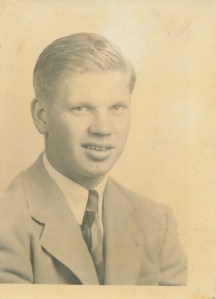


 insearchofbud