
Yesterday I looked in the alley, a routine check to see if anyone had graffiti’d our garage. Nope. But Don, elderly resident and dear friend, was also in the alley, returning from his dumpster. He had a scoop made from a plastic bleach bottle. I hailed him. I admit I was surprised to see him alive, since I hadn’t seen him in months. He looked a bit pale, frail, and unsteady. “You look good,” I said. I hope nobody says that to me! I thought.
As I pondered the ethic of the lie I told, we shook. His grip was still viselike. Of course I followed him to his front yard to chat. He likes to reminisce, so after first reviewing the neighbors and their pets’ crimes against his lawn, we talked about the past, my favorite subject also. He was unusually philosophical about the “dog fertilizer.” One of the prices to pay for having neighbors, he observed. I chimed in that we live in a quiet and safe neighborhood, which we do.
Don told me about some of his experiences during the Korean conflict in the early 1950s. He belonged to an army infantry support company where he ran a radio station. Just a desk really, he explained. The work was routine, he said, and when his commander found out he was a very good marksman they put him on a team to compete against other army units. They wanted to send him to Japan for the event. Don initially declined. He told his first sergeant he feared he wouldn’t be promoted if he were out of country, but his first sergeant reassured him. Senior sergeants have ways to make things happen, he said. Don said he and his fellow shooters made a poor showing and when they returned to Korea he was told to report to the CO. It was not a reprimand for lousy shooting, but for promotion to sergeant.
Don said he enjoyed the stripe because of the increased pay, although almost all of his money was sent to his wife Gert in an allotment check each month. He told me many of his fellow GIs went to town to get drunk with their checks, but not him.
Orders to Korea in 1950 meant crossing the Pacific Ocean on a troopship. He didn’t remember how long a voyage it was, perhaps a month. The small ship rode up and down every swell. A friend of his vomited the whole way, starting in San Francisco Bay before they had even crossed beneath the Golden Gate. Don said he feared the man was very ill by the time they reached Korea.
Don spent more than a year in there. At one point a major chewed him out when he was sergeant of the guard because some oily sand was in the barracks. I could tell this still bothered him because he mentioned it at least three times. Other officers acted more like human beings. Another major befriended him because they were both from the Billings area.
Back in the States, Don got a flight from Seattle to Billings. He was drinking coffee in the airport ticket area (no big airport building like there is now) and in walked his wife, Gert, her hair in curlers. “Man she looked great!” Don said, grinning. “She was embarrassed because of her hair, though,” he added.
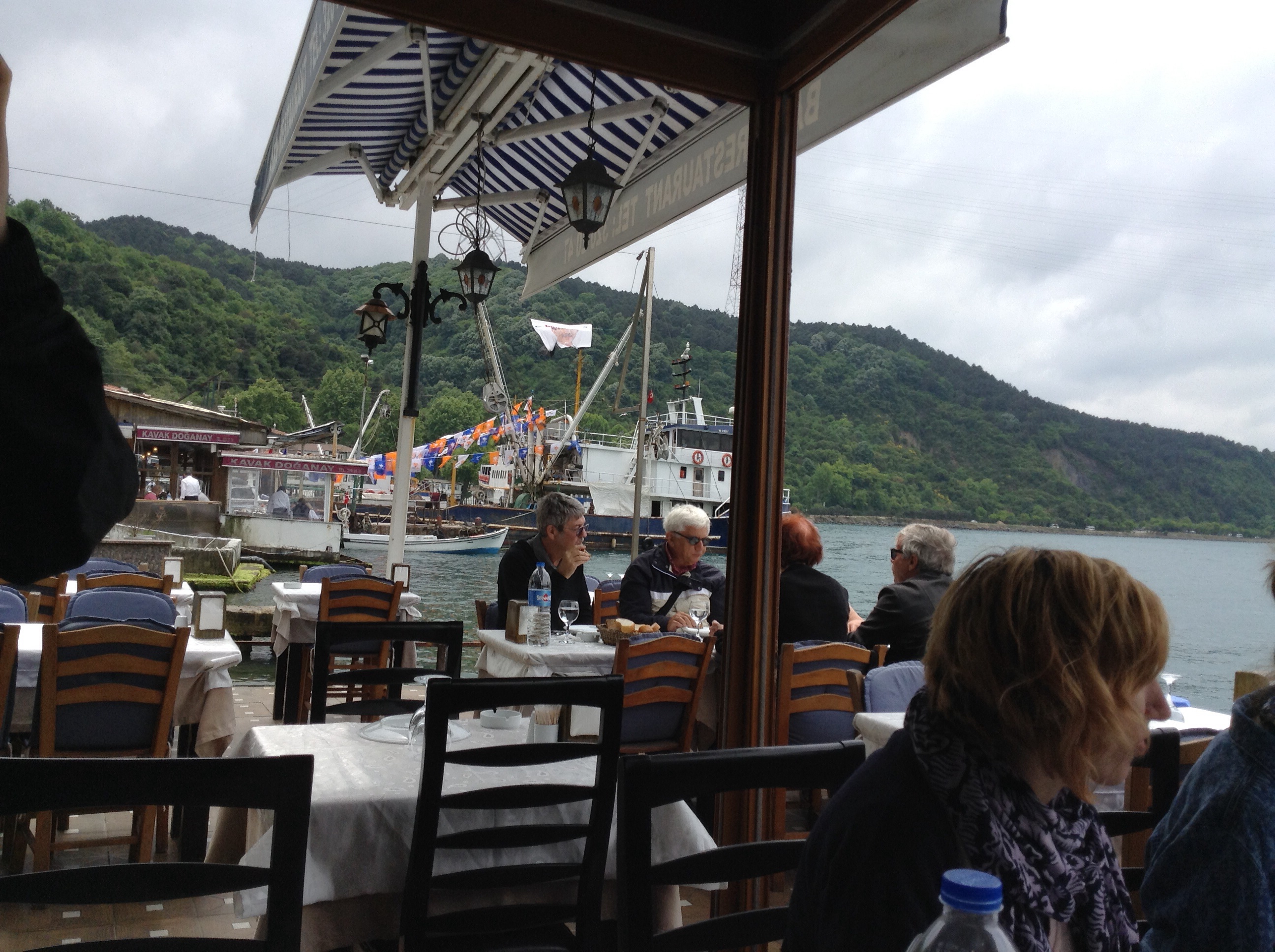
Istanbul was noisy all the time. Men at the parking garage shouted in Turkish. The muezzin called from a minaret less than a block away, through a megaphone. Beautiful sounds, gorgeous voice, perfect pitch. I anticipated and listened. Five times a day starting about 5am, then 9, then 1, 5 and 9. About 5 minutes past the hour, usually. In the night, party goers, often sober in this Muslin city, sang and laughed until 3 or 4am as they walked beneath the window.
Istanbul has 22 million. Or 18 million, according to another person. Or 17 million. Half in Europe, half in Asia, separated by the Straight of Bosphorus, merely 1 kilometer wide where castles on each continent loom. Sure enough, the towers and walls are castellated. I accompanied Susanna and her Minnesota art class to the Black Sea. We hiked up a hill to another ancient fortification designed as a lookout. I hiked with the group that was old or overweight. Made our legs burn. Semi-wild house cats seemed to be everywhere.
The cats are cultivated in Istanbul, like trees in public places. People leave them cat food. They seem to mostly leave them alone. One evening I looked out from the 3rd floor window of our apartment when I heard cats yowling and growling. Cat stand off. Arched backs, big hair. Growls. A man stood near one of the cats, watching. Soon 7 or 8 women stopped nearby to watch. The man made his move toward a cat, which ran away. The electricity in the air was gone. The women chatted in Turkish.
I sang my clearest falsetto from the window, “Help! I need somebody. Help! Not just anybody. Help! You know I need someone. Helllllp!”
Some of the women looked up at me, smiling broadly.
Another time I was nearing our apartment, walking behind a couple who were taking a selfie with one of those ubiquitous “selfie sticks.” I got between them, behind them, and made my widest million-dollar smiles just as they clicked. Then I changed to my usual grim expression and pushed past them as they squealed with delight. The guy put up his hand: high five. I also fist bumped him.
Back to Billings, Montana, USA, from Istanbul, Turkey, today, spaced-out and discombobulated because of the long hours flying and the altered day-night. You know, “jet lag.”
I loved Istanbul. I found the people there to be damned nice. They treated me gently, kindly, and in a friendly way. These were the people who worked on our street in the popular electrical supply district. A parking garage, “Otopark,” staffed 24 hours, was across the street. One block away at Galata Tower, a tourist destination, people treated me in an arms-length, impersonal way, mostly. A half-dozen blocks away at Karakoy tramvay station impatient people didn’t make eye contact unless they were hustlers. Many thousands pass Karakoy Tramvay station, where I was scammed.
Being victimized stung for days, two. I thought about what I should have done, different scenes. What happened?
A man we met at the top of the subway stairs dropped his shoeshine brush, so I snatched it, handed it over. He was glad, even ecstatic. He offered a shoe shine. “Here! I give you shoe shine!” he said.
“Please! Baba!” he pleaded. I didn’t know what “baba” meant, but it sounded good. He refused coins while telling me that his son needs surgery. In the end I gave him 20 Turkish lira. (Susanna said one of her friends gave 60 to someone else.}
Next time I’ll give the brush a good kick! I thought. Next time I’ll grab the brush and make him pay me to get it back. Next time I’ll keep the brush. I’ll shine my shoes on his butt! I fantasized. Take that! I mused.
I did none of that when another guy dropped his brush on the street a few blocks away. I just ignored it and the guy returned for it.
That was the only incident. I felt safe in Istanbul, even when I stopped by for a shave and haircut about 100 ft from the door or our apartment. I can’t even pronounce the name of our street, much less remember it. The barbershop “Formen” was in a kind of daylight basement on a corner and I was his only customer. He had 3 chairs. He sat me facing the mirror. My hair is short. He asked me “two?” I nodded. He selected number 2 plastic device for his electric clippers and mowed front to back near the center. I watched myself nearly smile and I said, “yes.”
Whenever he finished a section I encouraged him to be more exacting by finding imaginary flaws and inconsistencies. He was meticulous, shaving the front of my neck with a straight razor that turned out to be a replica with a razor blade in it, box-cutter style. A real professional.
I thought I’m worth more to him alive. After all what would he do with my body if he slit my throat with his box cutter?
I visited him twice in 10 days. He even burnt the hair off my large ears the 2nd time.
I visited Mitten the Turkish carpet salesman twice. A couple blocks from the Grand Bazaar. He was nice man. Treat me very well! I had tea the first visit and Scotch (blended, a good variety) the 2nd. We bargained and dickered over the price of pillowcases made from Killan wool carpets. I criticized the ones with stains or mends or patterns I didn’t like. I could tell Mitten liked that. After all, he is a professional! In the end I bought pillowcases for everyone. He wanted to give me a rug but I declined. “I have no friends, just relatives,” I explained. He put the pillowcases in a sports bag. An old one, and I departed, catching up with my family as we hiked down the street in a downpour. River of water, river of people, like refugees in the photo from the War of Spain.
The Nazis coveted Greece and Turkey, building fortified bunkers (the guns of Navarone).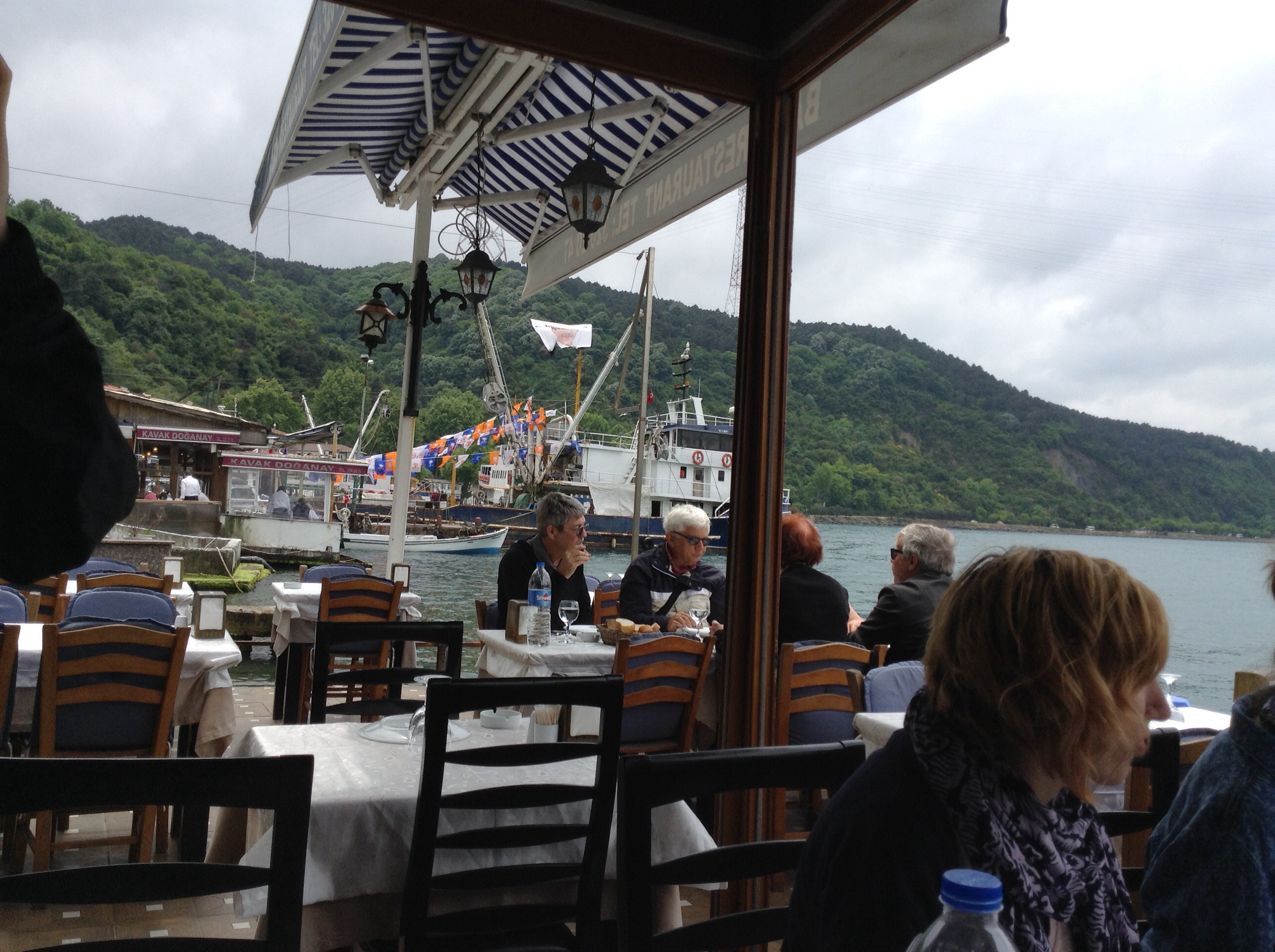

I don’t know who took this picture of Bud in front of his house in Kalispell, probably in the winter of 1943 or early 1944.
My nephew told me how he was the first on the scene of a fatal motor vehicle accident. A woman’s head smacked into the back end of a semi. My nephew’s face contorted in pain from the memory.
Another time. P. and I came over a hill on the way to Crow Fair. A pickup lay on its side in the August yellow grass of the median. Steam wafted from the radiator. I pulled onto the shoulder. A badge-shaped sign said I-90. The 9-1-1 dispatcher asked me to walk over to the wreck, where several other people already were ministering to a person who lay atop the side of the pickup. The voice in the phone asked me to describe the victim. “She is evidently in deep shock,” I murmured, “she is pure white with lacerated scalp where crushed when the truck rolled across the highway,” I said, “she’s still alive because she moved a little. She is wearing blue jeans and clean black Converse All Stars.”
A woman spoke gently to the victim. She said she was a nurse. An ambulance from Hardin pulled up to the wreck in the median. The paper said the woman died after being partially ejected.
Every time I drove past that place I started to cry.
Spent several hours Wed and Thur at NOVA Theater working with master carpenter Nathan Blanding on the stage in preparation for the musical “A Little Night Music.” Nathan installed overhead tracks for hanging the scenery that can be pushed on and off the stage.
Nathan knows the names of various tools, perhaps all of them. He knows the names of parts of a stage set, the various kinds of lights, the pipes that the lights are clamped to. He knows the names of the various fasteners, screws, bolts, brads, nails, and the power tools that screw them, shoot them into the work. Ladders and scaffolds. Cans bolted to grids. Some lights have names, like “Jill.” Others have numbers, like “31.”
Stage carpentry is different from, say, house construction. On stage, walls are still called flats, and although they can be built several ways, at NOVA they are 1 inch thick, 4 x 10 feet. On the floor the walking surfaces are composed of 4 x 8 by 6-inch platforms. Plus odd-shaped and -sized platforms and flats. Triangles and trapezoids. All are designed to fasten together and easily come apart. Cracks between flats that make up a wall are hidden by muslin glued to the plywood flat with half-strength Elmer’s. As you’d expect, they buy black paint in 5-gal containers.
A minimum number of screws holds components together, designed to take the wear and tear and bumps of a production, then easily come apart at strike. Traditionally, everyone helps strike the set immediately after the final performance. Building is another matter. Nathan does it all himself with whatever helpers he can recruit and train.
I walk through the back: fake log stands on end near red-upholstered queen Anne chair. Door section in frame was built for sound-effect. Fake steel girder and broken concrete made of plastic foam. In prop room swords, spears, telephones, books, clocks. A dressing room has wigs, hats, boots, mustaches, makeup. The fun is endless. Top hats, broad-brimmed, ladies’ hats with veils. Mirrors with bare light bulbs. Elsewhere dishes. Dozens of plastic water bottles, many half-full. Candy wrappers and pop bottles. Half-eaten sandwich. A script on a table, looks like a beat-up phone book. Folding chairs and upholstered chairs. On top of the fridge (“No alcoholic beverages in THIS fridge”) a miniature stage with scenery and furnishings all made of paper and cardboard. A clothesline on the back wall has a lone coat hanger. Two huge trashcans “Brute” are about half filled with more empty water bottles, paper, plastic packaging for cases of water bottles. Wire baskets are filled with crayons and markers that nobody is around to explain to me. Broom, dustpan, foxtail brush.

John Herman and I had recently learned how to smoke cigarettes in Missoula in 1967.
One bitterly cold, snowy, winter night in 1967 Larry Felton and I had walked from the Downstairs Coffee House on University Avenue past the Lodge on the brick walkway toward the baby oval where we saw a police car with red and blue lights ahead of us. Closer, a police officer with flashlight shined on a box on the Alumni Bench. It was the kind of longish box that could have held two dozen roses. Another officer opened the box and by now we were at the police car. By the shining flashlight one officer opened the wrapping paper and removed — a human leg! I stared until my eyes watered. Larry and I looked in silence.
We didn’t speak to the police officers because, almost as a matter of policy, we never did. To us self-styled hippies they were all pigs. Whenever we could we did illegal things anyway. We just couldn’t find or afford anything illegal that day. We were freaked out enough.
After seeing the dismembered human leg, Larry went to his room in Craig Hall and I went to mine in Elrod. Soon I phoned Larry, asking if I might come spend the night on his floor. I worried about the other human body parts that might turn up.
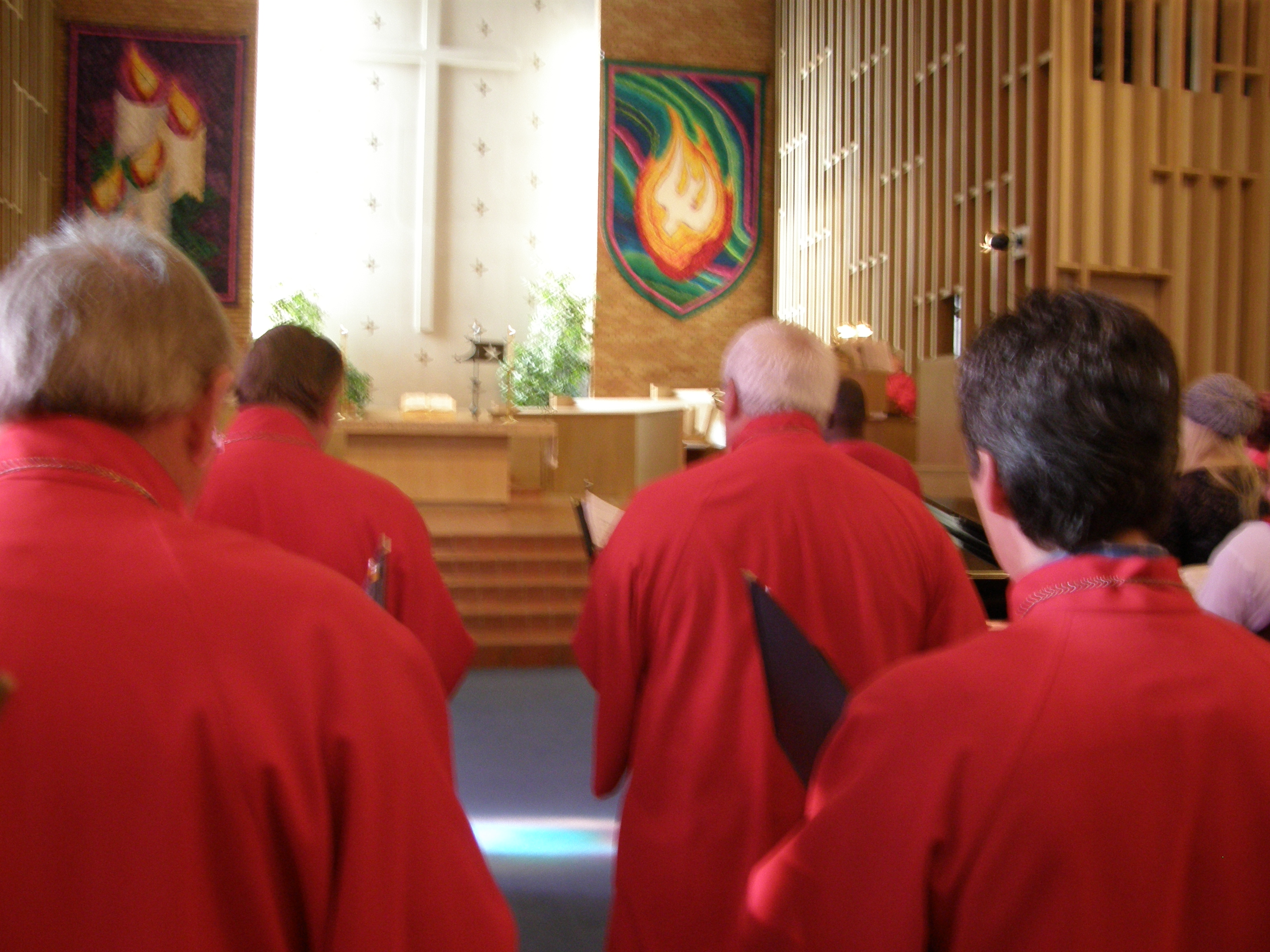
I deleted my blog post “It’s a Beautiful Day” because my attempt to be “cute” and “funny” concerning our church choir flopped. It [phone rings, I answer–a voice congratulates me that I have been selected to receive a free… I hang up] hurt our director’s feelings. I read the post again. Not cute, not funny, it had a mocking, unkind, sarcastic tone. I moved the post to the site’s trash bin. No great loss there. The worst thing I have written. No, I have written worse. I remember things and, yes, I still cringe.
I need an editor to review my posts prior to publishing. Thanks to the hurt looks I received, I have been brought to my senses. I had forgotten, temporarily, that words can injure, even kill. Words can be interpreted differently than how they were meant, no matter how innocently they were written. I am sorry I wrote them.

I parked my Chinese pickup near the cart corral. A friendly white-haired employee in day-glow green vest, Larry, had perhaps 6 carts with a tether on the front one. I wheeled the one remaining cart behind Larry into the store. Only he had trouble turning the carts because a special cart, made to look like a fire truck for toddlers, blocked his way, so he had to wrestle it first. So he blocked my way and that of a frail lady with a cart who wanted to exit. I looked at her and smiled. She looked pleasant, but smiled only faintly because she looked barely strong enough to do that much. She reminded me of a corpse I saw at a funeral. She’s not far from the mortuary, I thought.
Shopping done, I looked for my pickup and I heard a voice, “Sir?” It was the woman I had identified as almost dead. “Would you start my car? See? The key won’t turn.” She had a German accent. I reached in and turned her steering wheel slightly, easily, explaining that sometimes the steering wheel binds the ignition key device, and bid her try again. It started right up. Yes, her car was gone from its parking place when I drove by moments later.


 insearchofbud