
OLYMPUS DIGITAL CAMERA
July 16, 2015
We had been to this horseback ride place just this side of Absaroke maybe 6 years ago, but I had forgotten how much fun it can be for kids like our grandchildren ages 6-9. Owner Wanda Wilcox (406-328-4158) had young adults from France and England working for her, as well as a couple of more experienced local wranglers like Lexie Lacie of Hardin. Lexie has worked for Wanda 14 summers.
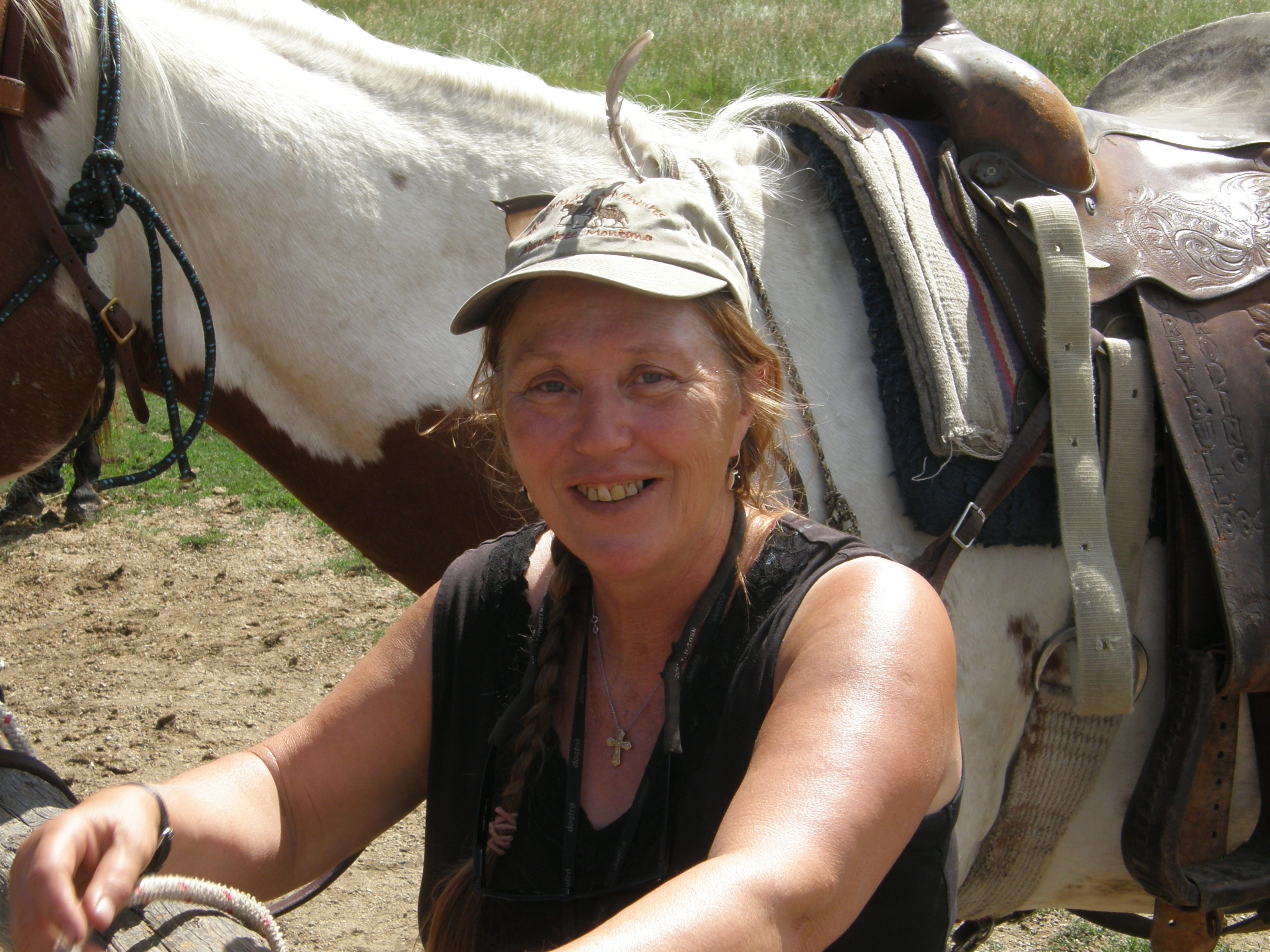
P. paid for riding lessons and an hour horseback ride so the three kids started with brushing and getting acquainted with the horses. Wanda taught the kids how to choose and put a saddle on a horse, even having them practice a couple times. She had them bridle a horse, then mount and dismount a few times. She was charismatic, telling about her parents until nearly everyone was passing tissues around for the tears of emotion.
OLYMPUS DIGITAL CAMERA
I did not cry, but I came reasonably close, I thought.
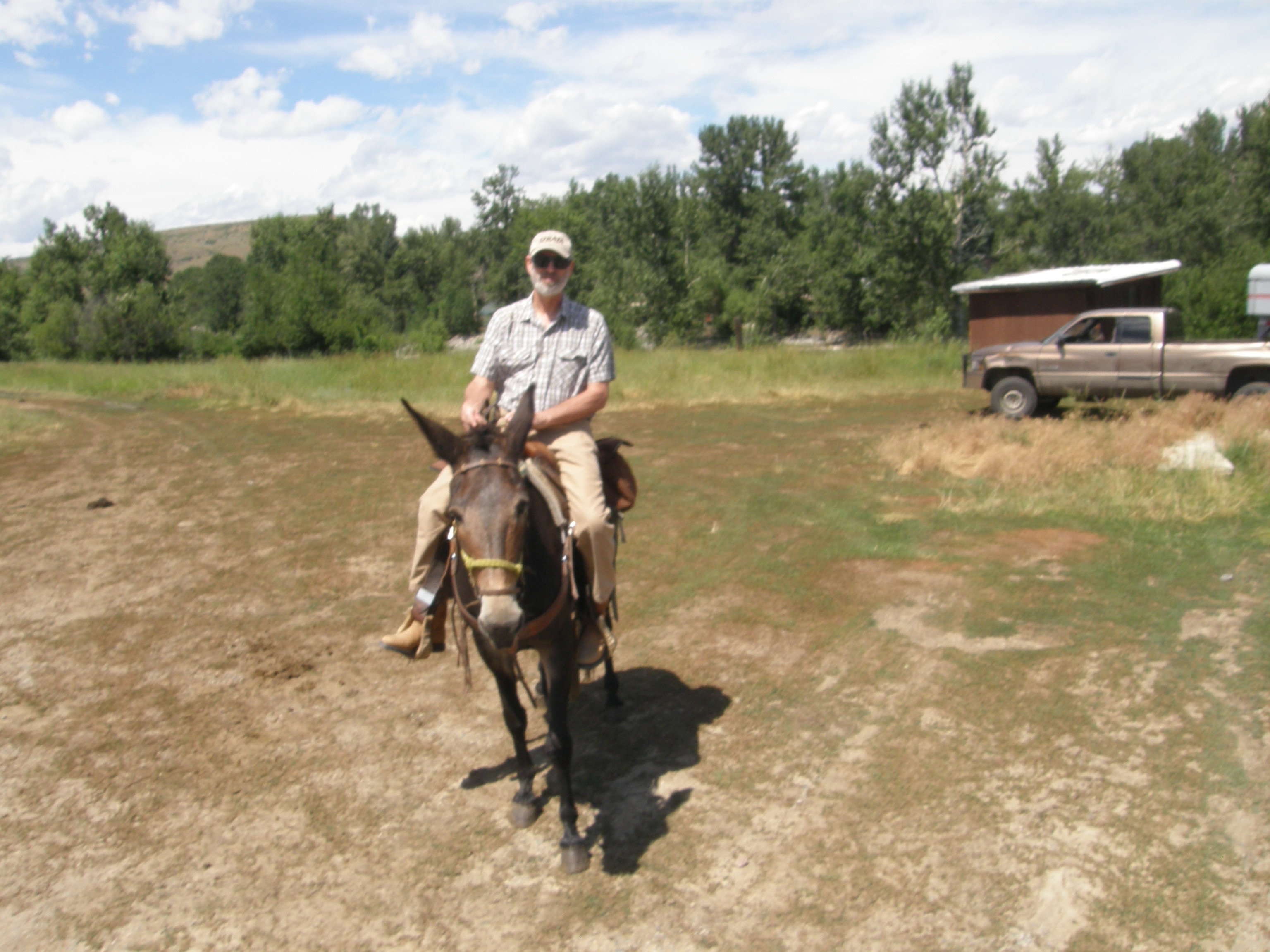
We selected our horse. In my case I selected a mule, named J.O. Our ride took us through some river bottom, across some hayfields, through a wood, back around the river bottom, into and out of, a boggy area, then along the river. We had three wranglers and 6 of us, all nose-to-tail, on a trail. I was second to last, on my mule.
OLYMPUS DIGITAL CAMERA
J.O. was a beautiful chestnut mule, moderate size. We once went packing, once, with some really huge mules that must have been bred from work horses. J.O. was not nearly that big, but he had a mellow disposition like the big ones had. He pretty much did what he wanted, although I did get him to turn once, using the reins. I tried to turn him a dozen other times and the reins had no effect. I tried turning his head with my hands, but I could feel that he had muscles of steel beneath that chestnut hide of his. Perhaps I really didn’t need him to turn. Perhaps he knew the routine better than I did.
If turning him was impossible, except just once when I must have been supposed to by circumstances, or perhaps by wrangler Lexie Lacie, who asked me to turn him, I was able to get J.O. to hurry by placing my heels into his flanks. I tried to be humane, but a gentle nudge with my heels had no effect. I used a verbal command. “Git, mule!” and kicked somewhat harder. We were walking along but the rest of the riders were getting farther ahead. I began kicking with both heels at once, with as much energy as I could dig up. Once, twice I let them strike J.O.’s sides, and lo! He began to walk faster, even sort of gallop, until we caught up.
A couple times I was able to coax J.O. to stop by pulling back the reins. “Whoa mule!” I said, but that was just for showing off, in imitation of a Yosemite Sam cartoon. J.O. stopped willingly. The steering by means of reins was problematic twice when he walked under low-hanging branches. The first time the branches were light and springy.

OLYMPUS DIGITAL CAMERA
We knew the kids enjoyed the experience because they asked when we could be back to do it again.
Nine years ago my grandfather Carl T. Bonde’s progeny held a family reunion at Lakeside, Montana. My cousin David Judd’s wife Diane had asked me to organize a slide show and ice-breaking session of the assembled relatives at a meeting room at a motel on Flathead Lake. The summer was hot, the weather perfect, except for some great white clouds billowing up to the east. As the satiated diners came in I greeted them and handed out some papers I had prepared, complete with answers to such questions as, “what was the company Carl Bonde worked for as a wholesale grocery salesman? I had things pretty wells planned and I had also fixed up a slide show of historic importance. Actually, it was a hodgepodge of convenient images thrown together in more or less chronological sequence.
As chief planner, appointed by Diane, I was responsible for planning all of the activities of my cousins who were all older than I as well as those of my nephews who were at least 12 years younger and more, but who had grown tired long ago of my antics. All were adults. All were professionals. All were careworn and world weary.
I had a sheet of newsprint on the front wall and I told them the schedule of events. Trouble is they had all sneaked out of the room by the time I had turned around for questions.
This didn’t preclude much merriment that evening as we all got rather drunk on Chris Angel’s party barge that he towed from Bozeman. The next day many of us visited our grandparents’ house, or rather, the place where it used to be, at the top of the hill on 5th Ave W. in Kalispell. The man who owned the property had just torn up the root cellar that our grandpa had kept apples and beer inside. The barn, which resembled a house without many windows, still stood. We were amazed how small it was. In fact the whole place seemed to be much smaller than we remembered.

My grandparents lived atop a hill on the outskirts of Kalispell. They had the longest, skinniest garage I have ever seen.
As I posted elsewhere, I worked at the pharmacy yesterday I blamed everything I could dream up, on Curtis, who wasn’t there. Then I had a legit complaint.

A couple Zumba lessons gave me self confidence to teach the ladies the “tango” in Argentina.
Oh, I said I was disturbed by the inappropriateness of the “Bob and Tom Show,” a 3- or 4-hour long comedy talk show that I’ve listened to many times and enjoyed. I just don’t think it is good for everyone who works at the pharmacy, so I performed my usual routine and complained to the boss, Donna. I love to walk down the long hall to her office. How many times have walked that mile to get evaluated only to be found lacking? How many times have I folded my hands on my lap and tried to look deserving of a raise? Pharmacy is hard work! “Yeah! doin’ nuttin,’” an old guy said to me once when I told him I had been too busy to finish his 25 prescriptions in the allotted brief time.
Hard work! I think that you didn’t believe me. You’ve been in pharmacies and where is the action? You might have walked up to the window to hand over a prescription and a bored looking person (clerk? pharmacist? technician?) forced a smile and told you to check back in about 15 minutes or so. As you checked out the toothbrushes, thumbing each one, you glanced back to see the pharmacist staring down at his (or her, more often these days) navel? Counter, anyway. How do they stay awake, you wonder. Do they make pills? Do they fill capsules? No, the pills they dispense were manufactured by Merck or some such. Lilly. Roche. Well, what do pharmacists do? I know and I’m not telling.
But I got off the subject.
I blamed the inappropriate radio programming on the senior pharmacist, of course, Curtis, although I confessed to Donna that personally, I liked it. I even told her the humorous vignette I had just heard on “B&T” about a new pill that vibrates in the gut to induce peristalsis. “Yeah, like a cell phone in your rectum!
“That you’d have to answer in your asshole,” said Tom of the “B&T Show.”
Of course, I chuckled when I heard it. I told Donna that I didn’t want to get Curtis in trouble. Well, yes I did, of course, but that’s not the only reason I complained, other than the joy of complaining at all. I complained because a show like that is not appropriate for employees who may object to the frank sexuality. This could constitute a “hostile work environment.”
Donna will speak with Curtis today about the hostile radio show and ask him to change the station. It is true that I work at one of the best-managed pharmacies of my long career. Inventory control is superb. Every drug is counted every month and excess inventory is sent away. Even though we dispense thousands of prescriptions a day we are geared up for big volume. All the technicians are cross trained to do each others’ jobs. People are nice to each other, mostly. Probably good that I work there just one day a week, most weeks.
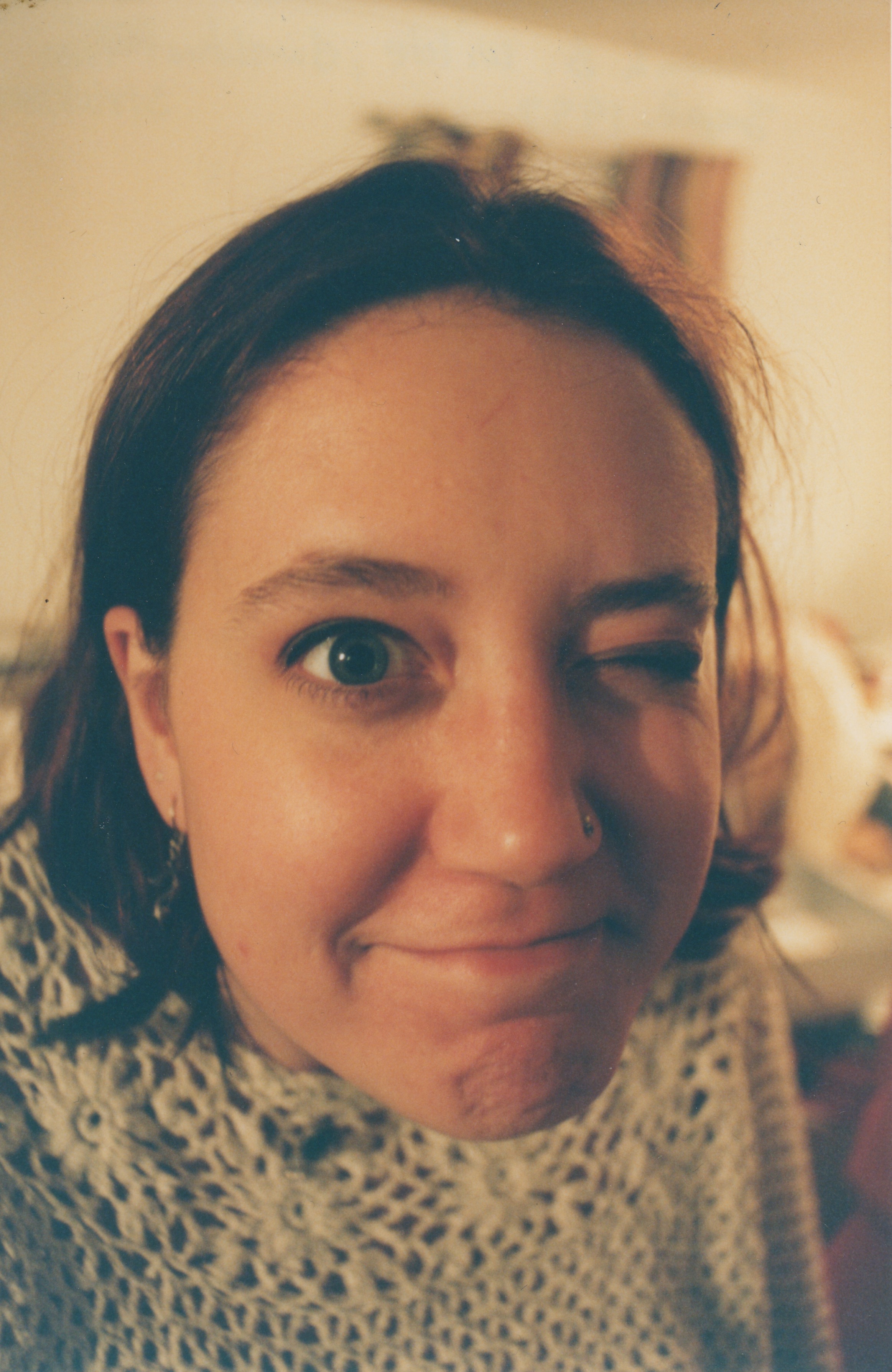
Tom’s late daughter, Hannah B. Wild, in 1997.
Malta is more than 200 miles from Billings, through sparsely populated prairie. Didn’t we need some CDs for the trip, especially since P. and I had been so keyed up that we could sleep only poorly? We bickered, so we agreed to quietly lick our wounds and listen to some recorded music. Two of the discs had been put together by our niece Hannah of some groups in the Seattle area. The sound sort of reminded me of Reggae, and that made me think of smoking weed, and that reminded me that Hannah had been bedeviled with drug abuse problems. Saddest of all, the music reminded me that Hannah is dead. She died about a year ago in Kona, Hawaii. No foul play was suspected. She had been denied admission to a shelter, “The friendly place,” because she was intoxicated. They gave her some blankets and she found her way to a field where she fixed up her bedding, folded her things neatly, and ?? Anyway, someone discovered her body the next day.
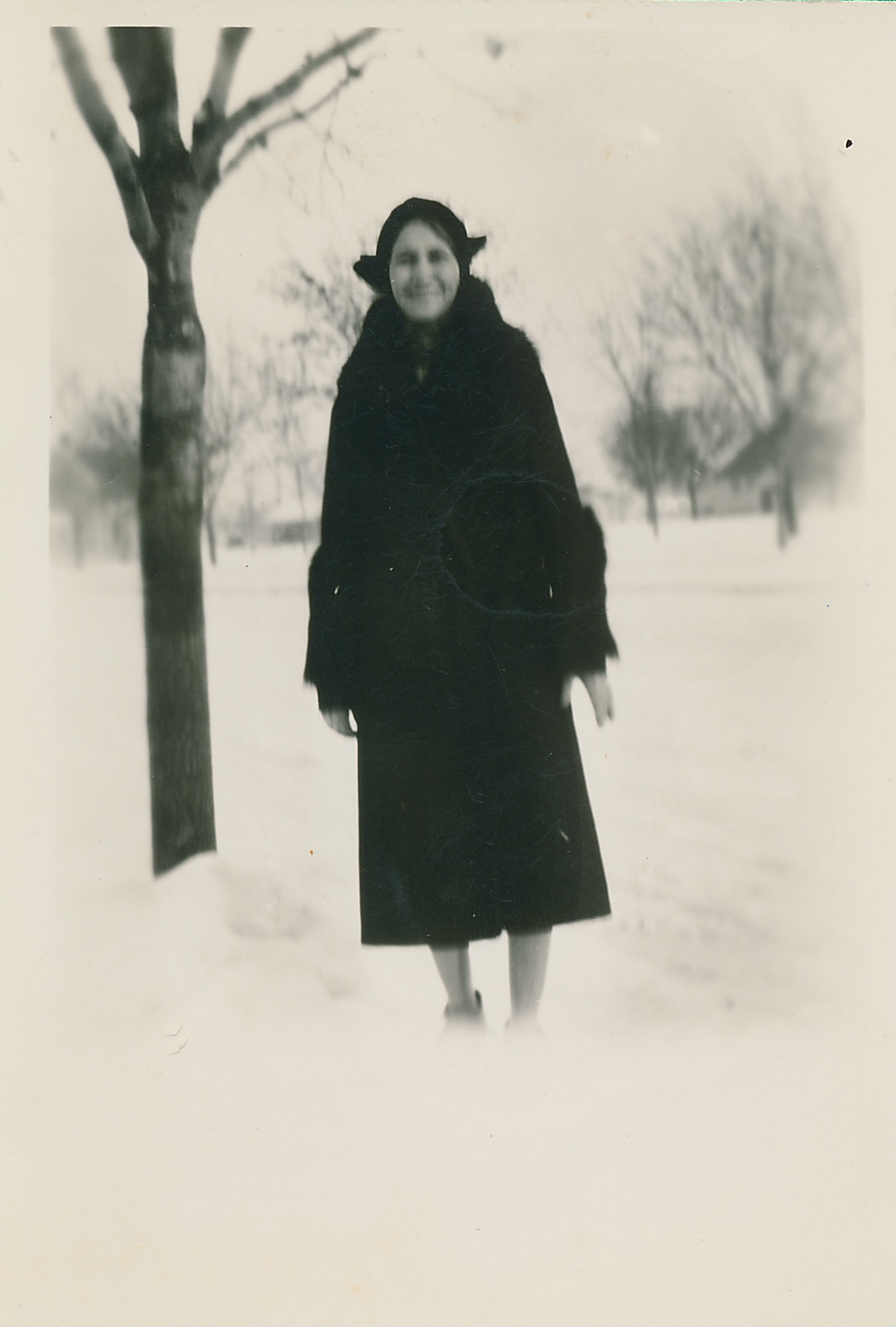
This figure has always reminded me of my grandparent Struckman’s daughter. Trouble is, I don’t know for sure.
Like I said, we drove to Malta to wait for our daughter and children to arrive by train from Minnesota. I had several hours so I walked from the Malta Amtrak station along Highway 2 a few hundred yards to the Philips County Museum.
I skipped the dinosaur museum. Last year at the Yellowstone County Fair I spoke with a man who claimed that he could prove dinosaur fossils were only 5,000 years old. Even though we kept things quite polite, I didn’t want to encounter him again. (What do you take me for, a fool?) Anyway, I am not intrigued by dinosaurs any more. I don’t think I ever was, really.
Instead I went to the historical county museum next door. There, newly appointed curator Lori Taylor found records from 1928-31 of my grandpa, Emil G. Struckman. He was school superintendent, so every September a reporter from the local paper asked him about enrollment. (Not so many elementary students, he said.) I gladly signed the visitor book and paid $5 to tour the exhibits.
Was I glad I wore my heavy sunglasses? It was a bright, sunny, hot day on intermittent sidewalks on the north side, and a dusty dirt railroad way on the south. On the way I passed a heavy, crated piece of freight dumped onto what could pass for spotted knapweed near the tracks. Evidently someone had delivered it from a train because it had the word “Malta” written in black marker on a board. Well, this must be how freight comes to town, I thought. Perhaps an hour later I saw a man unload some other heavy freight off a truck from Havre. Walking near I saw a plastic envelope with shipping information taped to a bunch of long boxes strapped to a wooden pallet.
We ended up walking a couple blocks past the museum to the local Dairy Queen for treats, past an old-looking house in need of paint that advertised “Abrahamson Upholstery” and a green sign sort of jammed into a hedge that proclaimed, “No Free Roaming Bison.” I didn’t see any other pedestrians, but it must have been close to 90, although windy with some stinging dust.
Amtrak had been hours late, held up for flooding and tornado watches. The kids needed exercise so we walked across to a small park with large mosquitoes and stayed all of 4 minutes. Then we stopped at Albertson’s for some Cortisone-10 cream to soothe the itching. We drove south but had to return to fill the car with gas. We stopped in Grass Range at Little Montana for hamburgers and corn dogs. Got home at about 9 pm.

Carl Bonde Jr. in about 1928, destined for college, then the infantry, then death by German torpedo.
Reflections on my work documenting my uncle Carl Ralph Bonde Jr.’s life and death in the English Channel in the last few months of World War II.
The parts left out: Carl’s childhood experiences, his friends, his interests, anything about his family in the 1920s through 1941. Then his experiences as a fire lookout in Glacier on Huckleberry Mountain. What about his friends? What happened to them, particularly the young men? Many of them ended up fighting racism abroad, ironically, in a segregated U.S. Army or Navy. [When should I capitalize “army?”]
What are some more details of his life in the army? Where did he go for basic training, how did he get there? Much of that information was lost, unfortunately, in a fire in the early 1970s, I believe. I want to tell more information about his experiences coming home on leave.
What happened to many of Carl’s fellow soldiers? Many of them survived the war. I spoke to only a handful of veterans.
Much has been written about the S.S. Leopoldville, the ill-fated ship torpedoed the night Carl was killed in action. More information is available about the port of Cherbourg, France, where the army had a command post that failed to save many from the Leo from drowning or freezing.
I would include information about the captain and crew of U-486, the type VII-C German submarine commanded by Gerhard Meyer. Some has been published. All aboard were killed when U-486 was torpedoed near Norway. The Norwegian submarine “Tapir” made the kill. I would include as much information as I can glean about it.
A book was written about the survivors from the 66th Army Division following their losses in the Channel. They went to Lorient and St. Nazaire to contain the German submarine pens in those two cities in the Bay of Biscay. When we visited St Nazaire we learned something about the fortifications there. More to be told there about the Nazi surrender to General Herman F. Kramer, commander of the 66th Division.
There’s more to be said about the reason for telling the story in the first place, the longing in our family to become whole, to fill the void left by Carl R. Bonde, Jr. We had nobody to take his place, although we did have a few men. We should tell that story also.
All of the surroundings and sights and smells and times need to be told as well.

Transmission shifting cable that I photographed for Buckie LeBoeuf last week.
Of course this is our daughter’s birthday! I did phone her and left her a message with a pleasant wish.
Our trusty cheap Chinese pickup can again be shifted into gear, thanks to Buckie LeBoeuf, of Sulphur, LA, and his parts inventory that included a transmission linkage cable.
Oh, I requested the wrong cable. He told me to look for a colored band on the old cable (which I had removed from the truck to take a picture of it). I examined the old cable and found a white paper band with blue Chinese writing on it. So I said blue. Later, when I took the old cable apart to see what was wrong I noticed a prominent yellow band of rubber. The new blue band cable was about an inch and a half longer than the yellow, but I figured better too long, so I installed it and it worked perfectly. It just made a bit larger loop under the truck. No big D. I backed the pickup out of the garage. The red brake warning light is on. I tinkered with the brakes (bled them again, checked fluid level, pumped the brakes, wiggled things, no result. Hot out. I’ll wait for inspiration to deal with brakes.
Despite these trials I replaced the spider glue traps in the basement. Our house is 90, the basement, damp and the old traps were riddled at their entrances with the hapless spiders who got stuck and died trying to enter. They met their fate despite the spiders’ clear warning that their fellows had perished by entering the same way. I was amazed at the number of spider bodies. I blew a puff of air to see if any were alive and able to wave a leg, but I found none. I considered photographing the old traps but discarded that idea after I forgot and pushed the parts of the sticky into itself to hide the contents. Also we have grandchildren coming next week to visit and I wanted to keep our spider-infested house welcoming. I simply dropped the squashed traps into a trash receptacle.
I put out four traps, strategically to catch the vermin before they can get to my head when asleep in the basement. The spiders in question are known as “aggressive house spiders” and have a troublesome bite. My children call them “hobo spiders.” P. doesn’t call them anything. She simply wanted the sticky traps replaced.

OLYMPUS DIGITAL CAMERA
uly 5, 2015
We will walk and run along the old north trail, figuring out where it has become overgrown despite its use by people for hundreds of generations.
We have to start in the middle of the trail, of course, because the trail has no beginning. I mean, yes, it has two ends, and they are the beginnings, but they are so remote that they were known by our great-grandparents only in vague terms as the “olden days.” In fact the northern terminus is almost the same for all peoples everywhere; in Norway, in Montana, in Oregon, in Canada, in Russia. Or perhaps it just looks the same. Tundra is a strong feature, but, as E.L. Doctorow wrote in “Arctic Dreams,” one finds unexpected mountains, rivers, gorges, habitations, even hot springs.
Even the I Ching describes death as a being mysterious place in the far north. We can see on the globe how all trails squeeze together there.
We will travel as people most often used to, on foot, and it is a real place. One can find the old north trail most easily northwest of Great Falls, Montana. A highway sign tells of the trail. Then, once on the trail, we encounter the inevitable surprise after surprise until we reach the limit of the far north. I don’t know how we will manage to find food, but people live all along the way. The way people aways have. We will not be the same again, once we have traveled the trail. My sons Todd and Bob traveled north on the old trail from the Sun River for dozens of miles, finding, then losing, then reminding their way. I hope to hear their story in great detail from them both, probably across a campfire.
Traveling south we find many other equally surprising features. In places the trail is well-worn and plain, other places we have to find remote clues of obstacles avoided or moved. We are lucky to travel 10 miles in a day, although after a week or two we are getting stronger. We are constantly hungry, thirsty, and tired. We find that light clothing and sandals are better than hiking boots. Witness the Taramujara, indigenous people, who can run hundreds of miles in sandals made of pieces of tires and cloth strips. I saw the sandals of one one such person myself in Creel, Mexico, in 1996. The cloth strips were short and the man spent several minutes tying them, but think. The wear is on the foot-shaped piece of tire, not the cloth. His sandals did not fail him.
I want to travel with you because I feel lost and alone otherwise. With you I have strength and reserve and I feel resourceful. We will always look out for each other, even if temporarily separated by circumstances. We have traveled together, although we sometimes snip at each other when we get tired or confused. Suddenly I feel like Walt Whitman. We will need to stick together at night. Once, Todd and I slept together on a rock high in the Beartooth Mountains. He kept my back warm by cuddling. My front stayed warm because of a fire we built on the rocky ledge. It was still dark when we arose to bushwhack our way to Mystic Lake. I remember that Todd wore the hat when we went to sleep, but I was wearing it in the morning. Interestingly, he didn’t complain. But I suppose a guy like Todd who can run 26 miles after peddling 100 and swimming I don’t know how far in Hawaii has become inured to physical hardship.

The materials for my research into uncle PFC Carl Ralph Bonde, Jr. includes a 48-star American Flag and a 50-star.
My uncle Carl R. Bonde, Jr. is certainly an American hero, having been killed by Nazis in World War II. Thoughts enter my mind. PFC Bonde was trained to kill Nazis. The men under the command of Uberlieutenant Gerhard Meyer in U-486 were trained to kill the Allied soldiers. Both sides were simply doing what they had been trained to do, so I find it difficult to hate the submariners. They also died perhaps a month later, off the coast of Norway, when U-486 was torpedoed.
The problem is patriotism. That’s what leads to war and the senseless killing of people like my uncle and his Nazi enemies. We need more matriotism. These soldiers and sailors would have come to a different fate if everyone were more matriotic instead of patriotic.
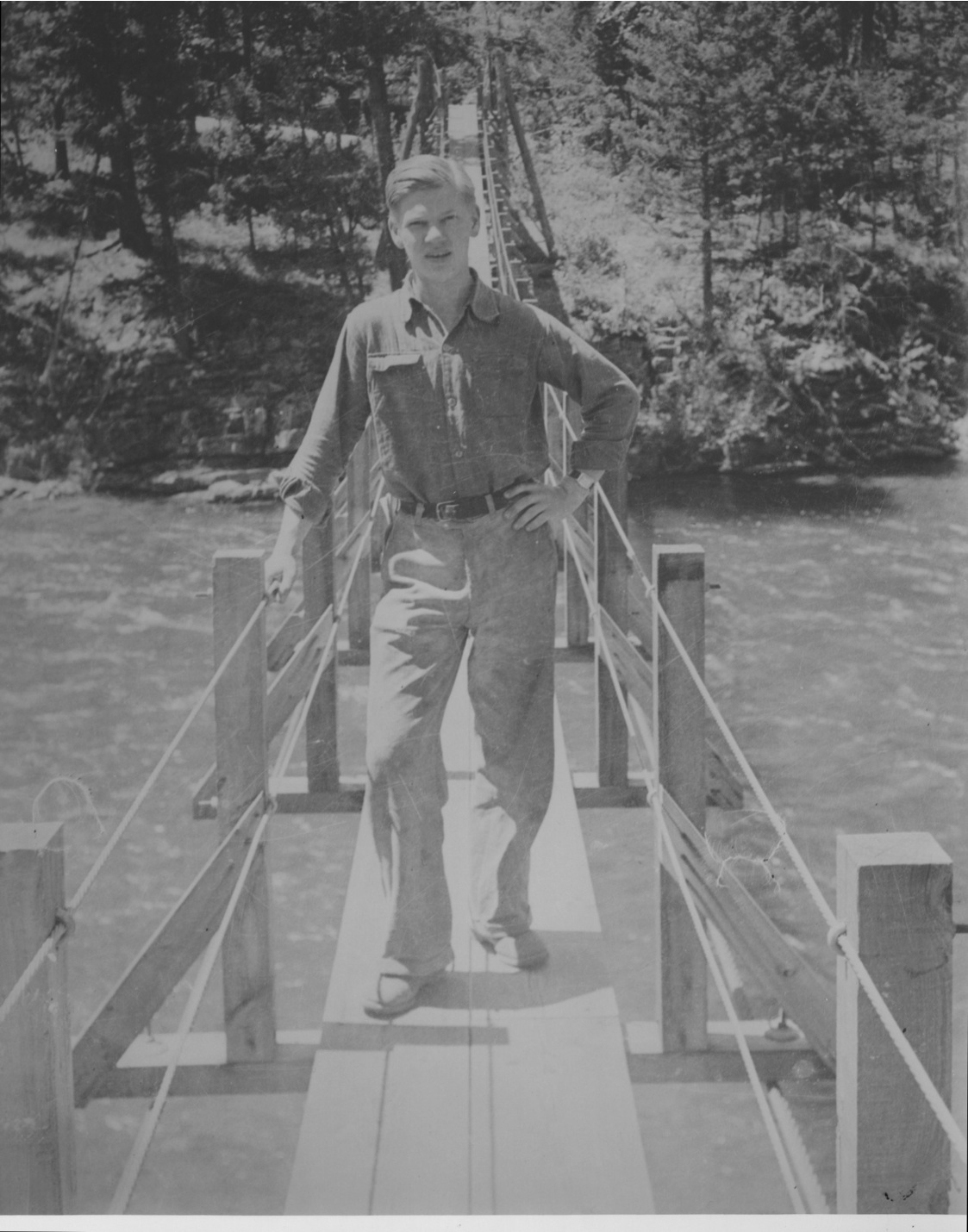
Here is a happier Carl Bonde, probably on a footbridge in Montana.
July 4, 2015
Yesterday morning Penny and I got up about 7:30 and, since we both had the day off, we agreed to take a long hike up the West Fork of Rock Creek in the Absaroka-Beartooth Wilderness. We missed the road, but we soon found it by asking a local woman.
Anyway, we found the road that led toward the ski area, passed a trailhead with a sign that said “Silver Run.” We decided that was the best hike, but since we couldn’t find a place to turn the car around, we kept going and going until the road turned to dirt and finally we ended up at the end of the road up a damned deep canyon. Rock Creek rushed cheerfully near the car, which I didn’t lock. I think if someone were desperate to get in a car they could get in ours without breaking any windows. I saw lots of cars and a few back packs with yellow sleeping pads protruding. The packs leaned against the concrete posts in the parking lot. A family wearing sandals sprayed each other with something. I used the FS outhouse. Smelled clean. In other words, it didn’t smell. I looked down the hole as I peed. Disgusted to see someone had dropped a can! Can’t they read the sign asking them to please not throw trash in? It is very difficult to remove!
We used walking sticks or, as they are more delicately known, “trekking poles.” We had day packs. Mine had 6 bottles of water, matches, sun screen, insect repellant, bear repellant, toilet paper, two apples, a GPS, LED headlights, extra batteries, and a rain suit. I can walk better longer if I drink lots of water, starting maybe a quarter mile from the trailhead. I try never to drink water from creeks or even springs.
The trail was deluxe and recently maintained. Gradual rise, wide enough for horses, bridges over small creeks, and miles long. We walked about 3 hours, stopping a couple of times to eat, until we got over a saddle to a meadow and the creek widened to a pond.
We saw plenty of wildflowers: Blue thistles, dandelions and kinnikinnik caught my attention at first, but after a few miles we saw lots of huckleberry plants (no berries), alder, lodgepole pines. A fire swept through the area in March so some green grasses had sprung, but of course, even fireweed hadn’t had a chance to grow yet. Other plants caught our attention: yellow columbine, blue bells, grand fir. The last identified because of a sap blister on its trunk that squirted when I pressed on one with my trekking pole. I couldn’t identify many plants because I didn’t have my book and anyway I’ve forgotten what I used to know. I learned that those “miniature huckleberries” we’ve often seen in the Beartooths are really whortleberries, good to eat.

OLYMPUS DIGITAL CAMERA
The trail wended close to the creek at times where rushing falls thundered. I saw no fish, but I probably wouldn’t anyway. We saw no large wildlife, although I looked all around. I think we saw death camas and cinquefoil, and sticky geraniums, but I’m not as sure about them. Horses on the trail left manure. I believe horses are most apt to poop after stepping through or over a stream, because that’s where I frequently saw it. I haven’t decided if that’s true. Once we had a llama and we could get him to poop at our convenience by leading him into water up to his knees.
One of the tributaries of the West Fork had enough volume to form a sheet flowing across a flat piece of granite, so it looked like glass. Surprises abound in the wilderness. Across the valley a cliff rose perhaps—a thousand feet? Hard to say, but, part of the cliff was a looming outcrop, like a bay window on a house, as large as a supermarket, but gray and stony. P. and I compared our feelings about that and we both felt threatened. Then resigned to dying if it let go of the mountain because of oh, frost heave, or earthquake Although we were still curious about the rest of the trail, we opted to return. The trek ended up being a 6-hour, 10-mile “death march.” It was good. I was so tired and stiffened up that I could hardly get out of the car when we stopped for ice cream and coffee in Red Lodge. I hobbled painfully at first, then began to limber up and walk. I had drunk almost all of the 6 bottles of water, so the daypack was light, at the last.
Bill and Mary Reynolds lived with their cats Mercedes and Evinrude on a house that floated in one of the lakes of Seattle. Bill will have to set me straight on which one that was. Tom stayed with the Reynolds.’ I think I was visiting my aunt and uncle Corinne and Norman Ackley in 1968. Norman had gotten Tom a 1953 Chevy sedan somehow, for 50 dollars, from a client of his. I’ll never forget the fright I felt when Tom took me across a bridge from the University of Washington district to the part of the lake where he was living.
Anyway, Bill and some of him and Tom’s friends had gotten good jobs working for the city as caretakers of the city parks. This allowed for lots of slack, plenty of money, and opportunities to purchase some decent weed from their friends who dealt in such.
It also provided money to purchase Zap Comix. I’ll never forget listening to Bill’s Quicksilver Messenger Service record while paging through Zap issue number “00.” I couldn’t believe my eyes. Up until then I had no idea that ideas could be expressed so eloquently using pictures and words together to express truth.
Soon we bought Rapidograph (T) pens that inevitably clogged up and went south. The best pens were had the finest tips. The pens, in case you don’t know about them, had a reservoir for India ink, and a tip with a barrel through which a weighted needle protruded slightly to touch the paper. If one shook the pen the weight would jog the needle through the barrel.
Once the needle bent or the pen clogged with dry ink, it was ruined for ever. Nothing could bring it back to life. Pens cost lots of money, like $5. We didn’t have $5, so we didn’t draw that much. We had friends who did draw, but they drew because they could sell their work to a hippie newspaper or the like.

This cartoon was named after a charismatic young tomboy who was friends with our kids in 1978. She was reputed to be able to throw a quarter through a comic book.
First Tom then I would draw the panels. Object was to confound the other’s ability to steer the story his way. This strip was two pages.
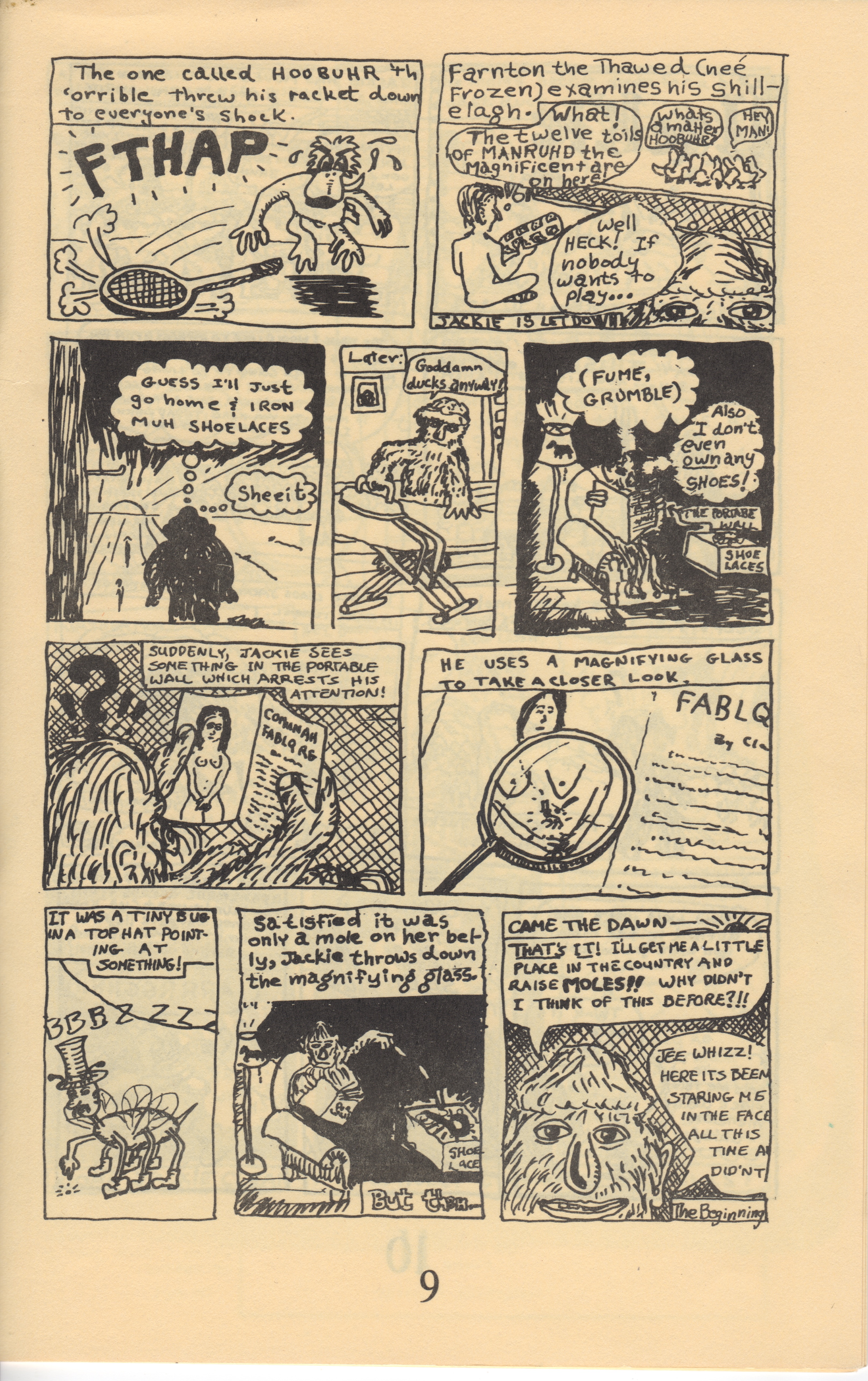
These pages made up a good share of issue number three of The Portable Wall


 insearchofbud