March 9, 2021
This year is already better than last year. Vaccination for Covid-19 is underway. Joe Biden is President and has a Democratically controlled Congress. The good and bad alike in this country will benefit from great leadership. Marijuana was legalized in Montana. Gunther is a fine dog. P. is doing well. Our kids are decent people. Every grandchild is decent. All of them can beat me at cards.
What a headache 2020 was. Could it get worse? The invasion of the Capitol Jan. 6 made me physically ill. But now the wheels of justice are turning and the perpetrators of the insurrection will face the consequences. At least I hope they do. Nonetheless, I feel shell shock. Post traumatic shock.
Seems too soon to declare victory. Our new Montana governor seems a bit nutty. I think he means well, and so forth. He likes rich people, anyhow, a minority in Montana. City government seems good.
Does Gianforte really think Indians rode the backs of dinosaurs? Did he know much about the museum in Glendive before he donated for it? Or is he really stupid?
Our weather has been unseasonably mild, warm, pleasant. We walked four miles with Gunther trotting. He’s sleeping now. Well, he was. Now he’s on the back of my chair, half-sitting on my neck. So warm!
My creative self is less confident. That’s the hazard in the writing business. That’s the business of writing. It is writing.
March 4, 2021
On this day in 1943, my Uncle Carl Ralph Bonde, Jr., was inducted into the United States Army. He was 19 years old.

Today I went through one of the trunks with old pictures, kids’ artwork, photo albums, like that. Envelopes had stacks of photos, and I didn’t look at them all. A couple cigar boxes had a stray mitten, assorted junk. A clamp for … I don’t know what. Broken glass at the bottom of the trunk, presumably from a framed picture. I don’ know. I left it there.
Typical of many couples, we had dozens of photos of our oldest son, Todd, a few of the next, Bob, and a few of our youngest, Clara. I saw an album with several photos of Clara’s namesake, her great-grandmother Clara McMain. She was in a nursing home in Lewistown, a victim of diabetes. Clara had one leg and was nearly blind. But she had a happy smile, holding Todd in one picture, holding a knitted throw rug in another. Posing with P. in a third.
We have another trunk, one that belonged to my mother when she went away to college, from Kalispell to Valley City, North Dakota. That one has much older material from my childhood, even some from hers. A few of the Household magazine issues with Robert’s short stories.
A wooden box that had once held a cream separator is upstairs, and it had the suitcase from P’s father, some memorabilia from our wedding in 1971, and some stuff from our grade school and high school years, most of it belonging to P.
Downstairs in the basement I’ve got a pile of stuff from my own high school years, including my photo album. Mother gave me a photo album when I was in the 7th grade, so I scotch taped pictures into it. Unfortunately, the scotch tape dried out and the pictures came unstuck. Since then I bought, or found, a packet of adhesive corners for fixing photographs into a picture album, but I never seemed to find the time to use them. Actually. I tried using them but I didn’t have the knack.
Retired people do their families a favor when they comb through the memorabilia. Reminds me of a joke my brother Tom told me once: A man climbed up to a guru high in the mountains. “What is the meaning of life?” he asked. The wise man didn’t hesitate to say: “Life is a fountain.”
That’s it. The seeker after the meaning of life got his answer from the wisest person on the planet. Might as well have been a wise woman. The seeker said, “It is? Really?”
The guru said, “Yes. Isn’t it?”

George G. Struckman left Germany during a politically repressive time during the mid-1800s. He was one of the so-called ’48-ers. We think he chose Bartlett, Illinois, to be close to other German immigrants. He had a good education, but I don’t know from what school. I’ll share it with you when I find out.
His wife’s maiden name was Bouchee. She was a musician and a 7th-Day Adventist. She and George’s house still stands in Bartlett, privately owned, but it is a landmark. I recall as a 6th grader visiting the house with its distinctive facade.
I think I mentioned that George fought in the American Civil War for the North. Because his grandson (my father) died when I was a small child I didn’t get the history lesson like I got from my mother and her side of the family.
This is a work in progress.
March 4, 2021
On this day in 1943, my Uncle Carl Ralph Bonde, Jr., was inducted into the United States Army. He was 19 years old.
Today I went through one of the trunks with old pictures, kids’ artwork, photo albums, like that. Envelopes had stacks of photos, and I didn’t look at them all. A couple cigar boxes had a stray mitten, assorted junk. A clamp for … I don’t know what. Broken glass at the bottom of the trunk, presumably from a framed picture. I don’ know. I left it there.
Typical of many couples, we had dozens of photos of our oldest son, Todd, a few of the next, Bob, and a few of our youngest, Clara. I saw an album with several photos of Clara’s namesake, her great-grandmother Clara McMain. She was in a nursing home in Lewistown, a victim of diabetes. Clara had one leg and was nearly blind. But she had a happy smile, holding Todd in one picture, holding a knitted throw rug in another. Posing with P. in a third.
We have another trunk, one that belonged to my mother when she went away to college, from Kalispell to Valley City, North Dakota. That one has much older material from my childhood, even some from hers.
A wooden box that had once held a cream separator is upstairs, and it had the suitcase from P’s father, some memorabilia from our wedding in 1971, and some stuff from our grade school and high school years.
Downstairs in the basement I’ve got a pile of stuff from my own high school years, including my photo album. Mother gave me a photo album when I was in the 7th grade, so I scotch taped pictures into it. Unfortunately, the scotch tape dried out and the pictures came unstuck. Since then I bought, or found, a packet of adhesive corners for fixing photographs into a picture album, but I never seemed to find the time to employ them.
February 28, 2021

Three days ago in Duluth, my oldest son Todd asked me why I wasn’t in a play we had been messaging each other about.
Naturally, I tried to put the best possible spin on it.
The cruel fact is, I’m a diva. Also, I wasn’t the director.
Last month I got the lead role in a one-act by Anton Chekhov, “The Bear.”
My character, Grigory Paplovavich Smirnov, is a misogynist, desperate for repayment of a widow’s debt. In the end he kisses her on the mouth. There! I’ve spoiled the story.
I explained to Todd the play is supposed to be funny! I didn’t mention how the woman playing the part of the widow curled her lip and shuddered. I lied and said I was afraid of the Covid. Maybe shake her hand. Or blow her a kiss.
Chekhov wrote the play in Russian long enough ago that it is no longer protected by copyright. I read four different translations, including one copyright protected version the director liked. By Paul Schmidt. From Amazon (sorry! I know I should be mad at Amazon.)
Wouldn’t my interest in the play impress the director? I never found out. In the end, the director handed out copies of a flaccid, plodding translation sprinkled with dated jargon no modern audience would understand or find compelling.
My sensibilities dulled by such antiquated usages as “widows weeds” and my fires quenched with the deadening verb “to be,” I lobbied for changes.
My part had most of the dialogue.
Consequently, the director spent a rehearsal in a read-through of this abomination, asking the four of us for a consensus for changes.
I asked for action verbs. Understandable words! Natural talk. You know.
Therefore, I did what actors rarely do. I rewrote my part. Took only 5 or 6 hours. I must stress that I pretty much left the other characters parts alone, especially the cues. I also took pains to end my speeches with a cue the other would look for.
They didn’t like it!!
They said I shouldn’t change Chekhov’s words. Wait. We’re talking about translations, here.
The other actors, one at a time, as though waiting to kick me, weighed in. The assistant director was okay with some of my suggestions. Another actor said she was okay with much of my work. But the person playing the widow said I was way off base. If I hadn’t wanted to do the play as written I shouldn’t have taken the part in the first place.
Next rehearsal I modified my rewrite of the script to replace the “widows weeds,” and others.
We were to run through the entire play. What I didn’t expect was the director and assistant to put their noses in the script and pounce on my attempt to modify it. They (rightly) suspected a rebel. A rewriter.
At one point, the director said there were three witnesses that said I had agreed to adhere to the script.
Soon, as we were acting a heated scene, the director suggested the widow must be so angry as to throw a metal bell at my character. To my surprise and horror, a bell whizzed past my head and struck a brick wall in the theater, making a crashing sound.
Sinking down in my chair. I groaned, “God damn! Jesus Christ! I’ve never before felt physically in danger during a play.”
Distracted by fear, I stumbled ahead. Soon, the director accused me of not listening.
Near tears, I said I didn’t think I could continue.
Both director and assistant called for a five-minute water break.
Next day, we had a meeting, in which they asked me if I thought I could do the role. The theater manager came to my aid. She said the purpose of community theater was for actors to enjoy the experience and to develop strong, positive relationships.
She emphasized nobody was to throw her props again. Full stop.
They left it to me and the director to decide my fate. Everyone left the meeting feeling better.
The good news is a younger actor, brilliant, in my estimation, was willing to take my role. Someone whom I thought should have been chosen in the beginning.
Therefore, I am still making the set for the Chekhov plays, but I don’t have to kiss the leading lady. Or I should say, she doesn’t have to kiss me.
I was going to start with the basics, beginning with the earliest ancestors. Of course, my mother came from two lines: Bonde on her father’s side and Wichstrom on her mother’s. History gets blurry and vague prior to 200 years ago. There’s a matriarch on the Bonde side, from a farm in Vang, in central Norway. A patriarch on the Wichstrom side, from Oslo, a coastal port city to the south.
I consider the past 200 years to be “modern.”
First the Bonde matriarch, Berit Bonde.
In the beginning our ancestors had pretty much moved from Africa to the steppes of Eurasia to learn how to herd sheep. Eventually, they got beat up by a variety of Tartars and other savage types, learned to ride horses, and ran west to the hills. They got into the area north of the Danube River and hid in the woods. That’s when they learned how to spin wool and flax and grind grain into flour. They didn’t eat well, unless they killed a deer or a neighbor’s ox. People only lived to be 30, give or take.
Mostly they had to avoid those damn Roman soldiers. The Danube kept the Romans away for a long time.
As far as I know, in the middle ages, Germanic tribes migrated from the mountainous areas of Eastern Europe north to what is now Scandinavia: Denmark, Sweden, Norway. I omitted Finland because their language is unrelated to the others.
We have Norse sagas and Beowolf in addition to archaeological evidence of life in the pre-Christian times up north.
In the early 1800s my great, great, grandmother, Berit Bonde, and her husband, Thorstein, farmed in a little valley in central Norway, at present-day Vang. A bunch of us went there two years ago. It has rocky soil and a lake surrounded by nearby mountains. We were there in March. We stayed at a bed and breakfast owned by Arne and Berit Nefstad. Bob and Heather and their daughter Olivia, along with Cyrus and Roland (Todd’s boys) and Penny and I went to Vang by rented car from Bergen, a port city on Norway’s west coast. Vang doesn’t even have a gas station. It does have Berit Bonde’s log house, though. It looks like a fixer-upper, with a cat scurrying about.
While in Bergen, Penny and I agreed to meet everyone else at a certain restaurant. For some reason we went by cab, only we got dropped off at the wrong place. For some other reason we didn’t have a phone, nor did we know Bob or Heather’s phone number. For another unknown reason, we didn’t figure out we were at the wrong restaurant until dark. Also, we didn’t know the address or name of the place where we were supposed to spend the night. We decided to order cocktails. Then hamburgers and more cocktails. We knew we were lost, but we were indoors.
We were in a bind because our restaurant would close later. Luckily, Bergen has fewer than 300,000 residents, mostly able to speak English. Finally, we got the restaurant people to order us a cab and, using pigeon English/Norwegian, we had the driver go up one street and down another until we found our rental apartment. Olivia said she was relieved to be reunited with us. The boys hadn’t realized we were missing.
Bob sold an article about our trip to the Washington Post. He omitted certain details, because he is a professional writer.
Our family history has been sugar-coated and vaguely states Berit Bonde’s husband Thorstein had “litigation” trouble such that he couldn’t stay with Berit and the children in Vang. He was able to provide them a house and modest income, but he had to go to Lillihammer to find work. He died a few years later in his 20s or early 30s.
A present-day informant said word back in Vang was Thorstein was alcoholic and drank himself to death. Alcoholism seems to run in our family, as does mental illness. Just sayin.’ Near Berit Bonde’s decaying log house was a present-day Bonde descendent who was too mentally “special” to visit with us. We love him, and claim him and hold him to our bosoms. He is acting exactly right. I only wish he could visit my psychiatrist, who has helped me through such a pass.
Back to the story of Berit Bonde.
In Vang, after a suitable mourning period of several years, Berit married a neighbor farmhand, Einar Halvorson. He took Berit’s last name because they lived on the Bonde farm. Berit bore several more children. This was the early 1800s. Einar Halvorson, starting as a neighborhood laborer, has become a Bonde family patriarch.
Other families in Vang also had kids. Many kids. More people than the meager land could feed, so Berit and Einar walked 237 km (142 miles) to Oslo with a few belongings. One child died on the road. From there they eventually got on a ship to Germany, then Canada, to a port of entry that was a better bet than Ellis Island, I was told.
I don’t know how they got to Minnesota, but Einar and Berit’s son Tosten and his wife Ingabor eventually quarried and built a two-story stone house near Nerstrand, Minnesota. The family built a barn and created and placed a wooden water pipe. The farm is still in the Bonde family today.
Einar and Berit lived long enough to see lots of grandchildren grow up in the stone house. They are buried in a cemetery about 10 miles from the house.
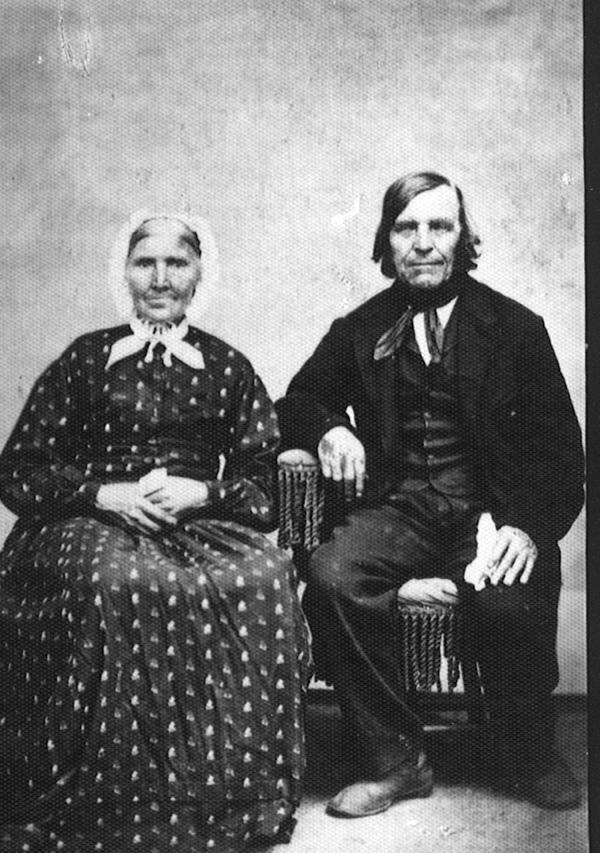
One of Berit’s grandchildren, from her first marriage with Thorstein, lived a couple miles away in Nerstrand. His name was Thorstein Veblen, a rebellious and witty academic who attended St. Olaf College in Northfield, Minnesota. He wrote several books that earned him a prominent name. One of those was an economics book, “Theory of the Leisure Class.” I believe it was meant to be satire, but most people couldn’t understand it.
That’s about all I know of Berit. As I mentioned, we visited the house she left behind in Vang, on Easter Sunday two years ago. Our son Bob drove us in the rented car past a barn and up a snowy hill where we saw Berit’s house on a gentle snow-covered hillside. There weren’t any tracks, except those of cats which darted ahead of us.
It was a one-room log cabin with an open, corner fireplace. It was the same design as we saw at the Oslo historical museum, the same design as the place we were staying. The construction was tightly fitted logs.
Evidently the corner fireplace was for eating and cooking and sleeping because of its central location. Cats poured out of windows about the place. Did I already mention the cats?
Berit’s house had been converted into a woodworking shop, with a band saw and other tools. Dust was everywhere and the old wooden board door was hard to open. Everything was natural wood, in this case black and gray, from age and weather. There were several other log buildings nearby and a post-WWII house down the hill a short space. Our friends Arne and Berit Nefstad told us the modern house had a man with the Bonde surname, but he was “special,” as I mentioned, and refused to allow us to visit him. Didn’t I think of my reclusive brother? He would have acted like that.
I have mental issues too, so I considered our inability to connect with the man to be confirmation we are related. We studied the house, took some pictures. I picked up a small stone. Bob put a piece of iron hardware into his pocket.
Next, Bob drove perhaps a quarter mile where we visited an 820-year-old stave church with pews that were inscribed with the name “Bonde” among many other names. A couple of men who unlocked it said the rocky land in the Vang area was unsuited to farming these days. We paid a woman to show us around the inside of the church. She was young, pretty, and chubby, but athletic. She led us up several ladders to the upper reaches of the building where we saw carvings of Norse gods in the principal wooden posts.
Norwegians seem to dislike war.
I am reading Joseph Heller’s book, Catch-22, and I admire the writing, also the format of the book. I cannot adopt his style. Not even close. The format might help me in my own attempt to tell my story, which I hope to tell to my own grandchildren. Yesterday I thought I’d write for my hippie friends back in Missoula, but now I realize we are all around 70 years old, and past most of our youthful folly, enjoyable as it sometimes was. When I wasn’t terrified.
I am afraid of war, hate it. Yet I ran toward the Marines when I was 20, to become a soldier during the Vietnam conflict. At that time I realized I was healthy and strong enough to join and that often we must go toward and face the terrors of our time. I still hate war, blustering, bullying, violence. At the same time I came to love my fellow soldiers, found beauty, friendship, even a Marine who became a father figure to me. Real brave people find how to help their fellow soldiers do what must be done. Often they survive. In my uncle Bud’s case, he did not.
And so Berit and Einar begat Tosten. Tosten and Ingabor begat Carl T. Bonde. (T for Tosten). Carl begat Buddy. Also Helen. Helen begat me. I begat this bunch of writing. Also three children who begat seven grandchildren. Who knows what’s next?
The house for Christmas was festooned with little paper stars hanging from strings in the doorway to the kitchen. Larger stars hung from wooden beads draped from the divider between the living room and dining room. Same for another double doorway to the front sunroom. A spindly fir stood in water, decorated with lights and ornaments, some older than I am. I’m 71. Penny and I have been married 50 years and almost one month.
Our house is like a museum, with old photographs and paintings, bric-a-brac, occasional musical instruments hardly anyone plays these days. That’s a pity, especially for the clavichord my brother Tom built in 1981, and the Martin guitar I bought for a thousand bucks in 2005. I sawed the top off a bongo drum to make the drumhead for an improvised banjo, back when I collected guitars from thrift stores.
Penny and Todd bought me a Deering banjo. Now I am learning to pick the banjo strings with thumb and index and middle fingers, helped along with a book on a music stand.

I still have a lot of darkroom equipment, especially expanded when the Billings Gazette stopped using silver processes to make its offset printing plates. I have two unused rolls of film, about 15 inches wide and perhaps a 100 feet long, slowly fogging away on a shelf in the darkroom. For a time when I worked as a pharmacist in Lame Deer, Montana, I had three heated four gallon developing tanks for film. I even had a vacuum pump from an offset press in an adjacent room so I could move the developer, stop bath and fixer from one place to another by switching a switch and opening a valve. At that time I bought 5×7 black and white film in 100-sheet boxes. My favorite was a kind of film that was orthochromatic, that is, insensitive to red light so I could safely work under the light of some red lightbulbs I got from my nephew from the Gazette. The bulbs came from Larry Mayer, the news photographer.
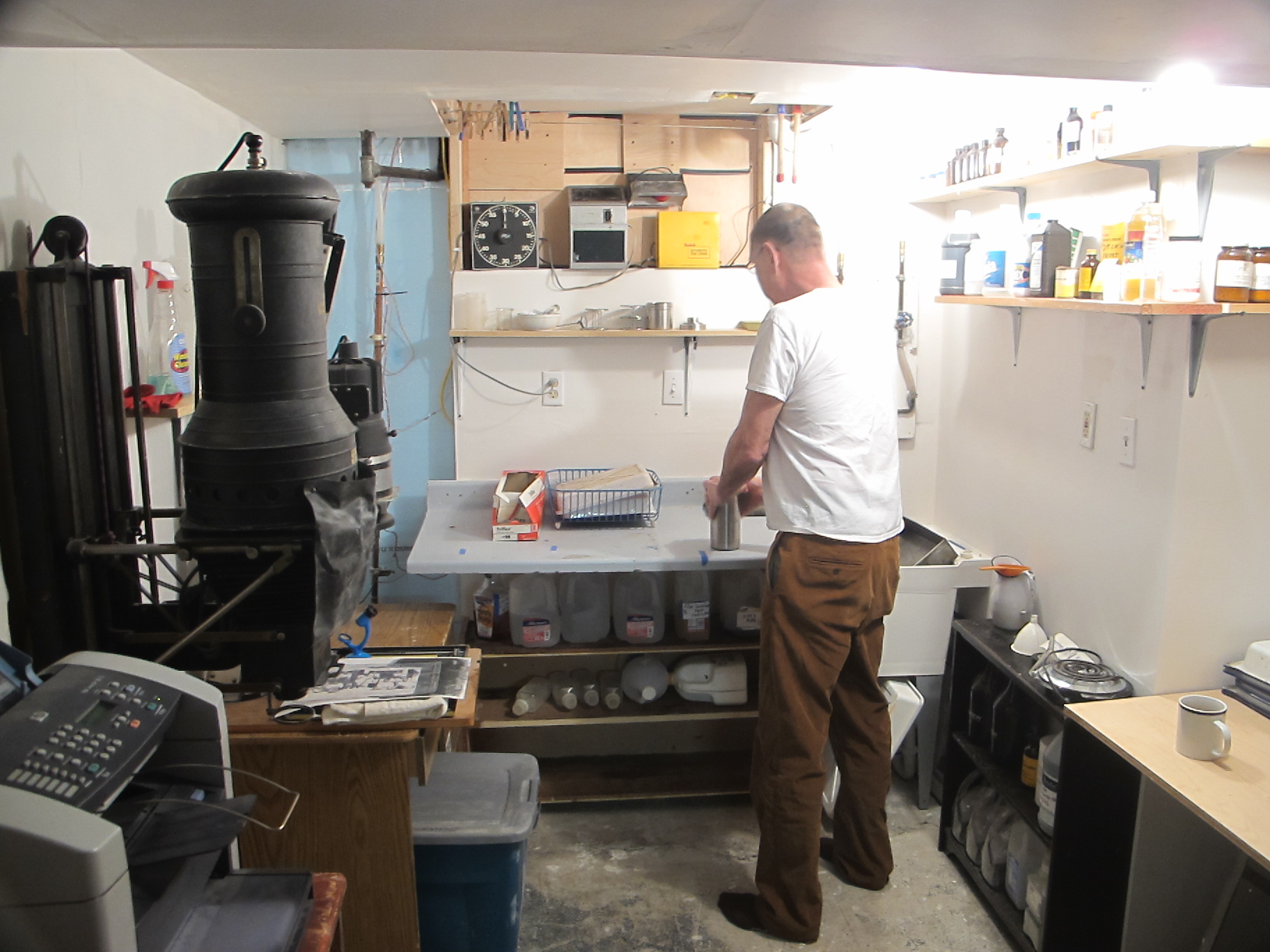
My nephew converted the Gazette from optical silver film to computer-generated laser images, direct to light-sensitive aluminum plates. No matter how much money he saved the Lee Enterprises company, the more Lee squeezed its editorial staff. Eventually all but a couple of reporters and a publisher remained. I expect in a few more years the era of paper printing will have ended.
With all that technology, the world goes on. I’ve heard the great physician, Oliver Sacks, explain that several phenomena we take for granted, i.e., perceived motion and passage of time, are constructs by our brains. In other words, when we think we see something moving, we are really seeing many discrete still images joined by a specific part of our brains, much like the separate images in a motion picture. The sensation of time passing is something like that, a construct of our brains. Dr. Sacks said he cared for patients whose bodies would stay still, as if frozen, for ten years at a time. Then for no apparent reason, the person would resume normal motion.
Time passage is an odd sensation, but most of us think little about it. I wonder about my grandmother, Ellen Bonde, whose son mysteriously was “missing in action” about two years after he enlisted in the army and was shipped to fight the Germans during WW II.
About a month after Ellen learned her son Buddy was missing in action, she received a second notification—a telegram—that his status was changed to “killed in action.” Her daughters ferreted out the information that Buddy’s ship had sunk in the English Channel and that his body was not recovered. But that was the extent of her knowledge. You could write the final chapter of Buddy’s life on a matchbook cover.
The reason for the paucity of information about Buddy’s demise was simple. The U.S. War Department kept the information secret. At first the army didn’t want to give the Germans any satisfaction or comfort, knowing they’d sunk a troopship with more than a thousand soldiers aboard. Another document, finally, after 50 years declassified, stated the large loss of life was a result of long-delayed rescue efforts and so reflected poorly on the United States and Great Britain. They thought it better to let sleeping dogs lie. Lie was the right word. “Cover up” is a better term, the words of an expose published by the History Channel for television.
Here’s what I know about my grandmother, Ellen Margaret (Wichstrom) Bonde. Or rather the story of her forebears. We visited a family historian, Bjorn Wichstrom, in Oslo a few years back. Bjorn was a man in his 80s, small in stature, dressed in dark blue suit and necktie. We encountered him at the Frogstetergren Restaurant atop a mountain near Oslo, along with several other family members. A replica of a famous painting loomed on the rustic wooden wall: The Birkebiener picture of two ancient skiers whisking the infant king of Norway under their animal skin coats. The ski tips made graceful curves upward ending in what looked to be brown golfballs.
Bjorn had the grace and charm of a scholar in the legal profession. He gave us candy and books as gifts. We gave him gifts from Montana, jars of huckleberry jam. Also some bead work from the Crow and Cheyenne Reservations. Mostly Bjorn sat quietly while the younger people conversed excitedly. In the end we agreed to meet several more times before departing Norway.
My grandmother had a photocopy of some letters she received from her Aunt Margaret, written October, 1907. These letters told about her ancestors from Oslo (formerly Kristiania).

The old man, Peter Wichstrom, moved to Norway from Sweden. He was a master joiner, a carpenter. He married a woman from Norway. Their child, the one who would become my grandmother’s grandfather, became a lawyer who worked for the government. He and his wife had 13 children.
One of those children would emigrate to the U.S. and marry. In LaCrosse, Wisconsin, my grandmother was born in 1887. She was one of four children. The family later moved to Valley City, North Dakota, where my mother told me grandma’s mother ruled the family with an ‘iron hand.”
The specter of a woman with a hand made of metal frightened and impressed me. My mother never met her grandparents, who are buried in an old cemetery in Valley City. I was with my grandmother when she bought a memorial head stone for her parents there. More than 50 years later I snapped a photo of the stone. Last year my wife and I visited the cemetery during the pandemic of Covid-19, but I couldn’t find the stone, although we walked all around and asked a man who was mowing with a tractor. He said he remembered seeing a headstone labeled “Wichstrom,” but couldn’t recall where.
Ellen’s parents died in Valley City, leaving a boarding house to her and three siblings to care for. Ellen was good at sewing, so she earned money to raise her brother and two sisters. Her brother Ralph was drafted into the army. He and his wife, Gertrude, moved to Billings, Montana, where he painted commercially and painted artistically. Outdoor scenes. I have one of his paintings, a woman riding a horse with pistol and lasso.
One of Ellen’s sisters died in the flu epidemic. His widower sent their child, a boy named Sigurd, to live with her after she married my grandfather, Carl T. Bonde. My aunt Corinne said “everyone liked Sig.” Near as I can tell, Sig lived with the Bonde’s only a couple of years.
One of Corinne’s sibs died of “scarlet fever” in 1919.

I don’t know of any photos of this child, dead at age three from an epidemic.
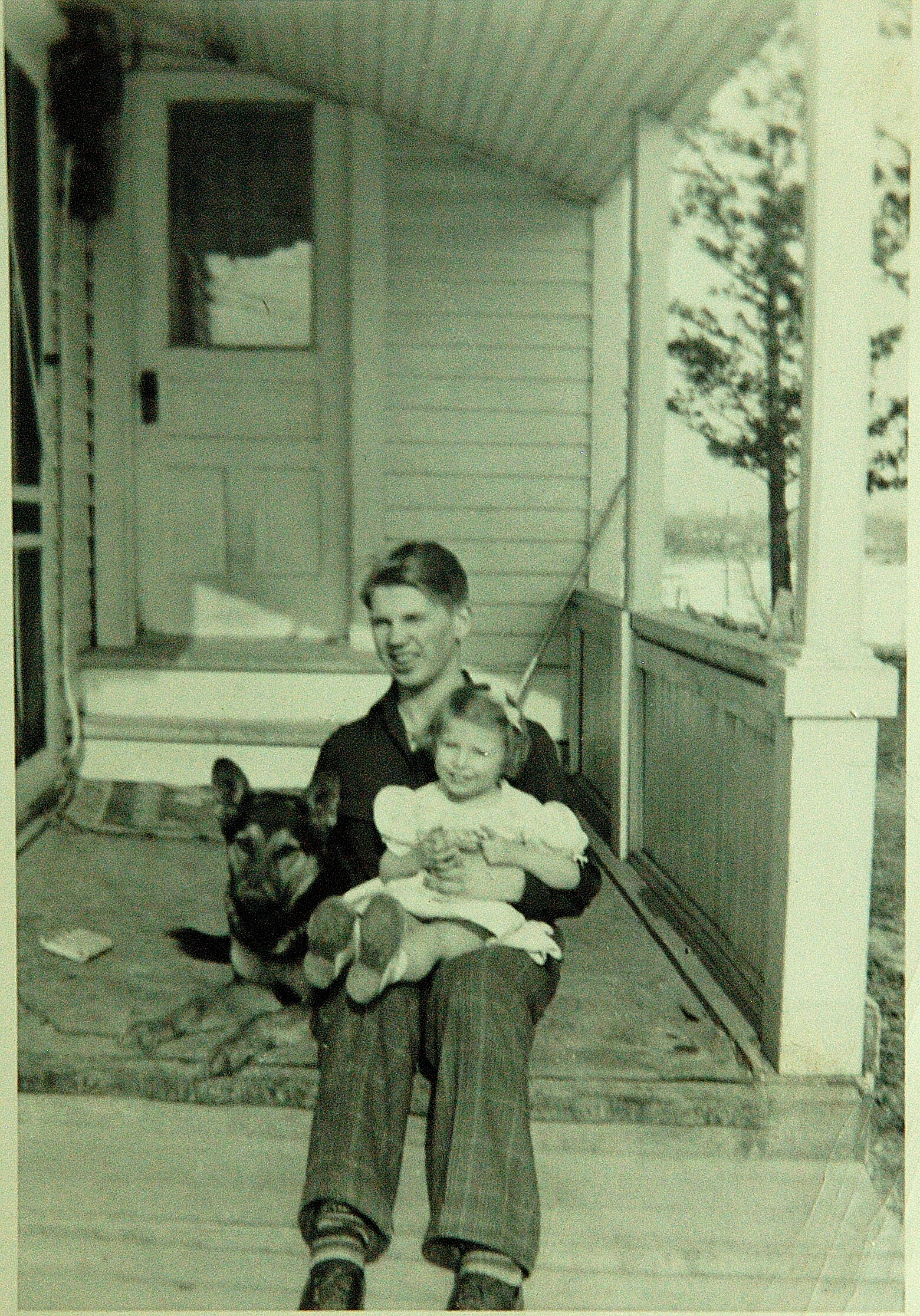
Grandparents’ home.
Kalispell is 120 miles north of Missoula, where my grandparents, Carl and Ellen Bonde, raised my mother and the rest of their family. Carl was a wholesale grocery salesman who spoke fluent Norwegian. He also wrote longhand with a fluid, looping style. Family lore said he learned from Dr. Palmer, author of a textbook about handwriting, called “The Palmer Method.” Carl’s skills in writing and speaking and generally being a “good guy” kept him working, even after he tried to retire.
Some in Kalispell, including grandma, made no secret they were racist against Native Americans. My mother’s high school annual had an ad for a business that said it catered exclusively to the “white trade.” My Aunt Corinne said grandma forbade her bringing home an Indigenous friend. These facts make me feel bad, but I think it’s important to be truthful. Especially now that lines are being drawn politically.
These days the Missoula city area spreads wide, lapping up against adjoining hills, in a valley west of the continental divide where three rivers intersect: The Blackfoot and the Bitterroot join the Clark Fork which flows north, then jogs east, then north again. Eventually the water skirts the mountains of the Lolo Forest somewhere in Canada, flows south again, and joins the Columbia River, thence to the Pacific ocean.
In the late 50s my brother Tom typed a cryptic message, folded and stuffed it into a tiny bottle with a cork stopper, and threw it into the Clark Fork River from the passenger seat of our car as we crossed the Higgens Avenue Bridge. He explained to me how his message would travel.
The much wider, fertile Mission Valley to the north, gives way to Flathead Lake and north of that, the Flathead Valley with Kalispell. The Flathead is a vast wetland fed by water from a variety of streams, notably the three forks of the Flathead River, draining the Bob Marshall Wilderness, Glacier National Park, and regions north in Canada.
Strikingly beautiful, the snow-capped chain of mountains east of the Flathead Valley is the Mission Range. It rises vertically from the valley floor and runs north-south practically from Missoula to Glacier Park. It has grizzly bears and hundreds of other shy species that are lesser known, less charismatic. The wild Mission mountain chain is separated east of that from the vast Bob Marshall wilderness by the Seeley-Swan Valley that runs parallel north-south.
These days indigenous Salish Kootenai people call the wide, wet, Mission Valley their home; and East of Glacier National Park, the Blackfeet Tribe owns a large area.
If Missoula were, arguably, the best place in Montana, Kalispell might be the most glamorous. (Feel free to disagree with me all you want. I haven’t lived in either city for at least 35 years.) Missoula has progressive, well-educated, liberals and Kalispell has tradition-bound conservatives (I am kind, no?). “Supposedly,” I should have said. However, I think conservatives like to think of themselves as “traditional.” Liberals like to think of themselves as “progressive.” Daddy was liberal; my grandparents were conservative. After Dad died, my mother was a Republican, although, she thought Nixon was over the top.
In the 50s and 60s Mother drove me on Highway 93 from Missoula to Kalispell and back scores of times. In those days before seatbelts and airbags I often lay across the back seat and looked at the mountains and trees. Sometimes in the winter we had to put on tire chains to make the top of Evaro Hill north of Missoula. I recall our old car sliding sideways off the highway on the ice. I don’t think the highway department plowed or sanded the road then.
Our houses in Missoula.
My parents, Robert and Helen, married in Kalispell in 1936. Robert sold a short story, “The Night of the Pig,” to Esquire magazine and he bought Helen a diamond ring with the money. They went to Missoula, where Robert earned a teaching certificate at the university, then moved to their first job as a married couple. At White Sulphur Springs, Montana. They lived in a rooming house everyone called the Castle. Today the Castle is a museum. A few years ago several of us visited the Castle. I found a copy of the magazine, Frontier and Midland, with another short story Robert wrote, “The Train.” H.G. Merriam published and edited Frontier and Midland.
Mother told me Robert couldn’t keep discipline in his class and would come home red-faced with anger. After the year’s contract expired, they moved to Great Falls. Robert taught journalism and writing at the high school for a few years until he took a job with the Great Falls Tribune as associate editor of a sister publication, the Montana Farmer.
My sister Carol was born there in 1939.
Robert and several friends and colleagues formed a trade union, the Montana Newspaper Guild. Joseph Kinsey Howard, Chick Guthrie, and Don Bosley were some of them. Also Dan Cushman.
The Struckmans lived in Great Falls through the World War II years. Carol said her uncle Buddy visited them there when he was home on furlough from training earlier during the war. She said he was fun and physical and affectionate. Also handsome in his uniform.
Buddy went missing Christmas eve, 1944. A month later Helen’s parents got a telegram declaring him killed in action. His body was not recovered, but they held a funeral for him in Kalispell.
My brother Tom was born in Great Falls in 1944.
Robert received a letter from L.C. Ford, Dean of the School of Journalism in Missoula, inviting him to find applicants for planned faculty expansion to accommodate the influx of ex-soldiers who would receive education benefits under the GI Bill.
Robert applied for, and got an instructor’s position. Once in Missoula, he taught courses in magazine writing and editing while earning his master’s in English. His thesis was a collection of short stories, titled Sundance and Other Stories. He was promoted to Assistant Professor of Journalism. He was also active in the Montana Newspaper Guild union, serving as a liaison with the university.
At first the Struckmans and several of the other new faculty families lived in the Strip Houses, or Married Student Housing near the university golf course. Within a year the faculty members moved to Fort Missoula, a defunct detention center for Japanese and Italian interned for national security.
According to fellow journalism professor Ed Dugan, Robert was handy with carpentry and renovated the fort’s officer quarters.
Across the street from the Struckmans and over a couple of houses was the Fiedler family: Margaret, Leslie, Kurt, and Eric and Michael.
Kurt was my sister Carol’s age. About 8 or 9 years old. Eric was Tom’s age, 4 or 5. Michael was an infant, born in 1947. I was born in 1949. Michael came to my first birthday party.
Carol and Kurt found ways to enter and explore nearly all of the buildings at Fort Missoula, including the hospital. Carol said they entered the building through a basement window.
Margaret Fiedler sewed a curtain for a production of “Peter Pan,” held in the Fiedler’s wide garage. Michael and I were too small to be involved, but we took part in our siblings’ Missoula County High School plays. Leslie did too, as did Kurt and my sister Carol.
Kurt had a scar on his forehead. Eric had a broken tooth. Eric and Tom wanted to be beatnik Bohemian types. When Kurt eventually went to medical school his mother was angry. Said he sold out for conformity.
Leslie taught English at the university, and at the Fort wrote Love and Death in the American Novel. The children quickly discovered that disturbing Leslie while he wrote would trigger him to put his foot through the closed door with much bellowing. He famously told the children to get out for “vigorous outdoor play!” Carol was afraid of Leslie.
I was not afraid of him because after our father died he brought us gifts from Greece. I remember him from the vantage of a small child, looking up at a kindly man.
I was a year old when Robert bought the house at 334 N Ave West in Missoula with a $5,000 loan from his father, Emil. Three years later our father died of cancer.
What should I tell about next? I don’t remember the first years in our house well. My father’s sister Marion convinced mother to send me to live with my grandparents in Kalispell until after Robert’s terminal illness and his funeral. Both places were important to me.
This was the era of the “absent Buddy.” He wasn’t in Kalispell and he wasn’t in Missoula, but he was terribly, tragically, absent from both. I encountered much left behind in his wake. Tears, sadness, but also physical things like games, toys, books, electronics, a camera, a radio, bullets and a rifle. Fishing gear. Oilstone and knives. The stuff a high school boy would leave behind, just as I left things behind for my own nephews, eventually.
My nephews found cooler stuff I’d left behind than the stuff I found from my uncle Buddy. I left behind a .32 caliber starting pistol that shot blanks only, two .22 rifles, both bolt action. Many pairs of handcuffs and leg irons, which I collected. Magical apparatus, including linking rings, trick dice, card tricks, tubes, wands, fake thumbs and fingers, silk handkerchiefs, special paint for the fake thumbs and fingers, special powder for gliding cards, production tubes for silks, fake pitchers for pouring milk into hats, books about Houdini, card tricks. (Eventually, one of my nephews gave me a small stack of the magic books.)
Then there was the movie cameras, darkroom equipment: trays, enlargers, easels.
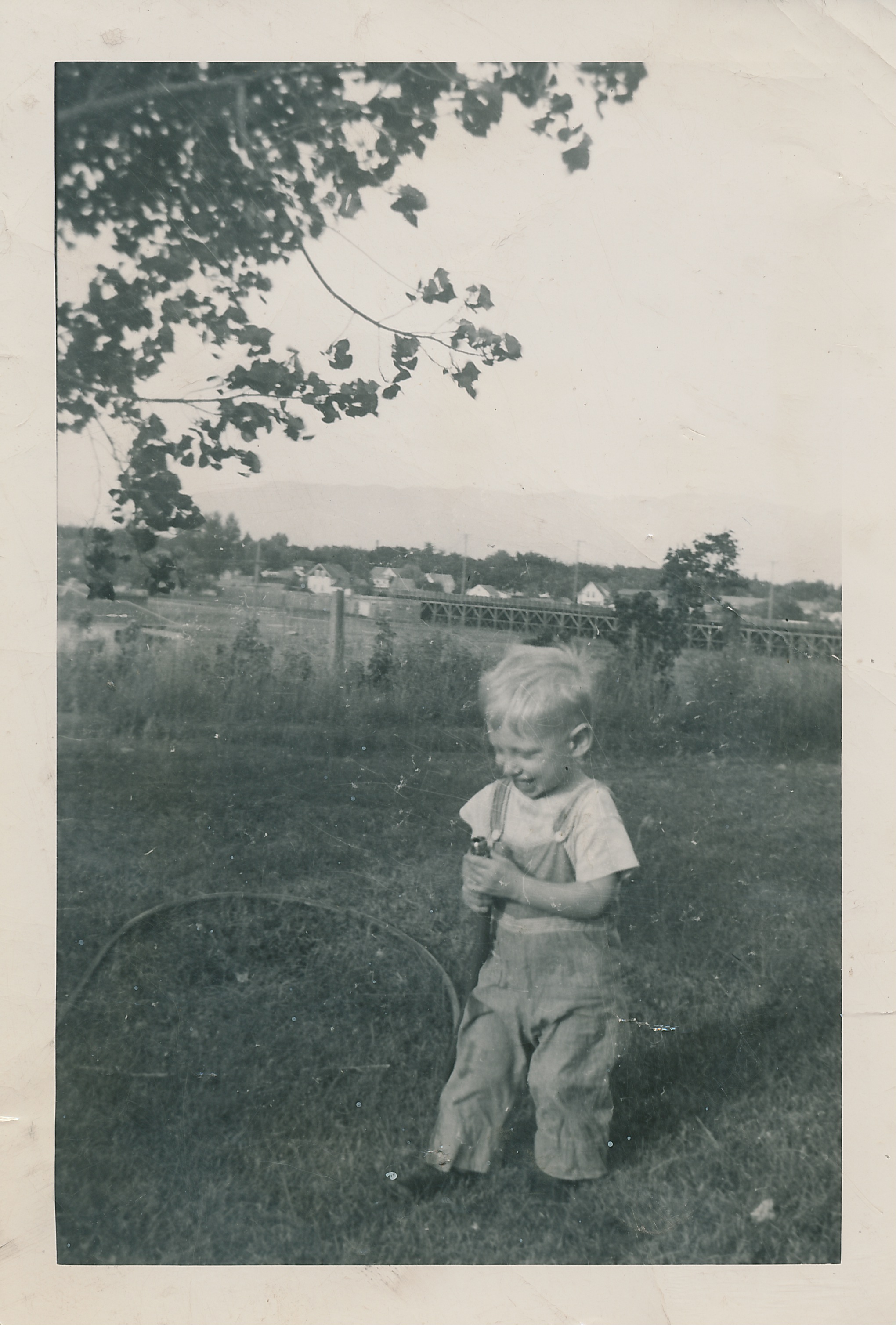
I’m getting ahead of myself.
I don’t know whether to tell about our house in Missoula where my mother helped me set up a darkroom that reminded her about Buddy’s photographic exploits just a 10-15 years earlier, or our grandparents’ on the southwestern edge of Kalispell. I spent a significant part of my early life at both places. Kalispell held mystery. Our grandparents had five acres with a barn, chicken coop, root cellar, storage shed, garage, and, of course the house where they lived. It had two stories and a cellar with dirt floor. The cellar was the best of all because lots of Buddy’s things were stashed on the foundation ledge beneath the floor.
My uncle Buddy’s given name was Carl Ralph Bonde, Jr., my mother’s only brother, who died in WWII, the “good” war. He was the darling of his family.
I knew about Buddy because mother spoke with animation and enthusiasm about him. Clearly, she loved him. No. She adored him. My grandmother Ellen’s heart broke when she found out he would never return from the war because a telegram from General Uhle of the U.S. War Department said he was missing and presumed dead.
After grandpa died from emphysema after a lifetime of smoking, grandma moved in with us, spent her last years at our house, looking sad, crocheting a tablecloth she never seemed to finish. She died the Winter before I graduated high school. She never knew any details of what happened to her son.
Even in his absence, Buddy impressed me.
When I was four or five years old my bedtime ritual included my mother rubbing my back, saying prayers. At the end of my prayers she encouraged me to ask a blessing for a list of people: grandparents, siblings, parents, like that. I asked why I should pray for my dad—after all, he recently died.
“His spirit is still alive,” mother explained. “So is my brother’s. We called him ‘Buddy.’ He died in World War II. He was one of the best soldiers. Private First Class.”
I could tell mother loved Buddy, loved him a lot, by the way she spoke of him as I lay on the smooth sheet with her cool hand gently rubbing my back.
I came to love Buddy too. I grew up playing with the things he left behind in the house where he lived. I read the books he left behind. Studied them.
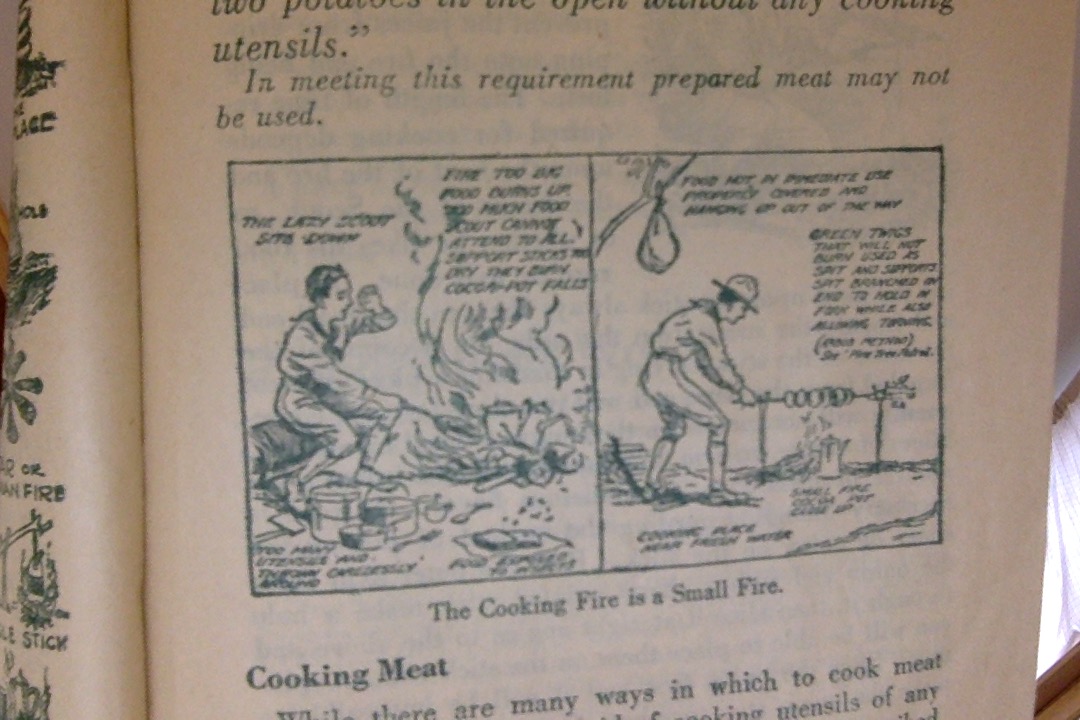
For example, he left behind his Boy Scout manual. The first aid section and water life saving section impressed me. It told how you could dive into the water to save a drowning person, diving deeply, then surface behind the victim, then lean him or her back and swim them to safety. It also showed how to break a hold if the drowning victim panicked and tried to climb on top of you.
Sure, I loved and respected my father, but I knew him only briefly and sporadically when he was home from work. That’s when I helped him by sitting on a board in the basement that he cut with a handsaw. When he played with farm animals with me by the heat register. When he told me stories. Well, one story. Goldilocks and the three bears, who, he explained, ate Wheaties. I admired his creativity, even when I was four years old.
Daddy spanked me if I played with his stuff. I painted his tools one summer morning.
Well, I had good memories too. Once he took me to his office at the journalism school at the university and I drew stairs with a pencil on a sheet of yellow newsprint. Daddy wore tweed suits and a newspaperman’s hat, that is, a fedora-style hat with modest brim and dent in the top.
That evening with my father I remember being at eye level with his pants pocket when he inserted the key into the brass lock of the journalism building. The western sun was setting and all appeared golden: Daddy’s hand, the brass key, the keychain, the lock, the sunlight, his brown tweed trousers.
I didn’t know then that he had cancer and wouldn’t live a whole year longer.
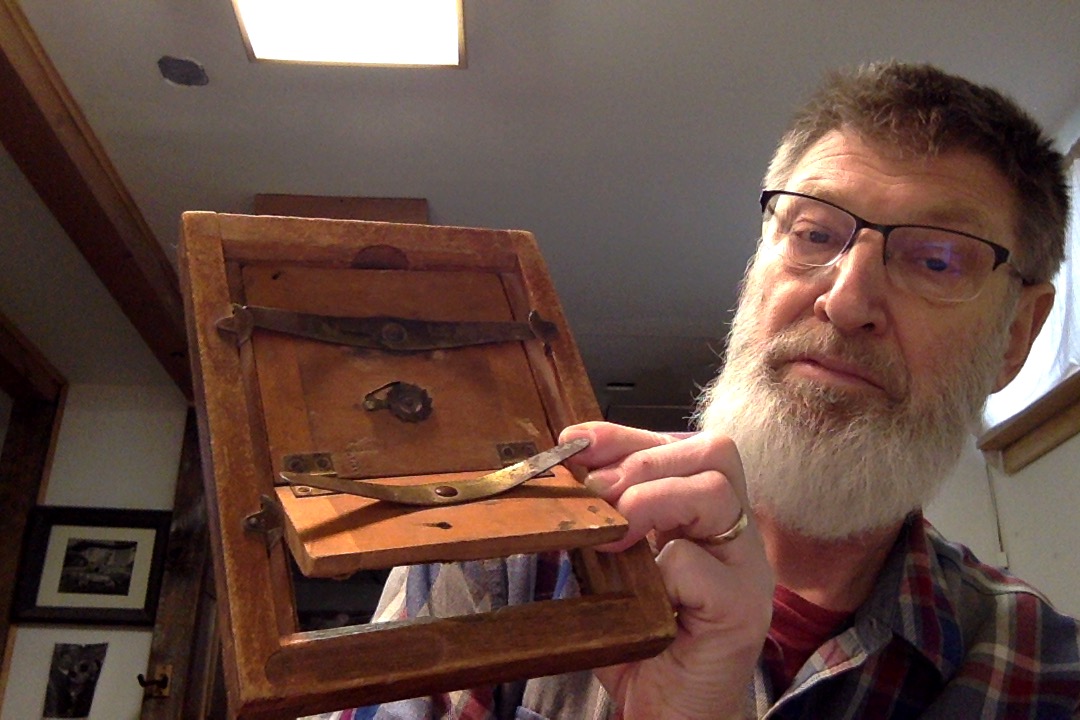
I was afraid of him. He spanked me a couple of times and he hollered—bellowed— at my sister Carol because she hadn’t washed the supper dishes. He looked scary when I gazed up at him and saw his red hairy nostrils. I got spanked when I peed on a college annual and another time when I bent a mechanism on his folding camera.
The adults sent me to my grandparents’ in Kalispell during my father’s last months of life. Even though I cried after I found out he was dead from cancer, at least I didn’t have to worry about getting spanked. I loved him, though. He let me help him and he told me stories and sang and played his guitar.
He was the last significant man in my life for many years. Certainly, family friends kindly visited after he died. Daddy was a singer in the Missoula Mendelssohn Club and helped found the Montana Newspaper Guild labor union. We had family friends of the university: The Fiedlers, the Browders, the Dugans, the Coes, the Bues. We had friends in Great Falls, but I knew them only from Christmas cards and letters.
My mother didn’t remarry. She had a teaching degree from Valley City, North Dakota Normal School and took teaching second grade at Jefferson School in Missoula the same year her husband died.
On the other hand, nothing ambiguous about how lovable was the absent Buddy, the darling of mother’s family. He was the youngest child, a boy, with three older sisters.
I was born in 1949. World War II officially ended four years earlier, and I never met Buddy. Although he died years before I was born, my mother’s memory of Buddy was fresh and she told me how she adored him. My sister is 10 years older than me and she remembers Buddy.
During our evening rituals and during times when she showed me her photo album I learned more about Buddy. He was an amateur photographer who developed his own pictures. I eventually found his equipment: developing powder in a glass tube, a wooden printing frame, some metal trays.

2/16/21
First the sadness. Then the happiness.
Marcian Killsnight was 75 when he recently passed. I think I have a photo of Marcian somewhere. I took pictures of many who came to my pharmacy in Lame Deer. Marcian was different. He didn’t visit me because of prescriptions. I don’t think he took any of our medications. As far as I know he had only one chronic condition. He was exposed to agent orange in SE Asia. Anyway, he was a Vietnam combat veteran, U.S. Army infantry. A true warrior. Respect.
I don’t know much about his history, except his sister was Roseanne Headswift, who died of Covid-19. I suspect Marcian also died of the same cause, but I don’t know for sure. He didn’t have money, but he was a true Cheyenne warrior and my friend.
We shared an interest in physical fitness, long distance running. I met Marcian soon after I started working in Lame Deer, in August, 1988.
The good news.
Some of you don’t know I have an adopted grandson, Lansing Stewart, whom I love like all my other grandchildren. Well, today is his birthday. He’s 18. He proclaims himself to be a man, and I think that is a mere formality. He has been a Crow man for years. Living life, working, learning, playing basketball with his team. He will continue to prosper!
I had a few minutes alone with Lansing prior to P. coming home, to tell him of some of my experiences that were formative. I knew I had only a few minutes, so I told him about the time a girlfriend called me to tell me she was engaged to marry someone else. I was 19. I told Lansing I had a feeling that I’d been kicked in the stomach. I couldn’t eat, I couldn’t sleep. My mother accepted a dinner invitation to a friend’s, Almeda Mann and Byron Brown. We ate meat that tasted like cardboard and I couldn’t taste it. I told Lansing how I dismissed her a few months later, then watched her walk over a bridge over the Clark Fork River.
Lansing played a bit of music for me, sort of a combination of lilting melody with harmony and disharmony that reminded me of how I once felt when I was 19 years old and in love. The music went on and on and I loved it. Sort of sawed at my emotions in a sweet-sour way; a thing Lansing said spoke to him. I can tell he’s been in love. I said I hoped he was in love now. Someone gave him a valentine’s day gift bag a couple days ago. I am not cynical, although I’ve felt some pain.
Then I told him how I joined the Marines and never went to war. I told him how a Marine major invited me to sock him and I complied with his request. Then I showed him a newspaper clipping that told how the US Court of Military Appeals exonerated me. Then I told him some “war stories” about basic training.
When in boot camp a bunch (platoon) of us were standing rigidly in a row. We were somewhat near another platoon with a black drill instructor. The DI asked one of his privates if he thought he was a “nigger.” Lansing giggled nervously. Then I told him how the same DI asked the private if he liked him. The private lied and said he did. “That means you want to fuck me?” asked the DI. Lansing looked shocked. But that’s how they talked, back in the day. They also used to call anyone who was a Native American, “Chief.” That made Lansing laugh. Lansing is Crow. Totally. He will wear that with pride to the end of his days, even if some asshole with a couple stripes on his sleeve calls him “Chief.”
I think I left the Marine Corps in better shape than I found it. I got the Major in a world of hurt for calling me a coward. I am here to testify that nobody who joins the military service is a coward. By definition, anyone who joins the military, especially during wartime, is brave. Not a coward. The prick is the one who calls such a person yellow. In fact, he is a liar.
I love Lansing. He is always going to be welcome at our house, with me. He is 18, a man, today.

My psychiatrist, Dr. Stiles, added a prescription, Rexulte 2mg/daily. Doesn’t mean anything to you? Good. It’s not meant to. The point is, I’ve developed a trusting relationship with my psychiatrist. I think I was lucky. I’ve been taking the additional medication and I feel improved. Of course, other aspects of my life have changed. (Turn, turn, turn.) They have worked in concert to make life bearable for me.
My oldest son Todd, and my spouse, P., threw in together to buy me a banjo. A typical 5-string Deering banjo. And a book. I’ve played other instruments and I know the importance of taking extra care and time to learn the fundamentals. This is what I’ve learned over nearly 72 years of existence on this planet. Glossing over the fundamentals of a skill is a grievous mistake. Don’t do it!
I spend a few minutes at a time, perhaps 3-5 times a day, working on the basics. I start by accurately tuning the instrument. I use an electronic tuner. Then I go to Exercise C. I’ve mastered making the G, C and D7 chords. Well, the G chord is simply strumming the strings without fretting any. The 5-string banjo was tuned to open G. I’ve played the guitar and the ukulele a bit, so I know how to make chords.
My time’s been spent picking individual strings in rhythm. That’s why I’m still on exercise C. In a month I may be ready to play my first song, “Boil Them Cabbage Down.”
I tried to quit Facebook, but I mourned missing my friends. Some folks I communicate with regularly are on Facebook only. Some I am quite fond of.
Therefore, I fell off the wagon.

I’ve auditioned for a play that will show on Youtube, or perhaps Fb. It is one of the Anton Chekhov plays, The Bear. Or The Boar. I will play the part of a retired artillery lieutenant, Grigory Stepanovitch Smirnov. I’ve been dreaming I’m him, a loathsome type, who has been jilted by ten women. He has walked out on a dozen others. For him, love is clearly dead. The show will play in March. It’s supposed to be funny.
Smirnov doesn’t play the banjo, but Steve Martin plays it wonderfully.
I’m also working on creating a set for a play for Delaney Hardy, an amazing young woman who wrote and directs a play, The Vote. It’s about Jeanette Rankin, and the vote is, no doubt, the vote she cast, in opposition to the entire U.S. House and Senate, to declare war on Germany. I haven’t had a chance to read her play, but I’ve read about Ms. Rankin, from (near) Missoula, Montana.
My dear departed friend, Michael L. Fiedler, knew Jeanette Rankin, who died in 1976, in California. Michael’s older brother Eric took care of Ms. Rankin for a time in her dotage. I’m thinking that was a time when she lived in Georgia, but I’m not sure.
1/26/21
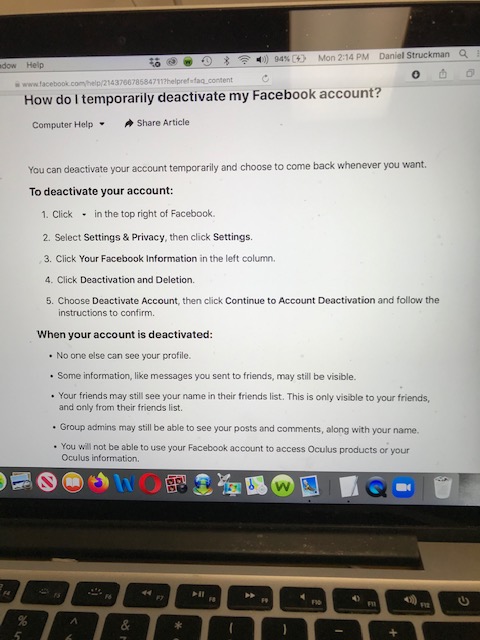
Yesterday I deactivated my Facebook account. I usually spend hours scrolling through my 2500+ friends’ posts, reacting, posting comments, so this is a big deal to me. I did this to see what will happen. Also, I’ve been feeling poorly these days, even before I got my Covid immunization, which made me feel a huge amount of fatigue. I took to my bed for a couple days.
I felt depressed, so I reached out to my excellent psychiatrist, a football fan, my coach. He responded with a prescription for an amazingly expensive pill that worked well for me before. I have a followup appointment in three weeks.
Even getting a speedy reply to my phone message has made me feel pretty good.
If you want to stay in touch with me, follow my blog, insearchofbud.com
Here are the usual photographs from my morning routine with Gunther, the love of Penny and my lives.


Our 50th anniversary is this Saturday. I bought her a ring and pair of earrings, festooned with Yogo sapphires. I believe we will stay home, Covid-style. And go to bed early, 71-year-olds.
I hope to add to this narrative in a regular fashion.
I’m reading The Periodic Table, by Primo Levi; and 600 Generations, by Carl Davis. I recommend both, especially the one by Carl Davis, a new work about the archaeology of ancient people in Montana.


 insearchofbud