Northern Cheyenne Service Unit
August 15, 1988, I had orders to report to David Means, Service Unit Director of the Lame Deer Clinic. Lame Deer is 106 miles east of Billings, Montana, my home town.
I drove east. I listened to National Public Radio. The top story was the fires in Yellowstone National Park; the Army National Guard was called in to fight the blaze. Even at six, the air in Billings was smoky. Cool and smoky.
Near Crow Agency, I stopped at the restroom at the Custer Battlefield trading post. On the stall wall, I saw graffiti referring to two Cheyenne men on death row in Deer Lodge for killing a Miles City man. The men were Lester and Vern Killsontop. Years later I would become friends with their sister, who helped get their sentences changed to life in prison.
Columns of white smoke ascended the sky on the eastern horizon as I resumed driving our old Ford wagon up the hill on Highway 212.
In about a mile, I saw four dead horses piled on the shoulder of the highway. Fire burned the grassy fields of the Little Big Horn Battlefield. Pieces of burnt wooden fence posts hung from the taut barb wire. Some chunks were still smoking. Some of the guard rail posts were aflame. Here and there, the field was blackened to the edge of the highway.
Much further on, derelict cars were aligned crazily near houses along the highway between Busby and Lame Deer. A tire on a post had the words, “Arrow Salvage” in white paint.
I was apprehensive. I could see in the distance where fires burned in the wooded areas near Crazy Head Springs east of Lame Deer.
I reported to David Means, a man I immediately admired. I told him I hated the carpet in his clinic. Without missing a beat, he said it was due to be replaced.
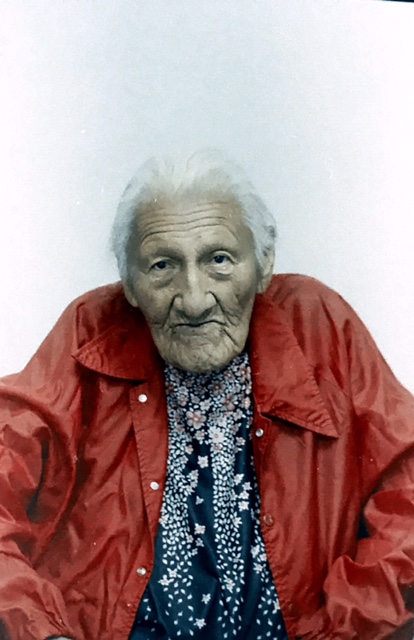
Larry (Rabbit) Hiwalker
Next day, Lame Deer had a feathery blanket of ash from forest fires at Crazy Head. I crawled out of my sleeping bag in a government three bedroom house, vacant, my home for the week until the government provided me with other quarters.
I didn’t know that eventually I’d commute the 106 miles between Billings and Lame Deer daily.
At first, a daily commute was out of the question, because in 1988 we had only the old brown Ford station wagon with close to 150,000 miles on it. The cost of fuel would have been too much.
That night, the streetlight on the cul-de-sac illuminated the ash as it fell. Looked like snow drifting to the street.
I tracked, through the ash, the three or four blocks next morning to work at the Lame Deer IHS Clinic pharmacy. Mine was a new position; all the work used to be performed by one pharmacist. Turns out they had recently hired two additional doctors so they needed more support staff.
When I first arrived, Rabbit Hiwalker asked me how I liked Lame Deer. When I responded with enthusiasm, he gave me a sideways look. “What religion are you?”
In Lame Deer, the government houses were dwarfed by huge Mormon, Catholic, and Baptist churches. I laughed.
Lame Deer is a beautiful ghetto. Frank Ridgebear told me facetiously how he grew up playing with sticks and broken glass. My memory tells me the streets are dirt, no sidewalks, no lawns. Houses mostly need repairs and paint. Poverty is grinding.
However, my view of the reservation was greatly influenced by the clinic, the way people came in, looking their best, acting their best. I quickly learned the word “aho” meant thanks, and I heard it frequently every day. I found most people to be gracious, intelligent, funny, and generous. That’s not to say that some were not racist, ignorant, and angry. Probably the same as any other Montana population.
One uncommon quality on the reservation: patriotism. Volunteering for military service was common, even during Vietnam.
Lloyd Yellowrobe, Vietnam veteran, raised and lowered the American flag daily.
The countryside looked gorgeous to me as I drove, and I enjoyed studying it as the seasons changed. Velvet green changes to gold, then white. Beautiful skies, sunrises, sunsets. Clouds.
My favorite was June. The air is cool at 6 a.m. and two hours to work is an easy drive through fertile country, Eastern Montana, hills, sunrise, traveling almost exactly east. I never got tired of the drive, and I still feel intimate with every mile. Something would catch my eye one year, and I’d photograph it the following year on the same day of the month. Or try to.
One scene that caught my eye: cowboys gathered their horses in a round corral as the sun rose behind them. The light caught the dust billowing from countless hooves. No camera, but the following year I was ready. The scene didn’t repeat, so I got off the road to drive up the ruts to a nearby butte. A twin butte, really, because I could catch the early morning light as it bathed the butte with orange light. I kept the photograph on a bulletin board in my office and people came in to visit and talk about the butte. I’ll bet several people were conceived there on its sandy summit. I don’t remember what the butte was called, but I returned again and again to photograph it. Always it looked different, depending upon the weather, clouds, time of day, whether I was in a hurry to get to work.
It’s all Indian country from Crow to Lame Deer; houses built by the government set back from the highway, connected by straight unpaved roads. Sometimes you’ll see a cluster of teepee poles leaning against a house or in the crotch of a spindly tree. The houses rarely have garages or other outbuildings. One of my friends painted a teepee on the side of his house. He said tourists often approached to take pictures, often asking permission first. He worked as a custodian at the Busby school and I have a picture of him. Somewhere. Ronald Glenmore. He was an artist. I gave him most of the photographic prints I made of tribal elders. I believe he intended to display them at the Busby school.
David Means, Service Unit Director
My boss, Dave Means, was American Indian Movement activist Russell Means’ distant cousin. Dave had the rare gift of quiet humor and self control that made him well suited to his demanding job as Indian Health Clinic Service Unit Director. He held a position of power and autonomy, but he had to answer to the clinic staff, the townspeople, and the Area Director. A balancing act, he told me.
I remember sitting in his office at the clinic. He told me he was successful because he studied theater at Montana State University in Bozeman.
We liked each other immediately, and he is the one who promoted me to be the Chief Pharmacist at his small clinic in 1989.
I’ve gotten ahead of myself.
At first I worked for another Chief Pharmacist, an officer named Dave Miller, who quit shortly after I told him I would wait for him to leave, then do everything my own way. Dave told me that Lame Deer patients lie about ninety percent of the time. He truly didn’t like Indians. He told me so. I felt sorry for him, but he had to go.
Once Miller transferred out, like three months later, Dave Means gave me Dave Miller’s job.
One of the first things I did was to get a hammer and nails and lower all of the artwork in the clinic waiting room from near the ceiling to eye level.
The clinic had been built in the 1960s, modern in its day. It had hideous orange and black carpet and orange walls. In 1996, it burned to the ground and I cried when I heard the news. I was in denial until I drove out that Sunday to see for myself.
Thirty years ago in Lame Deer, most of the doctors and nurses of the Indian Health Service lived in a neighborhood a couple blocks from the clinic. The rent was about $200 a month, but the price of electricity to heat the houses was high in the winter. Anyway, I needed to commute the 106 miles from Billings to Lame Deer because nobody in my family wanted to move from Billings. They had jobs. They were in high school.
In the beginning, I drove old cars that broke down. The last forty miles the road between Crow Agency and Lame Deer was twisty and narrow. In the winter, the road sometimes was icy. I did a 180 once, when I lost traction. Scared me, so I asked Dave Means for a place to stay in Lame Deer during the week, especially in the winter. Dave asked me to write a letter to the housing committee.
The housing committee offered me a basement apartment at the fitness center for about $100, which I took. It had one bedroom and a combined living/dining/kitchen room. Oh yes, a bathroom. My apartment was right beneath the fitness center treadmill. I remember Dave Means running on it when I went up to complain that the light fixture was about to come loose from his incessant “clomp, clomp, clomp.”
There were two basement apartments, the other was occupied by a Bureau of Indian Affairs policeman named Mike. I can’t remember his last name. Later, Mike had a roomie named Lonnie Spang, a young man who could play the guitar expertly. I let Lonnie move in with me when Mike kicked him out. Lame Deer has a truly socialist style society. Other times Lonnie stayed with the school superintendent’s family.
I was glad to move to the furnished basement place with a load of stuff that I carried in our old volkswagen van. Ultimately, the field mice that played in the walls near my bed drove me out. Turns out, Policeman Mike left a box of commodities, with split peas and such that was feeding the mice, in the laundry room.
This was 1989. At first, when I wanted to use a telephone to phone home in the evening, I had none, so I walked downtown. The “big store,” the IGA, had a pay phone out front, but there was quite a line of teenagers standing there to use it. I asked around and the only other pay phone was at the police station, so I walked over there. In the vestibule I found no competition. I called home.
In those days the Rosebud–Bighorn county phone book was thin. Even thinner was the Lame Deer section. Most of the numbers were tribal and federal government agency listings. The entire town, of perhaps twenty-five hundred people with Dull Knife College, BIA, IHS, and the Northern Cheyenne tribe, had only enough phone listings to make up one page (front and back) plus half of another. In fact, nobody knew for sure how many lived in Lame Deer. My twenty-five hundred-person figure was a wild guess. I guessed the electric company records would yield the best information.
Here is how things worked out: In 1990, I ended up quitting my job in Lame Deer when a staff pharmacist job at the hospital at Crow Agency opened up. Cut my commute almost in half.
David Means said when I told him I was quitting: “Well, fuck you then. There. I said it.” Then he smiled and we shook hands; he wished me well.
During the next five years, the BIA redid the road between Lame Deer and Crow Agency, straightening and widening. In the meantime, Dave phoned me to see if I wanted to return to Lame Deer to work in the pharmacy again. Well, I did. I missed the people there. So I quit the hospital at Crow Agency.
The Lame Deer clinic had changed. More patients, more doctors, three pharmacists and two technicians. Lonnie Spang had moved to Billings and worked at Willard’s car repair shop. I hardly ever saw him again.
Dave Means was still Service Unit Director, but about a year later, the clinic burned to the ground. Next day, we set up a makeshift clinic temporarily in some tribal houses.
A few months later, Mr. Means was arrested on a Friday afternoon on a charge that he had once, years before, molested a young lady. Dave protested his innocence. Turns out she had been to one of those therapists who help bring forth “repressed memories.” Although the charge was ultimately dismissed, Dave had to go to jail and he suffered damage to his career, his pride, his reputation, and probably to his health.
Soon we were taking up a collection to buy Dave clean socks and underwear for jail. That’s what you did. People in jail ate a lot of chicken pot pies. Turns out that being arrested in Lame Deer isn’t even a very big deal. Many adults on the reservation have been arrested at one time or another because of changing tribal politics. Oh, and before that Friday, when they took Dave away in handcuffs, Dave lived in the same basement apartment where I had once lived. You know, the place with the mice? I don’t know why he lived there, perhaps because of the chaos that ensued when the clinic burned.
By then I commuted the 106 miles five days a week. When I finally retired, we had bought and worn out a Ford, three Nissan Sentras, three Honda Civics and a BMW. Well, the BMW had almost 300,000 miles on it and still ran fine. Almost fine.
Dave still lived near Lame Deer, and he commuted five days a week to the IHS Area Office in Billings. Many mornings we waved to each other as we headed our opposite ways. He usually drove a little white pickup.
The clinic fire’s cause was never certain. My friend Lloyd Yellowrobe may have stacked too much rubbing alcohol near a faulty light fixture in the supply department. On the other hand I always thought I had left the coffee pot on through the weekend. However it happened, the clinic was a total loss. All of the medical records burned. Monday morning we met at the Lame Deer Boys and Girls Club. Linwood Tallbull offered his building to the pharmacy.
I had always been on great terms with Linwood, Community Health Representative Director, and he and his people moved out of a nearby double-wide trailer during a busy morning and allowed our pharmacy and administration to move in. The physicians were not so fortunate. They had to work a block away at first. We dispensed our first prescription within 48 hours of the loss of the clinic. Oh, I think I dumped out a bottle of Tylenol and put the prescription in there.
Remarkable how things change. I ended up lending Dave Means, the guy who hired me twice, several hundred dollars for his legal defense. Like I said, the charges were ultimately dismissed, but he had been replaced by another for Service Unit Director. A string of them, actually, before they found a strong woman, Debbie Bends, who has held the job the last dozen years. Dave eventually showed up at the pharmacy and repaid me.
Lloyd Yellowrobe got into a car wreck, broke his neck. He pretty much healed up and takes care of his grandchildren over at Busby.
Linwood Tallbull was replaced as CHR director, but now teaches traditional medicinal botany at Chief Dull Knife College, the best place to get a meal in Lame Deer. I don’t know what happened to Mike the policeman or Lonnie Spang, as I haven’t seen either one of them in ages.

Ray Brady
Ray Brady was one of the healthy people who used to visit with me at Lame Deer clinic pharmacy. We often spoke of his service in the Army during the World War II “Battle of the Bulge,” the bitterly cold winter when Hitler tried one last time to conquer France and, probably, all of Europe.
Ray Brady served during the time my uncle Bud was killed in action. Both of them had been transferred to Camp Shanks, in New York, before going overseas to England.
Mr. Brady had charisma and was neither needy nor overly profuse. He did enjoy a conversation and he was a man of the world.
Sadly, Mr. Brady died about five years after I retired from the Indian Health Service.I bought an app for my phone so I can scan color negatives to make color positive prints. I don’t know if it’s the best of its kind, so I’m not going to advertise here. The quality of the positive image is not excellent, but fairly good. Colors are approximate and the resultant image doesn’t have anywhere near the detail.
However, I quickly ran to my collection of negatives. I keep them carefully filed away with notes on many of them. My photo prints are almost useless because they are jumbled together, thousands of them. Moreover, I’ve given away most of the good images so I end up with the blurry, boring, crappy ones.
Betty Nora Flying
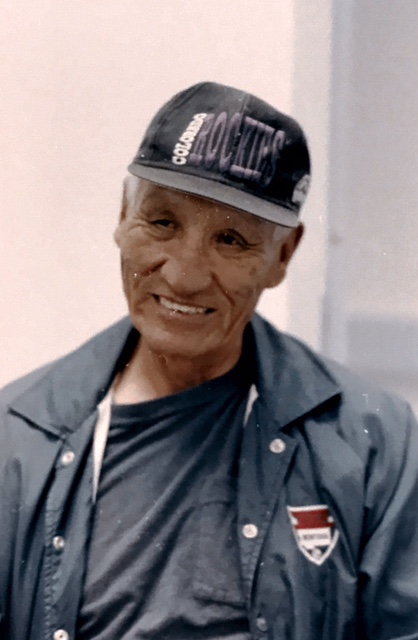
One photo image I liked, particularly, was one of Betty Nora Flying. She lived to be an old woman in a bright little blue house set way back from the road between Busby and Muddy Cluster on highway 212 to Lame Deer. I knew her kids.
In fact her daughter, Mary Jane Flying, was our first pharmacy technician at the Indian Health Service clinic in Lame Deer. And this was in 1988, because of the generosity of her boss, Linwood Tallbull. He allowed her to come help us.
At first, the pharmacist at the time, Bill Schuman, wouldn’t let her into the pharmacy itself, but kept her outside the door for her to dole out OTCs like Tylenol to those requesting them.
Bill worked solo to prepare and dispense the prescriptions. He prepared anywhere from 50-100 prescriptions daily. He was known for breaking telephones and strewing pills when he became enraged, although I never witnessed him doing it.
Maybe you don’t know how the IHS works. If you do, skip this paragraph. Enrolled natives can receive care, including prescriptions, doctor and dental and optometry visits, free of charge. It is pure socialized medicine. The drawback is the clinic is always poorly funded. Another drawback is the clinic is often packed with seriously ill patients seeking care. However, the mission statement has always been to elevate the health of the indigenous people to the highest level possible. Many of us tried as hard as we could.
Anyhow, Bill Schuman soon transferred to the Coast Guard and I eventually joined the IHS and ran the pharmacy, so I asked Linwood to allow Mary Jane Flying to work as a technician inside the pharmacy. Her job was to count out and pour the medicines into bottles after the computer spit out the labels. Then I would check Mary Jane’s work and give the medicine to the patients. We could get the prescriptions done more quickly, the two of us. Mary Jane was a fast learner. She was older. She liked Elvis, Texas Chainsaw Massacre movies, and Ozzie and Harriet.
Soon, Mary Jane asked for my pharmacy name tag so her mother could bead it. Of course I gave her $35 for her trouble. Then I had her make some moccasins for my newborn grandson, Josiah.
That’s how I became acquainted with Betty Nora Flying, Mary Jane’s mother.
She was willing to sit while I photographed her, and I took many photos.
Lloyd Yellowrobe
I have barely started telling about Lloyd Yellowrobe, a hero to me. Lloyd, a decorated Vietnam veteran, was honored at the Ashland Labor Day Powwow.
I remember a time twenty years ago when a gathering of Lloyd’s family and friends cried while a priest administered last rites to Lloyd. He was in Billings in intensive care after his pickup truck accident. Lloyd’s mother passed a box of tissues to me. Must have been a miracle that Lloyd survived. Esther Yellowrobe, another person I hired to be a pharmacy technician, told me all about it.
I don’t remember the first time I met Lloyd but he has always been a friend to me and he made me feel like I was working in the right place once I started at Lame Deer. Was sort of a shock for a city kid like me to suddenly start working in a rather remote Indian Health Service clinic. Lloyd was the supply man for the clinic. He supplied the pharmacy over-the-counter medications by the case.
Lloyd proved himself to be an artist. He drew a caricature of his nephew, “Rabbit” Hiwalker, that looked like a Playboy bunny. I didn’t know that I’d be destined to go on adventures with Lloyd, or that I’d keep cedar, a traditional medicine, in the pharmacy for Rabbit’s use.
Here’s an example: Lloyd always claimed to know about a huge meteor crater out toward Ashland, east of a prairie dog village. He and I drove there once, right after work, tracking up and down red dusty roads, even finding a sinkhole in a hayfield that had a log poking out, apparently to let whoever was cutting the hay know it was there. We ended up locating an irregularly shaped valley, not too convincing to me. I never did believe it was a meteor crater, although Lloyd said he saw it in an aerial photograph.
On our way back to town Lloyd had me pull over onto the shoulder of the highway, over the top of a hill, on a downhill slant. “Take your foot off the brakes,” Lloyd said. To my amazement the car backed up the hill by itself, as though a magnet were pulling it. I figured that was some sort of optical trick, but hey. Why not believe it was a magnet? I could believe in the magnet long before I’d believe in the meteor crater.
Another time Lloyd and I looked for the buffalo herd up by Crazy Head, but didn’t find it. Still another time Lloyd took me up on the big plateau on the Birney divide to the buffalo jump. We walked around down below and Lloyd found a buffalo bone with tool marks where someone had scraped off the meat. I was always impressed by the respect Lloyd had for the ancient sites on the reservation. Then we traveled onward, on the dirt road near the abandoned car maybe 200 yards down a hill.
I might not have thought much about it, but Lloyd pointed out this car at the bottom of a ravine. Lloyd knew the story of how the car got there. Did he put it there? He said he saw it as it coasted down, never to rise again. For all I know the car is there today.
That same adventure he showed me Wild Hog basin as we approached a lookout tower. Lloyd’s father used to watch for forest fires from the tower. The tower was the same kind of Chicago Aermotor Company structure that stood atop the hill near Crazy Head Springs. Those were happy times. I don’t know Lloyd’s father’s name, but his mother was Martha Wolfname. I went to her funeral in Busby when she passed away.
Lloyd lived in a blue house in Busby in those days. One Saturday we went fishing in the after bay at Yellowtail Dam. Didn’t catch any fish. In fact I don’t think we ever did catch a fish, but Lloyd pointed out a red-tail hawk to me.
Because I commuted daily to work I was free to explore other areas in the vicinity of Billings on weekends and holidays. Sometimes our kids and I went up in the Pryor Mountains.
Our daughter Clara and I weaved our brand new ’89 Nissan Sentra sedan through the sharp rocks atop East Pryor Mountain. I had gotten through before with a VW, even though the sign recommended a 4WD. The day was gorgeous! Warm, blue sky, lots of June wildflowers. In fact, vast fields of blue wild iris.
I was familiar with this East Pryor Mountain ridge. One Thanksgiving, I led a bunch of nephews, my son Todd and his friend Ian, to walk through the snow twelve miles (some said it was more than twenty) to look for Mystic Cave. At least one of my nephews doesn’t speak to me to this day. We didn’t find the cave, but we did manage to track through deep snow back to the cars. We escaped with our lives, but we suffered. Todd called it a “death march.”
Mystic Cave has long held a fascination for me.
Clara and I wanted to find Mystic Cave, one of the best-decorated limestone caverns in Montana. You have to drive a couple of hours from Billings, half of it on dirt roads, then up on top, past Big Ice Cave, then the road gets sketchier and more rugged. You drive on a broad ridge through the BLM wild horse range.
At the far end of the East Pryor ridge we eased down a steep hill but crunched against some sharp limestone. The hideous crunch didn’t sound good, so I set the brake. On hands and knees on the rocky ground I reached beneath the engine.
Hot black oil. Turns out we busted the oil pan. We were at least 30 miles from the nearest gas station. You could go ahead toward Lovell, Wyoming, or back toward Pryor or maybe Bridger. Obviously, we were stranded. I felt almost panicky.
It was maybe three in the afternoon, and what could we do? We walked back up the way we came on the ruts perhaps a quarter mile when we saw a 1950s-era Willys Jeep loaded with four people coming our way. This was barely a road. The jeep was open on top, painted bright blue.
Bill Thormahlen
I waved at them. When they stopped, I explained our situation to the driver, an older man with a big white beard. He said he was taking his three friends on a tour, but he would come back around and get us. I felt like we were getting the brush off, but heck. His Jeep was full. I could see crying wouldn’t help! I wanted to ride on the spare tire or running boards.
We were alone again, so we walked back to the car. Damn! I thought.
Oh well, it would take hours for the bearded guy to return, so we might as well look for that cave. Clara and I hiked down the road, then combed the timbered top of the ridge. We didn’t find the cave.
An hour or two later we returned to our car, only to find a second car. A Jeep Wagoneer.
This time It was not the bearded man, but another guy, who said he was a pastor from Billings. I explained our plight again. He offered to take us to Billings and I accepted.
An hour later we were back on the main Forest Service road descending from East Pryor Mountain, when a couple of deer ran in front of the pastor’s car. Right behind the deer was a six-passenger pickup with a familiar bearded face behind the wheel. We stopped and I got in with the bearded guy. Clara stayed with the minister for the ride to Billings.
My rescuer was the white-bearded man who had been in the blue jeep. Hearty man named Bill Thormahlen, and he was with another man. They had a five-gal. container of oil and an ice chest with sloshing water and lots of beer. The other guy drank a beer and Bill drove. Told me he had just returned from Alaska where he could fix anything with baling wire, silicone calk, and “hunnert-mile-an-hour” tape. I made a mental note to carry those three things always.
Yes, I felt sheepish that I had not trusted Bill to return, but he didn’t seem to notice. Instead he told me some of the recent history of the Pryors. For instance, how they had long ago used a bulldozer to create swales on the surface to catch snow and moisture.
When we arrived at our disabled Nissan the other guy, at Bill’s direction, took a leatherman tool to remove the plug to finish draining the oil. Then he closed up the break in the oil pan. I’ve since wondered how. Then he took a bunch of the silicone calk and applied it to the break. Bill said to wait 10 or 15 minutes for the silicone to set.
Then he put five quarts of oil into the Nissan. He handed me a smaller, plastic oil container that would hold perhaps a gallon. He told me to check the oil halfway to Billings and add more if needed.
Before they led the way out, I offered to pay Bill for his time and trouble and oil.
“Money?” He laughed. “Ha ha! No! No money!” he repeated, laughing again. Again, I made a mental note.
The silicone repair lasted all the way to Billings. I checked the oil in Pryor, but the Nissan didn’t need any. It did leak a puddle of oil after I parked in front of our house, but I added some more oil and was able to have the oil pan welded the next day.
I wrote about Bill Thormahlen’s heroism in my magazine, The Portable Wall, and sent Bill some chocolate candy at Christmas. I titled my piece “The Code of the West.”
In 2019, I went to Bill’s funeral service in Billings. I told Jean, his widow, the story of her husband driving up to rescue us on East Pryor Mountain. He lived to be 85, and his family told about his life as a cowboy and truck driver, but mostly about his being a generous, good-natured man.
Eddie “Snow Bird” Alden
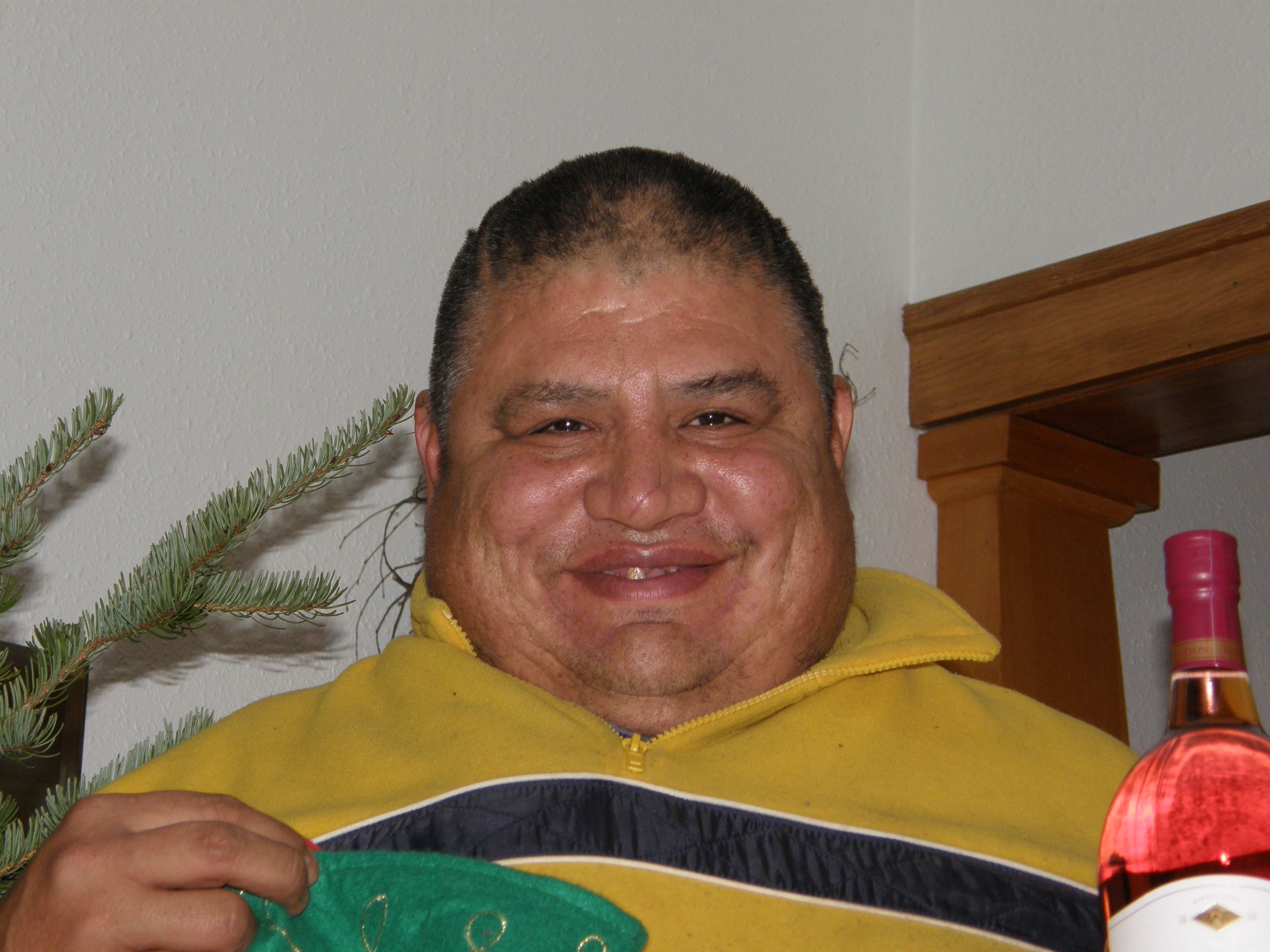
My sister-in-law saw our Christmas tree. Said it reminded her of Eddie Alden. Asked me if I missed him. Yes, I said, especially at Christmas. Eddie was a proud member of the Crow Tribe.
I have many memories of holidays with Eddie. Most people knew him as “Snow Bird,” but for some reason Eddie asked me to call him “Eddie.” I remember long ago, I was at Crow Agency with Eddie and the driver of the Urban Indian Health Clinic van. I can’t remember the man’s name, but he was older than I was. Eddie asked me for a ride back to Billings. I told him “sure.”
The driver eyed me, “You’ve got yourself a boy, now.”
Sure, I thought. I figured the driver was just being dismissive of my friend.
I didn’t know how fortunate I was to have a bona fide super hero friend. We formed a friendship that stretched from about Fall of 1992 until Summer, 2019. Twenty-seven years.
Eddie was a Crow man, frugal with paying for necessities, but lavish when he bought fireworks or halloween accouterments. At one point, when Eddie was facing homelessness because he didn’t want to pay $500/month rent, I suggested that he move under a bridge, a place he had stayed during the warmer months of 1992. I felt frustrated by his anxiety about housing, on the one hand, and his unwillingness to spend money for it.
Eddie giggled. He rented a room in the Colonial Apartments, and I visited him there, on the third floor. I don’t know the history of the Colonial, but it looked like a huge white wooden bungalow, at least three stories high, with hallways running its length. In 2003 the Billings Gazette published Ed Kemmick’s piece with great descriptions and history. Ed noted that the Colonial had a reputation for being the housing of last resort, a place where someone might soon be a victim. Some of the 28 rooms had heavy padlocks and the hall had the sweet smell of urine, according to Ed.
Some weeks later Eddie peddled to our house with his tape recorder. He said a drunken man had cursed at him. Eddie had had the presence of mind to tape record a truly foul, racist, slurred rant studded with expletives against Native Americans in general and Eddie in particular. As I recall, several of us urged Eddie to report the incident, but instead, I think Eddie moved to a basement apartment near Billings Clinic. Or maybe the one across from Goofy’s Bar. In any case, Eddie was such a hoarder he basically trashed every place he lived. He documented things carefully, with photographs, tape recordings, newspaper articles, official papers protected in clear plastic at Kinko’s, in multiple copies. Tape recorder batteries littered the small paths of floor through the trash bags of other goods at his place.
His kitchen stove was an avocado-colored peninsula amidst a sea of junk, spattered with grease, a cheap non-stick frying pan on top with a quarter inch of fat and a pancake turner. I don’t remember that Eddie got sick from his own cooking. In fact, he seemed to never get sick at all. I worried about fires, but none broke out.
I’d know if he had had a fire, but maybe I wouldn’t know if he got sick. He popped into my consciousness in his own time. Generally, whenever we had company. And his birthday. And Crow Fair. And if he ran out of money. Good times. I promised him I’d always give him money so he wouldn’t go hungry.
Tom Struckman
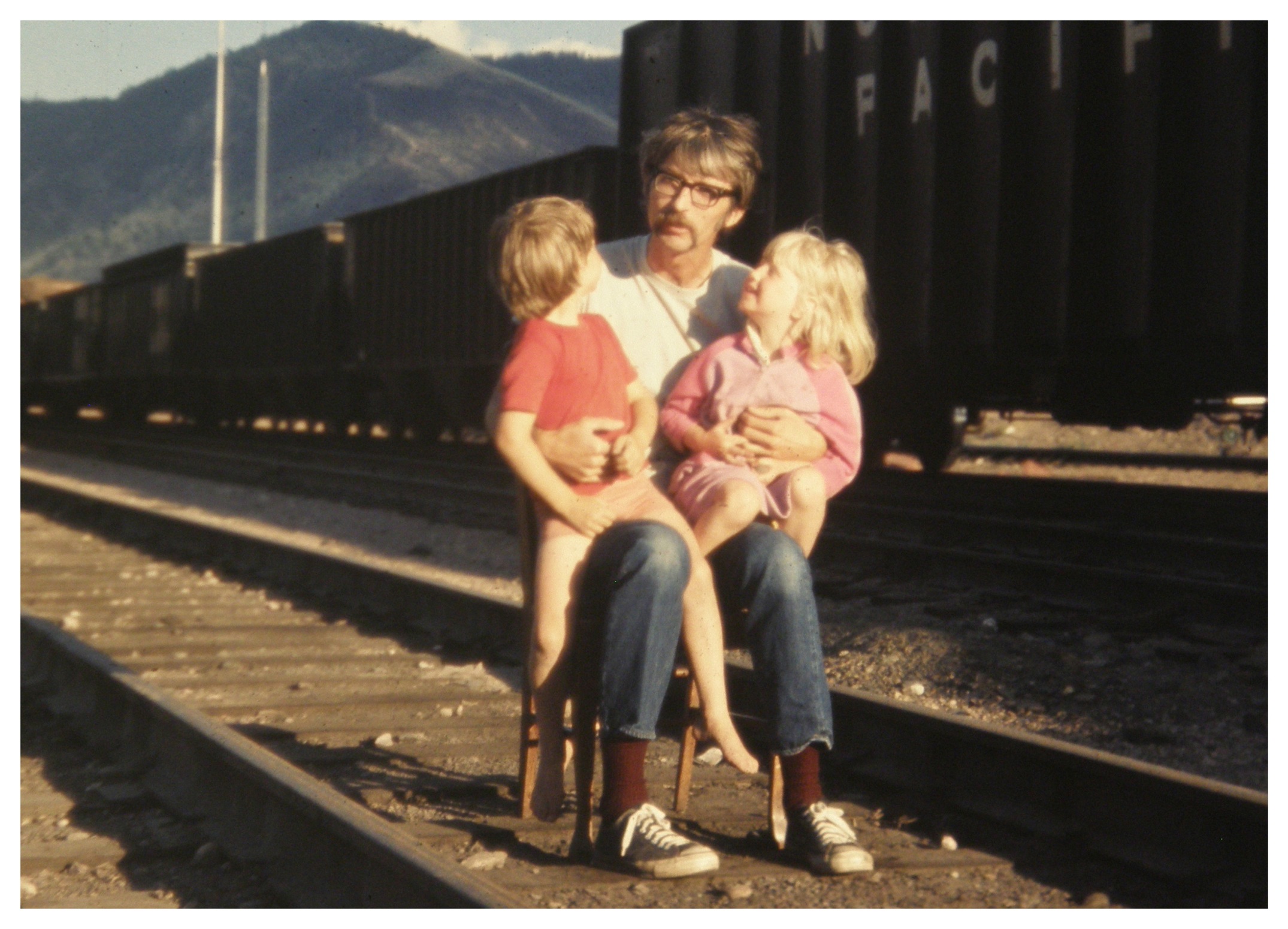
My brother Tom, who lived by himself in Missoula, and I had not spoken for about 10 years. He got tired of me: he was disabled with schizophrenia and agoraphobia, but damned intelligent, with a degree in English. He believed in the concept of “voluntary simplicity,” of living well with little money. A perfectionist, he didn’t like my pragmatic ways. He was one of the last of his bohemian generation, one of the last who never sold out. I, on the other hand, went to school, got a degree in pharmacy, and worked a career to support my family. I don’t remember why Tom finally had enough of me, but he was blunt. I was showing off a guitar solo in his small house in Missoula.
“Fuck you,” he said. I put down Tom’s guitar. My family and I stood. We filed out in silence.
We drove away from his house and although I later tried to reestablish our friendship, it never took. One time I sent Tom a message on a scrap of paper: just a scrawl telling him I loved him. He gave the scrawl back to me later without comment. We were still not friends. Another time I knocked on his back door. I opened the door and called his name. He hollered back, “what the hell do you WANT?” I asked him if he wanted me to leave him alone. He yelled back, “YES!”
In my basement, the other day, I found 31 color photos from early September, 1997. My brother Tom Struckman died then, 54 years old. Tom had severe chest pain. A couple weeks before that our nephew Geoff Angel telephoned me from Missoula that Tom asked him to return a copy of Adam Smith’s book, An Inquiry into the Nature and Causes of the Wealth of Nations (1776), usually abbreviated as The Wealth of Nations. Tom was destitute, but was interested in wealth as a social phenomenon.
Wikipedia said Smith’s book “is considered his magnum opus and the first modern work of economics. Smith is cited as the “father of modern economics” and is still among the most influential thinkers in the field of economics today.” Tom was good at using books for knowledge, for instruction. Once he reviewed a book about swimming for The Whole Earth Review. Stuart Brand paid him for it.
Tom had gotten The Wealth of Nations from a Missoula bookstore, but it was an abridged edition, so he was returning it. Geoff also helped Tom get a wool blanket for his bed to use as a mattress. His wooden bed had sublime, but simple, craftsmanship. It had a plywood deck.
Like I said, Geoff called me from Missoula because Tom had complained of the severe chest pain that had lasted many days. He told me that Tom had taken so many over-the-counter pain remedies that his ears rang. Tom had no telephone, so I phoned the Missoula police to ask them to check on Tom. I got no report back, so I phoned the police again the next day. Someone there said that Tom told the police officer he was “fine,” so the officer left.
I called back to Geoff to tell Tom that a doctor at the emergency department could treat him with a drug.
Later, Geoff told me that Tom said, “There’s a drug? Let’s go!” Soon he had been admitted for a heart attack that had destroyed about a third of his heart. The people in the ER told him that he had been misinformed about the drug. It was far too late, they said. No use giving him any hope, I thought. Anyway, I had been thinking of morphine—palliation, not a clot-buster.
Geoff visited Tom the next day in the hospital. Said Tom was hip to the pathophysiology of a myocardial infarct, but also turned on to the philosophical, wondering about losing a third of his heart, the center of his emotions. Tom dug the sound of his own heart on a doppler when he was undergoing tests.
My nephew Jon Angel spoke to Tom in the hospital by phone and he said he seemed cheerful.
I quickly telephoned Tom when I heard about Jon’s success, and Tom answered, “hello.”
“Hello!” I said, “Tom it’s me! It’s Dan! How are you?” I heard a clunk, then a dial tone. Hurt my feelings, sank my hopes.
That evening Jon told me he was going to Missoula with his 1-year-old son, Bradley, and he insisted I go along. “Well, he hung up on me,” I protested. But I went.
We got to Tom’s house on Missoula’s north side the following afternoon. I knew Tom used chewing tobacco so I bought a generous supply of Copenhagen and Skoal as a gift.
At Tom’s little house, we walked up to the back door. Jon barged in without knocking, and I followed. I sat across the room from Tom who sat on his bed and to my surprise he didn’t object to my being there. Turns out Tom dropped the phone in the hospital and didn’t know that it was me calling him. We talked. We reminisced about our days working for the Northern Pacific railroad.
Tom didn’t want the chewing tobacco I brought. “Causes heart attacks,” he said. He showed me his two medications: lisinopril and nitroglycerin tablets. Tom said he wouldn’t take the nitro because he wouldn’t need it. Tom said he tried to dig in his garden but he felt so short of breath and weak he had to stop.
I promised Tom we would come back when he felt stronger. I was amazed that he was alive after such a massive heart attack. We shook hands all around and Tom made a saluting gesture toward me as we departed. I told him I was glad to be his friend again. We didn’t embrace but we touched each other when we shook hands.
We spent the night with my oldest son Todd who was staying by himself in Missoula because his fiancé was out of town. Jon and I slept in their bed and Bradley vomited on us in the night. The next day Bradley had such a foul-smelling diaper on the road back to Billings that I nearly vomited when we stopped near Big Timber. Nonetheless I was elated.
Mark Fryberger phoned me a couple weeks later: “Tom died,” he said simply.
Mark said he had had an extra cat and wanted to check with Tom to see if he was still between cats. When Mark looked through Tom’s back door window he thought he saw a scarecrow on the kitchen floor, so he opened the back door. Then Mark called the police. I thanked Mark.
Our daughter Clara was home with me and we sobbed. Later that day Todd phoned me. He had helped put Tom’s body in a metal box with rubber seals. Tom’s body was decomposed, full of maggots, putrid smelling. Todd said he went to Tom’s and encountered a pair of guys from a mortuary who told him to go home and leave everything to them.
Todd said he started to leave, then realized he didn’t have to do as they said. In the end Todd stayed at Tom’s until late, scrubbing Tom’s skin off the floor, then scrubbing the steps leading into the cellar. Tom’s body had lain on the trapdoor.
I started to ask Todd if the body could have belonged to someone else, but he quickly disavowed me of that. Much later, I asked Todd about his experience. He said he felt it was an intimate experience with Tom and a great honor and responsibility. Perhaps that is why Todd eventually studied medicine after completing his master’s in fine arts in poetry.
Todd asked us to come to Missoula that afternoon because he didn’t want to spend a night home alone after cleaning up Tom’s house. We drove to Missoula that night.
We got there after midnight. At Tom’s some scented candles were still burning throughout the house. It had the cloying putrid smell of death. A white rubber glove lay on the ground near the gate to Tom’s backdoor. I picked it up. We snuffed the scented candles.
The next day I walked over to Mike Fiedler’s house to tell him the news. I made numerous phone calls.
We phoned lots of family and friends to tell them about Tom. Tom’s daughter, Hannah, was angry with me for not telling her when Tom had the heart attack. Lots of families came to Missoula. My sister and her family came from Nebraska. Hannah and her family from Yakima, Washington. People from Missoula. Our aunt Corinne from Kalispell. Todd’s siblings from Berkeley and Billings.
Most stayed with Geoff, except Hannah and her family stayed at a motel downtown. We ended up sending most of Tom’s stuff home with her and her husband Jason in a rented truck. Other stuff got divided up among everyone else.
The 31 photographs show what Tom’s house looked like before we emptied it. Tom had been a recluse for nearly 20 years, living with schizophrenia, untreated. He was a voracious reader. He made cassette tapes for his nephews. He raised vegetables, he made things in his wood shop. He kept meticulous lists of the songs on each of the tapes he made.
The light was on when he died. Looked like he had been applying for heat aid when he walked into his kitchen and collapsed on the floor. His body was spread eagle. We could see his imprint on the linoleum where Todd had scrubbed with an abrasive cleanser.
Tom’s life was remarkable for a number of reasons. He lived humbly, yet had a monumental ego. He told me that he didn’t believe in God’s existence, but took responsibility himself. “Isn’t that noble?” he asked. He was well-educated, not quite achieving a master’s in English from Eugene at the University of Oregon. I think I’ll write more about Tom later. He was 5 years older than I, prone to pummeling me, but he inspired many. He lived with a certain elusive feeling. Hip. Cool. He read a book about swimming, then used it to learn to swim. He did the same with drawing, skating, riding a bike, juggling, building musical instruments, carving classical statues from soap, and playing Bach on classical guitar.
The next night we prepared a meal in Tom’s kitchen to remember him. Mike Fiedler, our Aunt Corinne, Jason Wild, Hannah B. Wild, their son Jacob, Bob Struckman, and Penny.
Tom’s daughter wanted to burn Tom’s bed. Tom built the bed himself, about the size of a cot. Nobody else wanted to burn the bed because the workmanship of the simple construction was excellent. We gave it to Mike Fiedler who took it home.
Many years later Fryberger and I were searching Missoula for Fiedler near South Fifth Street. We drove down the alley and spied Tom’s bed, still in good shape. Sure enough, Fiedler was in the house and he received us with much joy.
That was the last time I saw Mike Fiedler, although we spoke on the phone. He told me he loved me.
After Tom died our younger son Bob took some of Tom’s ashes to San Francisco to a Zen Monastery where Tom had lived during the early 1970s. Bob asked to place some ashes there, but they declined to give him permission. Bob said he toured the facility — the people were friendly and helpful — and even saw the place Tom stayed and slept. I think it might have resembled some sort of cubicle or cell large enough for one person to sleep on a mat.
Bob said he dumped his portion of Tom’s ashes underneath a bush at the monastery before he left.
Those ashes, by the way, reminded me of fine gravel and gray dirt. Tom’s entire body was reduced to less than a cubic foot of ashes. I’d say the cubic box, lined with a plastic bag and tied with what looked like a bread tie with a metal circular tag, was nine inches cubed. I’m good at estimating nine inches because that’s approximately the span from my thumb tip to my little finger tip when I stretch my hand out as far as I can.
James Blackwolf
Walter Blackwolf told me several stories about his father, James Blackwolf, Hat Keeper for the Northern Cheyenne. The Hat Keeper is the position of highest honor and importance to the tribe. Only the wisest and most esteemed are so entrusted. Anyone who met James Blackwolf was impressed by his deep humility and wisdom. I met him only once, at the pharmacy. James was preceded by a well-groomed young man who got me ready to meet him. I never forgot the encounter.
Unfortunately, James Blackwolf died on one of his trips to Oklahoma. His son Walter often came to the pharmacy, and we spoke frequently.
Example of story Walter told me about James Blackwolf: A van with a Sioux drum and drummers visited James at his house. The Sioux had had many people die prematurely recently and they sought help.
The Sioux medicine man saw James from a distance, and the people in the van gave James gifts. When they got out their big drum James told them to leave it outdoors!
“Don’t bring that drum into my home,” he said.
The reason? The drum had an image of a buffalo head. James told the group that their people would stop dying prematurely if they would wash the image off the drum head with a cloth and water from a coffee can. After washing the drum head, they should place the cloth into the water in the can, put on the lid, and bury the can in a certain way. After they did these things they could bring the drum into his house.
Walter said that after a long time–months–the people in the van returned and brought even more gifts to James. They said after they had done what he said to do, the people stopped dying prematurely. Walter explained that when the drummers drummed they had insulted the buffalo by banging on its image with their drum sticks.


 insearchofbud
Thank you for sharing these reflections. In your time at Lame Deer did you ever meet a Wayne Whiteman? He, along with David Means, was one of the students from Lame Deer in the composition classes I led during the first Upward Bound session at EMC in 1065.
No sir. He was probably one of the many healthy individuals I never met.