Grandma travelled from Valley City, North Dakota, to Sheyenne, North Dakota. What was transportation like in 1907?
Here’s some history. Probably I’ll start with her family in Kristiania later Oslo, Norway. Both of her parents immigrated from Norway and I recently received a family history from one of her cousins, Bjorn Wichstrom, from Oslo. I also have a family history from her Aunt Margaret Wichstrom from Norway, written in 1907.
Grandpa was born in Nerstrand, Minnesota, one of…I don’t know, maybe 14 children(?). Three or four died in an epidemic. I’ll get information from another cousin, a descendent of one of grandpa’s brothers. Grandpa and grandma met in Sheyenne.
Certain people in the tree seem notable for the way they endured. My grandma is most notable because of her courage in the face of being orphaned as a young adolescent. My maternal great grandpa lived near Chicago in the 1850s and he rallied his friends and walked to Missouri to fight against slavery in the Civil War. His parents immigrated from Germany.
My mother’s life shattered in 1953 when her husband died a horrible death from a brain tumor. She started teaching right away, raising us 3 children by herself. She had courage.
One of grandma’s great nephews on her mother’s side, Kjell Nielsen, fought in the resistance in Norway against the Nazis. Educated in Paris, Kjell was a metallurgical chemist who helped blow up a shipment of deuterium oxide that Hitler intended to use to build a hydrogen bomb.
My mother had scores of cousins, but I was friends with Earl and Harold Bonde who inherited the old farm at Nerstrand. They survived WW II and served their country by farming. Working incredibly hard for many, many years. They are the toughest men I have ever met. Their story stands out for me.
I’ve already documented my father’s life, except I didn’t know of his work helping to form one of the first newspaper unions in the country in Great Falls. In fact minutes of meetings in the early 1940s Montana Newspaper Guild showed he was friends with A.B. Guthrie, Joseph Kinsey Howard and Frank Bird Linderman; gigantic figures in journalism even today.
More about my grandma Ellen Bonde (1886 to 1967). I lived with her as an adolescent and we took at least 4 long road trips from Montana for summers in Seattle, Ann Arbor, and Chicago. Memories just flood in. I remember how she got up at perhaps 8 in the morning, how she came out of her room wearing a flannel nightie, sometimes with a house coat, with rolled down nylon hose and shoes. I doubt if I ever saw her feet.
Often in the winter when we lived where we had forced air heat I’d get up early, turn the thermostat all the way up, and lie down in front of the register to let the hot air put me to sleep. When my mother got up she said, “God damn you!” and turned the heat down.
The current football coach at Skyview High in Billings was an 8th grader at Paxson school in Missoula when I went there in 1961. He was a year ahead of me. (I’d tell you his name, only I’m still chicken.) He is probably one of the best football coaches in Skyview’s history winning championships especially when his sons played on his team.
I had hobbies so I needed a job. I ended up getting the unnamed 8th grader’s paper route to start January 1. He was smaller than I but tough. He said he used his money from the route to buy a shotgun. Me? I bought a bike on credit for $10/month. Mine was a red Schwinn. He claimed that I had copied him so he threatened to beat me up.
Anyway, I followed him around Route 52 for perhaps a week in late December while he pointed out the houses of the subscribers of the Missoulian Sentinel. It was an evening route with perhaps 2 or 3 on each block. “Get this’n, and that’n and that’n over there,” he said gruffly. “Got it?” I always said “yes.” Dark and cold I didn’t take any notes. Even if it had been light and warm I’d not have taken notes. In the 7th grade at Paxson I was a failing student, a bed-wetter, living in a basement at home, and my friends were like me, only they were all smart and got excellent grades. Also they didn’t smell bad. I even got in trouble with the school safety patrol student for swearing. I had said “good lord.” The student judge threw out the case.
January 1 was a Sunday and my bicycle fenders got packed with snow that turned to ice, rendering the bike useless after the first day. I slowly trudged the 50+ blocks of the circuitous paper route throwing papers at the porches I could recall. Took me almost 6 hours. When I got home I had about half the papers left. Monday my predecessor caught up with me on the way home after school with his friends and threatened to pound me. He heard about the complaints. I looked at his friends and said, “guess I’m gonna get beat up.” They let me go home unhurt.
Recently at work when the successful football coach’s name came up in conversation, I boasted that he used to beat me up when I was a kid. Then I admitted I was lying.
Grandma, who said she didn’t like me, always urged me to fight in such situations, but I used every trick I could think of to avoid getting my face punched. Once I threatened to call my brother. I started screaming, “Tom, Tom!” and the bully ran away after saying he wasn’t afraid. (My brother would probably have helped the bully beat me up.)
On another sub-zero afternoon of January I returned home after walking 3 or 4 blocks with the papers, in excruciating pain from frostbite. I couldn’t even get our storm door open. I was wearing thin cotton gloves and my ears were burning. I screamed and cried and pounded on the door. Grandma let me in. She gently and kindly helped me warm up, gave me warm mittens and a scarf to wrap around me, and helped me fold my papers. I was able to deliver the papers. My mother had made it clear at the outset that she, under no circumstances, would deliver papers for me.

Bill Moomey was delighted to see this photo of his platoon sergeant, Irvin Weaver, of the weapons platoon, Company E, 262nd Infantry Regiment, and his friend Carl Bonde.
I learned of this conversation (that I admit I filled out with adult language from my own WW II interviews, research, and experience in the military during the Vietnam era) from Carl’s section leader, Bill Moomey, when I first spoke to him on the phone in 2005. Read more…
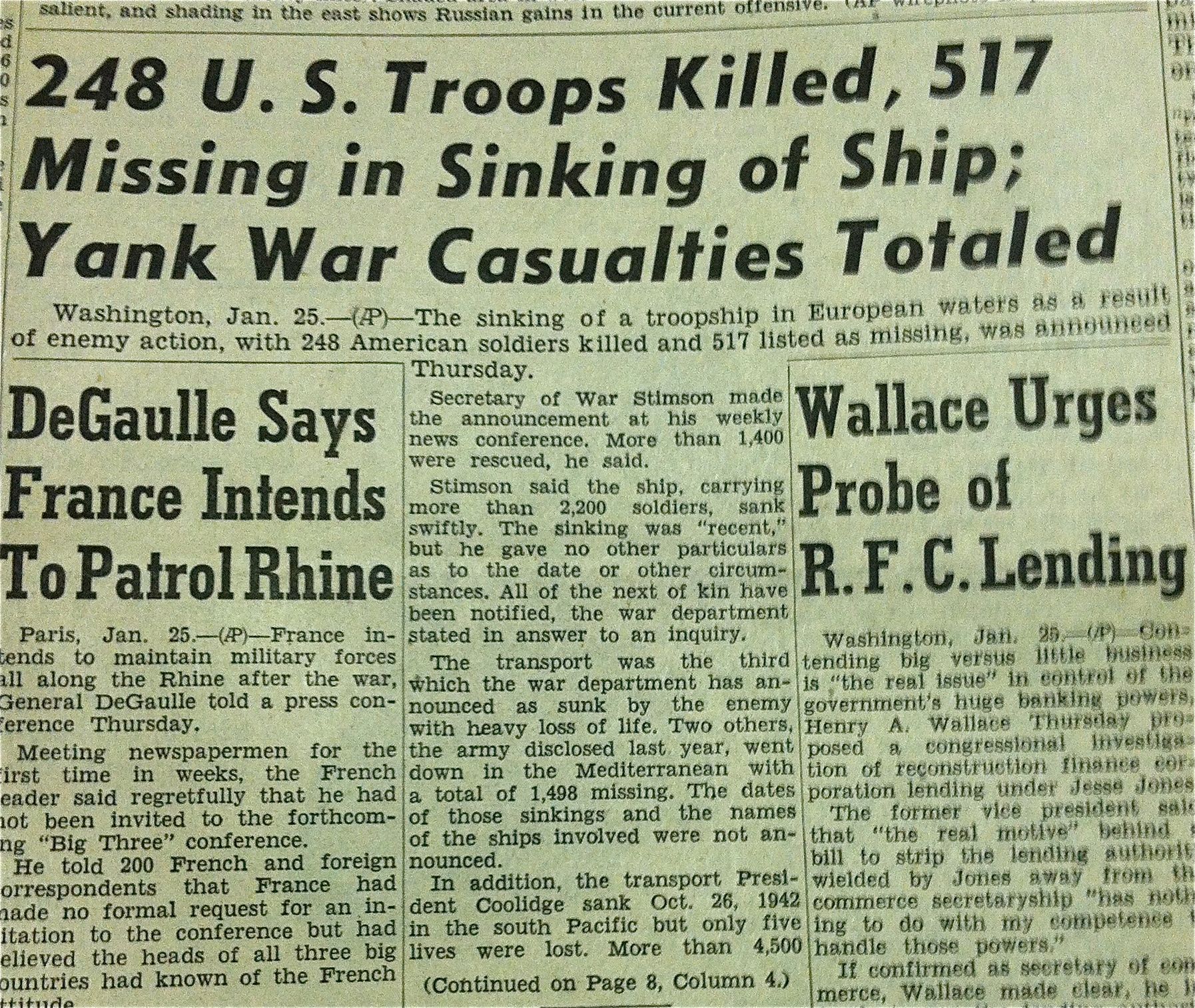
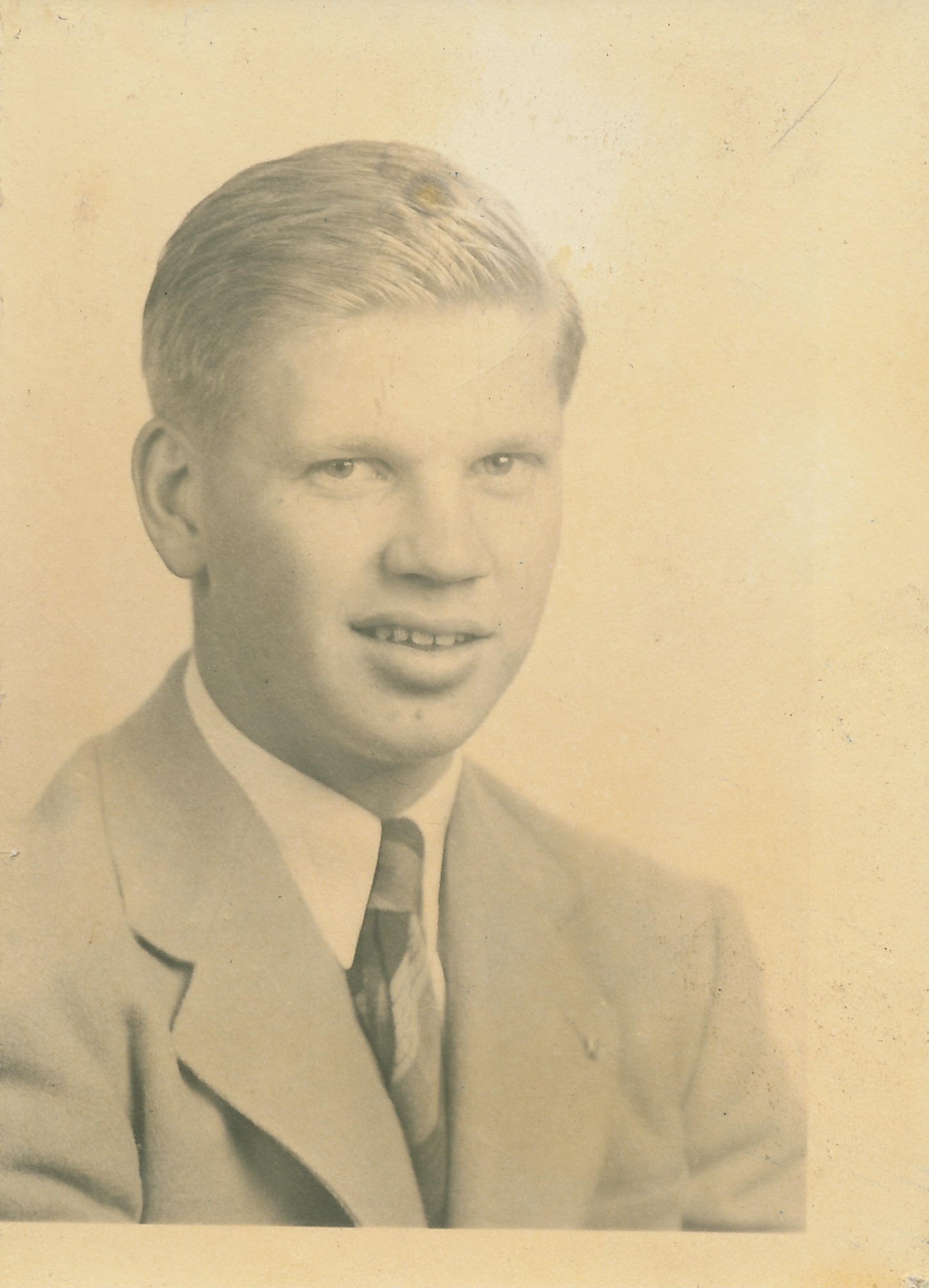
Back to telling about my uncle Carl R. Bonde, Jr., lost Christmas Eve, 1944, aboard the SS Leopoldville in the English Channel when a uboat sank it with a torpedo. That’s another sentence I’ve said so many times I can’t count them. It happened close to France about 70 years ago and I still feel badly for Carl and his 762 fellow soldiers who died that night. I still feel badly for my grandmother, Ellen Bonde, who saw her only son go off to the European Theater of WW II when the war was supposedly just about over. Other people’s sons returned. Not hers.
The Allied troops had stormed the beaches of Normandy the previous Spring, then had pushed the Nazi troops out of France. Almost. Two exceptions: Germans held two huge bunkers along the French coast at St. Nazarre and Lorient. These were submarine bases and the Allies were unable to penetrate them with bombs because they had concrete ceilings and walls 10 meters thick. After a few failed and costly attempts by the British and Americans to breach the fortresses the Allies simply contained them with troops around the perimeters of each and harassed them with artillery and other tactics.
Ironically, the US 66th Army Division with Carl and his buddies was bound for the submarine bases on the French coast. That was the official story. However, one of Carl’s friends, Bill Moomey, tearfully told me in 2005 that he believed the 66th Panther Division was initially headed for the deadly battles in the Ardennes Forest, but because of the huge loss of life from the SS Leopoldville that decimated the division they were sent to the submarine pens instead, relieving the 91st Division, which went to fight in the Battle of the Bulge. The 91st suffered heavy casualties at the Ardennes Forest.
Bill told me that Carl’s death helped save his. We both wept. My sister Carol and Bill’s wife Doris had gone shopping so they didn’t witness our tears.
From Carl’s parents’ perspective, their son was drafted into the army, spent a full year and a half in infantry training, then finally went to England. All was going well. They got a letter from Carl from Dorchester telling about him and the “limeys,” as everyone called the British, according to Walter Merza, another friend of Carl’s whom I met in 2006. Carl sent home a book from England about chess strategies. Carl’s dad wrote to his brother about his son’s experience in England.
On January 25 the Bondes received a telegram at their home in Kalispell, Montana, from the US War Department with a statement that their son was “Missing in Action.” No further explanation. That news is just enough to keep hope alive. One would wonder if he had been captured or lost somewhere in the woods, maybe? As a survivor of the SS Leopoldville disaster said on a History Channel interview, the authorities knew the men were not missing. They knew Carl and his fellow soldiers were dead. Many families never heard more about their soldier hero than that he was missing. About a month later Carl and Ellen Bonde received a second telegram stating that their son had been killed in action. His body was never recovered.
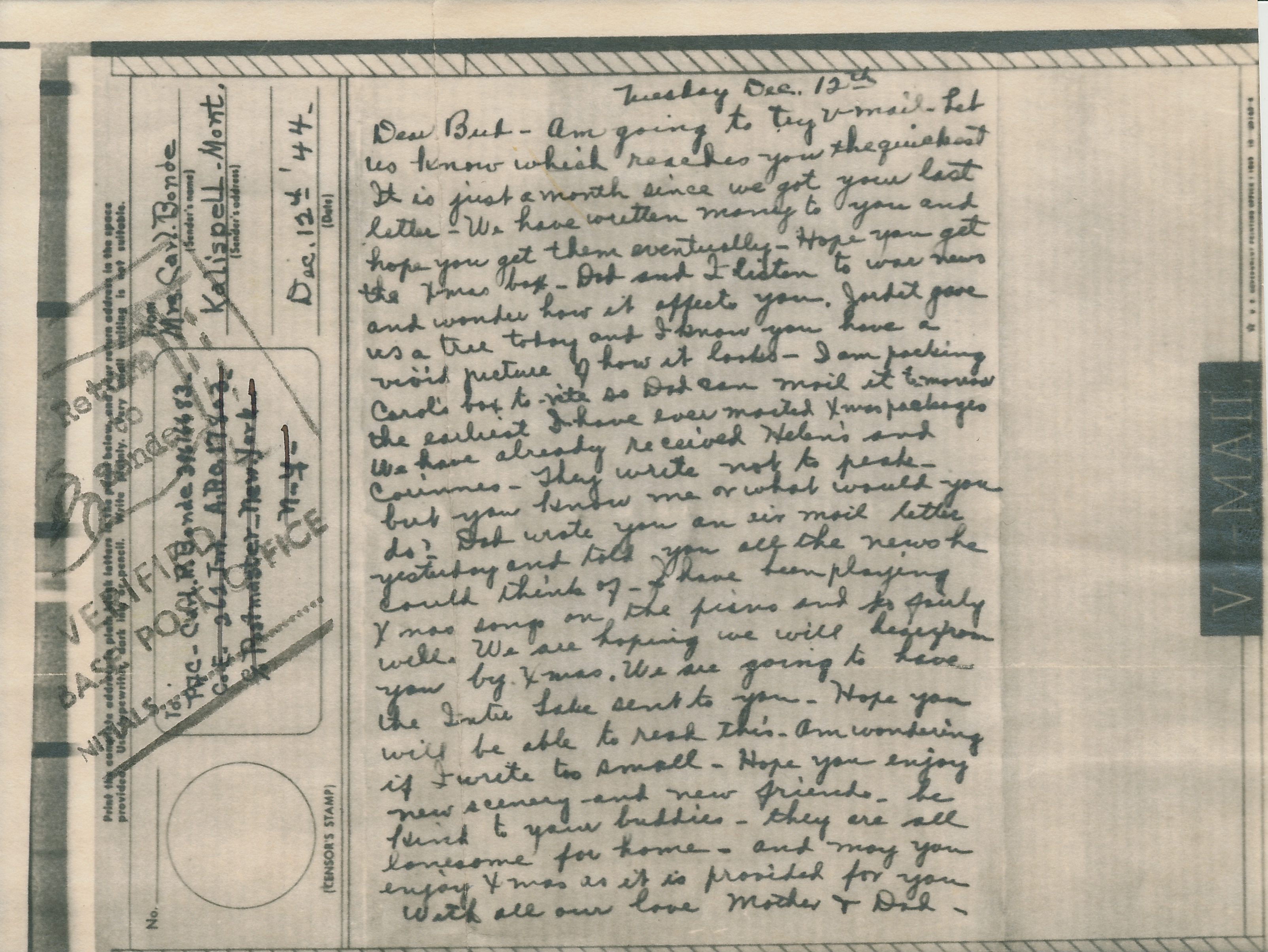
Transcript of Ellen Bonde V Mail Letter written December 1944
Mrs Carl Bonde
Kalispell, Mont.
Dec. 12th ‘44
PFC Carl R Bonde 34616683
Co. E 262 Inf. A.P.O. 17803
c/o Postmaster New York, N.Y.
Tuesday Dec. 12th
Dear Bud – Am going to try Vmail. Let me know which reaches you the quickest. It is just a month since we got your last letter. We have written many to you and hope you get them eventually. Hope you get the Xmas box. Dad and I listen to war news and wonder how it affects you. Jordet gave us a tree today and I know you have a vivid picture of how it looks. I am packing Carol’s box to nite so Dad can mail it tomorrow the earliest I have ever mailed Xmas packages. We have already received Helen’s and Corinnes. They write not to pack but you know me or what would you do? Dad wrote you an air mail letter yesterday and told you all the news he could think of. I have been playing Xmas songs on the piano and do fairly well. We are hoping we will hear from you by Xmas. We are going to have the Inter Lake sent to you. Hope you will be able to read this. Am wondering if I write too small. Hope you enjoy new scenery and new friends. Be kind to your buddies. They are all lonesome for home. And may you enjoy Xmas as it is provided for you. With all our love, Mom & Dad –
[This letter bears a stamp “Return to Sender Verified Base Post Office.”]
My Aunt Corinne said my cousin Mike and I hunted rattlesnakes barefoot. Yes, we did catch 1 at what’s called the Hogback, a long butte in the high sagebrush country between Dillon and Melrose, Montana. I’m sure we wore work boots, or at least tennis shoes, but not barefoot. Too many prickly pear cacti for barefoot. We might have worn low-cut Converse all stars. Or else pointed toe leather shoes with the compulsory gorilla-hair vest and probably a red button-down short sleeve shirt and tight leg pants. I’m talking 1966, in the summer. I had a split shift job moving aluminum irrigation pipes every 12 hours, so I had all afternoon free for hunting rattlers. More precisely, the prairie rattler (Crotalus viridis viridis) abounds in Beaverhead County. Laurence M. Klauber, who wrote the definitive 2- volume book, Rattlesnakes, published in 1956, has pages of information collected from people in Beaverhead County who told him stories of their encounters with the charismatic reptiles. A commissioned officer in the Public Health Service told me of Mr. Klauber’s book. He was an optometrist, named Tom Raffael. He made sure I got an award for my years of service on the Northern Cheyenne Reservation. Tom was sentimental, that way, and patriotic. “It’s a grand old flag,” he said, when he pushed to have us run it up the pole every morning and take it down at night. That’s when I found out the Northern Cheyenne have patriotism deep within their culture. I was always able to get the cooperation of a teenager or other young adult when I needed help taking down the colors at sunset. I got off the subject.
As a child I had never seen a rattler until my mother drove my grandma and me to Ann Arbor, Michigan, in 1962. We stopped at Reptile Gardens near Rapid City, South Dakota. A Wikipedia article said R.G. was started in 1937 to exploit the widespread fear of rattlesnakes and the public’s willingness to pay to see them. Many of the rattlesnakes there were much larger than the Crotalus Viridis Viridis of Montana, which seldom grow past 3 feet and are typically half that length. But the prairie rattlesnakes typically are a fat snake. Fatter than a garter snake of similar length. I still have not seen many rattlesnakes except in zoos. I suppose that is a good thing.
A few other people I knew encountered rattlers more frequently than I ever did, such as Penny’s cousin Ronald Rowton, former sheriff of Fergus County in Central Montana. About 20 years ago I asked him about rattlers and he said he didn’t care much about them. However, on the same trip to Lewistown when I asked Ronald about the snakes we saw a dead one on a dirt road between Lewistown and Grassrange. Someone had cut off the rattle at the end of its tail, so evidently at least 1 person cared about it enough to decaudicate it. I may have invented a word.
Anyway, another time in 1966, when my friend Tad Henningsen and I found a rattlesnake — he found it actually — on the Hogback, I came prepared with a 4-foot steel pipe with a wire running through it so I could snare its head. I also brought a metal trash can to carry the snake back. We were in my mother’s metallic blue Ford Fairlane 500 sedan, so we just put the can with the snake into the trunk and left the trunk lid open. As I recall we didn’t remove the loop from the snake, either, so the trash can rode with the pipe sticking out and the snake was still alive when we returned to Dillon.
Tad and I were thirsty so we stopped at the A&W on the edge of town. I think Linda Cook, fellow high school student and car hop, waited on us. Tad was more attractive to her, so she approached towards his side of the car. After we ordered the usual free ketchups (which we usually just squeezed into our mouths) and root beers Tad asked Linda to get him his hat out of the garbage can in the trunk. Linda started back as Tad, panicky, bolted toward her to prevent her from putting her life into danger. I confess I ended up killing the snake at my house, giving the rattle to my nephew who took it to school to show his friends.
In recent times we saw a lot of racers, garters, and bull snakes around Billings. We did see an occasional rattler (like maybe 3 or 4 in the last 30 years) but most often we saw bull snakes, often larger than a rattlesnake. Once 2 of our high school age children, Clara and Todd, went with us on the 4th of July to float about 6 miles of the Tongue River between “White” Birney and “Indian” Birney in Montana. The Tongue borders the eastern boundary of the Northern Cheyenne Reservation. Penny and I drove a station wagon, Todd and Clara took the 1965 VW van with the raft and food and other necessities for floating.
On the way to “Indian” Birney, or Birney Village, as it was also called, Penny and I noticed a large snake lying on the highway. “Todd and Clara will grab the snake, I’m sure,” I said to Penny.
Our plan was to leave the car at Birney Village and for all of us to pile in for the drive to “White” Birney, or Birney Town, upriver. When we stopped at the getting out place on the river, I asked Todd if he saw the snake on the road. He had, he said, but admitted that he hadn’t stopped. I felt pretty disappointed. Todd later asked me to grab a chain out of a bag in the back of the van. Of course I screamed when I touched the snake.
Todd and I wanted to fix up a snake skeleton, so we picked up a dead bull snake on a road outside of Billings, took it home, skinned it, and I boiled it on the camp stove for 3 or 4 hours, hoping to clean the bones that way. Instead, the snake’s flesh was like hard rubber. I ended up tanning the skin and giving it away. I found a bird cage in the basement and dug up the compost in the alley bin, put some compost right on the snake carcass, and buried the whole bird cage. Months later I dug up the cage, found what looked like hundreds of rib bones, and the spinal column. I found a thin wire to hold the column together with a nut fastened to each end and I gave the bull snake spine to a great nephew.
The best family story about rattlers came from Penny’s mom, Lillian Meakins, in 1920, when Lillian was a girl of perhaps 6 on a homestead in Eastern Montana. In that part of the Missouri River country adjacent homesteads were frequently claimed by numerous family members. A single homestead was too small and wouldn’t support a family. To “prove” the homestead Lillian’s mother and grandparents built tiny houses from parts that came on the train from Missouri and then overland by team and wagon. Just building the house was insufficient, one had to sleep in it a certain number of nights a year. Lillian and her grandma rode their horses to the 1-room house, sided with tarpaper, having a low arched roof also tarpapered. Rattlesnakes abounded in that country, sometimes showing up in hen houses in nests.
Lillian’s grandma got up in the night to visit the outhouse. She didn’t light the lantern she kept by the bed where she and her granddaughter slept. Back in the house, grandma heard the sound of a rattlesnake on the floor at her side of the bed. “Lillian, wake up! Light the lantern,” shouted grandma. Lillian didn’t stir, being sound asleep. Grandma shouted to Lillian over and over, to no use. Grandma grabbed a stick that happened to be near the door. Each time she heard the buzz of the rattlesnake she brought down the stick. Again and again until she no longer heard a sound.
Lillian told us the story and chuckled. She said, “you should have seen that snake! It had no tail left on it!”
During my high school years Ellen was usually in the living room in the armchair crocheting or watching TV. This went on for many months as I went about my daily activities: school, after school athletics, running down into the basement, running upstairs, running outdoors to the clothesline pipe to hang upside down. This was Dillon, Montana in the ‘60s. I delivered morning newspapers with my friends even though I didn’t have a route of my own. I’m sure I got paid something. Man it was cold in the winter! My friend Duck’s route took us up by the college on the hill where the wind whistled in from the continental divide. Grandma wasn’t up then, but I’d see her at noon when I went home from school for lunch. She didn’t make lunch for me, so I’d make about 10 peanut butter and bread sandwiches. I weighed about 170 lbs but I was almost 6-5, people called me skinny. I played football and I wanted to weigh 200, a goal I never reached until after age 50. I remember during football season that my knees always hurt from me falling on them.
Ellen’s crocheting eventually resulted in an amazing tablecloth which she gave to my aunt Corinne in Seattle. Grandma loved her three daughters and their kids, but she didn’t like my mother’s kids including me. We argued with her about politics and just about everything else and I know she disliked insolent children because that’s what she called me.
I’d guess the tablecloth took several years to complete. She managed to travel with Corinne to Europe and to go to Seattle to have a mass removed from her abdomen another time. Grandma brought back a bunch of boughten slides from France and Norway. I looked through them and I, being 16, was delighted to find some of bare-breasted women dancing in the Folies Bergere. I had a darkroom with an enlarger so I could view them easily. I don’t think grandma knew about the pictures of breasts because she was nearly blind from cataracts that she wouldn’t have removed. She said she thought the surgeon’s hand might slip.
PFC Carl Ralph Bonde, Jr.’s mother, Ellen Bonde, was about 62 years old when I was born in 1949. That would have made her about 57 when her son died aboard the SS Leopoldville in the English Channel Christmas Eve. The US Army officially listed the day he died as December 25, 1944, but the overwhelming evidence is for Christmas Eve. (I spoke to 6 WWII veterans who were there.) Ellen Bonde was 36 years old when she gave birth to her last child, a son, Sept. 15, 1923. My mother said she hadn’t even known that her mother was pregnant.
I stayed with my grandparents for several months in 1953. Ellen had silver curly hair and wore a dress every day in the 1950s when the agricultural economy she grew up with was all but changed into one of money. She and grandpa lived in Kalispell, Montana, on a hill on the edge of town. In the winter the house always smelled of pine wood smoke. Ashley Creek ran through part of their land. They had 5 acres with many apple trees that grandpa painted the trunks white with whitewash to protect them from bugs. I was always confused about the lime he used. Grandpa said lime was used to make cement, so I begged him for lime so that I could make some. We’d just talking like that when grandma would call out “Yoo hoo. Lunch.”
Ellen could bake pies, cook venison, make cinnamon rolls and even creme puffs in her voluminous blue kitchen that was a huge, high-ceilinged rectangular box with a few windows on the west side. Ellen was the boss of the kitchen and the rest of the house too. I had to be careful around her.
Grandpa was a smoker, a drinker when he went down to the barn to get away from grandma, and he had long since conceded all domestic power to grandma. “She’s the boss,” he repeated as he puffed through pursed lips. He had emphysema and his realm was the barn.
Back at the house on top of the hill grandma used a wicked looking hunting knife to dig around in her rock gardens. Big rock gardens out around the house on the other side of the gravel driveway. My cousins and I could go out and find cool fossils and petrified wood in the rock garden. Grandma also used power tools and a hammer. She was tough and she meant business. I saw her push my mother’s light green Oldsmobile uphill out of a diagonal parking space in the winter when the wheels just spun and mother couldn’t get it out. Grandma didn’t talk a lot, but I knew she hated Franklin D. Roosevelt. She didn’t say why, but I think everyone knew that she blamed him for the death of her son in WWII.
Grandma treasured a book published by the US War Department titled “Tactics and Techniques of Infantry” that had belonged to Bud. I know she treasured it because I left it outdoors in one of my childhood forts and it got wet and mildewed. She didn’t talk about her soldier son to me as much as my mother and her sisters did. I know grandma loved Buddy dearly because I found a letter she wrote to him in mid-December 1944 that had been returned to her because it couldn’t be delivered. He never received it. I still have a copy of it, and it is copied verbatim elsewhere on this blog.
The letter was poignant because Ellen told Bud how she had been scrambling to put together a Christmas package for him with gifts from his parents and siblings. She told news about his dad and his sisters and she closed by asking him to be extra kind to his army friends who were no doubt homesick and lonesome for their families.
Anyhow, Ellen was a tough, strong-willed person from North Dakota who lost her parents before she was out of high school. Even though she helped raise her brother Ralph and several sisters by sewing and mending clothes, she still managed to graduate from normal school in Valley City, North Dakota, the same institution my mother graduated from in the early 1930s. teacher’s colleges used to be called “normal schools” because grade schools in those days were supposed to normalize the students, often immigrants, who attended. Not only did Ellen help raise her siblings and graduate, she later took in one of her nephews, Sig Christianson, when Ellen’s sister died of influenza in 1918.
Ellen married my grandpa Carl Bonde in Valley City and they moved to Sheyenne, North Dakota, where he worked in a grocery. That was his life’s work. He ended up as a wholesale grocer in Kalispell, Montana. On the hill, as I said. Anyhow, early on, they lived in several small towns in North Dakota and Minnesota and Ellen had 4 daughters, one of whom died in her arms of scarlet fever the same year as Ellen’s sister died. Of course the other girls were my aunts and my mother.
Ellen certainly bore her share of sorrow and loss. Stoically, too. Although she did socialize with a number of women — Mamie Paulson and Mrs. Jordet come to mind — at Ladies Aid and “circle,” she eventually grew isolated and silent by the time her husband died and she moved in with my mother and me in Missoula. My mother had to keep the peace because Ellen and I bickered often. Well, I was cheeky and insolent towards her. During my adolescence my interests often required me to borrow grandma’s things: oh, pots and pans when I did magic tricks. Or cake pans when I developed pictures. I needed those things and I considered my grandma and all of her possessions to be mine to enjoy as I saw fit. Grandma did not agree with me at all. She had a 20-gallon lard tin filled with sheep’s wool that she intended to one day spin on her spinning wheel. She never did that and my sister has the spinning wheel in Nebraska. Grandma had a big stack of wooden serving trays that she intended to paint gaily with flowers, Norwegian toll style. Paints too. When I was crawling around under the bathroom in our house in Missoula the sewer gas was stinky, so I squirted the oil paints out onto the dirt floor to mask the stench from the sewer pipe. I don’t know if grandma ever figured that out, but she did notice that her steel bucket that had many tubes of oil paint was about empty. She blamed me and I admitted it. She accused me of other crimes that I hadn’t committed, so I denied doing them. She said I was a liar and rotten to the core.
I wasn’t rotten to the core, she said on her death bed in 1967 when I was 18 and visiting her in the hospital. She told me that I was good, certifiably so, by my grandmother.
The best version I have of our uncle Carl’s demise would place him in a lower compartment near the stern of the SS Leopoldville, compartment F4, according to survivor Bill Loughborough. When the torpedo detonated many died outright. Those who survived faced the wall of seawater that flooded their compartment to the ceiling. The wooden decks that had been constructed in the hold collapsed and timbers, men and equipment ended up tangled together. Men were trapped, pinned down by the weight of the remains of compartments overhead. Some screamed with pain. A witness said one in his company washed out the side of the ship through the hole made by the torpedo and subsequently rescued. Sounds apocryphal, but entertaining.
Back to my story of Carl and his death December 24, 1944. Nobody said they saw what happened to him, although his friend Bill Moomey had been with him in compartment F4 where Compan

Bill Moomey, who died last year, was a close friend of Carl’s. He credited Carl with saving his life because the 66th Division had been devastated by the torpedo that struck the SS Leopoldville Christmas Eve, 1944. The 66th was assigned to the cost of France to contain German submariners in their bunkers.
y E, 262nd Infantry Regiment, was quartered. Bill did not say whether Carl was one of those vomiting after the unappetizing meal of “slop,” but the nauseated ones went up on deck. Perhaps Carl was still exhausted from the all-night travel to Southampton Port. Perhaps his vomiting drove Bill topside for air.
in 2006 Bill, his wife Doris, and their friends treated me gently and kindly when I met them at their reunion in Sarasota, Florida. Because of their extremely considerate behavior towards me and each other, I had to wonder if they kept hard information from me. Many published first-hand accounts of the torpedo attack said soldiers cried in pain as the seawater level rose, stopping their suffering. Possibly our Uncle Carl died that way if the blast didn’t kill him. According to the stories those in pain did not necessarily die quickly because the ship didn’t sink for about 2 hours. Less likely, perhaps Uncle Carl somehow swam to a ladder and made it to an upper deck with the hundreds of other soldiers. Some of these would later drown when the ship sunk, some would die of hypothermia. A few would die from getting cut by the props of the few rescue boats that eventually reached the freezing soldiers. A survivor told how he saw a body floating in his life vest with a bloody stump of a neck with tubes sticking out. Possibly that person—he was somebody’s son! I won’t finish this thought. Together, nearly 400 died in the water Christmas Eve. These were soldiers who survived the blast but were not rescued when the ship sunk.
When I interviewed Carl’s buddies in Sarasota Al Salata said that he escaped the sinking Leo by climbing down a rope net and stepping onto a rescue ship, the SS Brilliant. Mr. Salata was a senior enlisted man in 1944, about 10 years older than the others. He was older than 90 when I met him, but his memory seemed sharp. The other survivors, Hank Anderson and Bill Moomey, both jumped 20 feet down to the Brilliant. Other published accounts said the sailors below piled canvas hammocks and some broke their fall by catching them somehow, team fashion.
Al Salata was memorable to me for a number of reasons besides his age. The second day of the Company E reunion Bob Carroll, a soldier who crossed the channel on the HMS Cheshire, took us to a museum in a passenger van that he had rented. Al was the front passenger and I watched him buckle his seatbelt. His hand held the male end of the buckle for perhaps 10 seconds, poised to put it home. He didn’t move. And he didn’t move. I asked Al if he wanted me to help him. “No.” Then he clicked it shut in one smooth action. Al’s wife Mary accompanied him to the reunion. Bob, Al, and Mary all died within two years after I met them.
The 70th SS Leopoldville demise anniversary. Bud’s friends Bill Moomey and Maurice O’Donnell went to great lengths to assure me that he had died quickly from the torpedo blast. But they could not have been certain. Even so, the scenario may have looked like this:
In the dark early morning hours the soldiers lay on the ground dressed in their wool overcoats. Some lay on the brick surface of the dock. Maybe the surface was concrete. Some sources said the area was within a huge building lit by incandescent lights. Other soldiers lay on the piles of duffel bags. Most were weary from hours of walking the previous evening, then riding a packed train from Wilmouth to Southampton. The men didn’t mind the bright overheads because they could sleep at last. This was the morning of Christmas Eve, 1944.
Bud was one such soldier. Perhaps he and the others of Company E, 262nd Infantry Regiment, lined up single file to board the ships to France. A bored looking sailor stood at the gangway, directing first one way, then the other. “You up there,” he said to Bud. The ones before and after were went on to the next gangway. They went to the HMS Cheshire. Bud boarded the SS Leopoldville. He was in good company. Hank Anderson and Bill Moomey and others in his weapons platoon also boarded. They were to sail with the tide on the English Channel.
The Channel is shallow and the ships cannot cross to France except when the tide permits. No doubt the gangways to the ship were short and the inclines gentle. The ships sat low because the tide would remain out for hours.
On the SS Leo, sailors routed the tired men to various ladders and stairs below decks. Bud’s company went to the number 4 hold about 5 levels down, to 4-E. Lightbulbs hung from the ceiling of the room that spanned the width, so the room was perhaps 60 by 15 feet with a wooden stairway that landed sidewise in the center. Ten picnic style tables were arranged down the room and hammocks and life jackets stacked on the sides. The exhausted soldiers dropped their duffel bags on the deck, dragged them to one side, and laid down to get some more rest. The ambitious men fixed hammocks. Toilet facilities were accessible, but distant from quarters and insufficient. They were aboard a troopship meant to shuttle thousands from England to France in less than a day. By the time she left port most of the men were still sleeping. Soon after they departed Southampton the soldiers from each berthing area fetched pots of food and dinnerware.
In 2006 I attended a reunion of men who had partaken of the midday meal that December 24. Bill Moomey called it “inedible slop.” Several books have been written about the SS Leopoldville on its final trip across the Channel and the meal has been described many ways, but few of the narratives agree on exactly what it was. Possibilities: bread pudding, stew, cornbread, greasy mutton, and a few descriptions containing bathroom curse words. Some men were certain the pot contained fish.
Bill Moomey said he didn’t eat any of the meal, but others did. Bill said with pride that he never got seasick. Once onto the Channel the ship began to roll with the waves and Bill said some of the men vomited. Seasickness added to the vomit and the odor of the food. Bill left the quarters below for the upper deck and fresh air. The air was fresh, but cold. All the while Bud stayed behind, perhaps seasick. No one knows for sure. Perhaps he too went above deck but gathered with a different group. Bill was fairly sure Bud remained below when the torpedo struck the ship at 5:55 pm.
The men of the 262nd Infantry Regiment had been training together for at least a year in Arkansas and Alabama before their month in England. They knew how to behave if they were on a sinking ship. Various witnesses said that a loudspeaker voice assured them the ship would not sink and that help was on the way. The men could see the lights of Cherbourg, France, from their vantage on the upper deck of the SS Leo. Shore was closer than 6 miles.
Those who could find life preservers helped each other tie the ribbons. The preservers looked like 2 large teabags fastened in 2 places along one side. Your head went between the ribbons and the bags hung front and back. Along the edges were several ribbons and these needed to be tied.


 insearchofbud