
Wrote in uncle Bud’s year book.
Today I got a temporary tooth repair. Reminds me my brother Tom’s immediately after he died, the night after his body was discovered on his kitchen floor in an advanced state of rot and maggots. Our oldest son Todd had spent the afternoon helping the mortuary folks remove the body, then scrubbing, then he put scented candles all around in a failed attempt to mask the putrid cloying smell of death. Todd gave all of us, including Tom, an enduring gift. Todd said it was a sacred privilege. One of the most intimate ways to aid another.

Tom’s image showed as a light-colored area on his floor where his body decayed.
Long story short: Tom left a collection of teeth on his book shelf. These are teeth that he pulled himself, or teeth that had decayed to the extent that they fell out. Tom employed over the counter remedies like aspirin and acetaminophen for pain relief. He also encouraged his cat to sit on his back (how???) to soothe him.
Anyway, after delivering our friend Emily home this morning I got several local anesthetic injections by Dr. Todd Torbert in preparation for repairing a molar with a cracked cusp, lingual side, I learned from overhearing his banter with his dental assistant, whom I thanked, but did not learn her name. I was bent on leaving when I last saw her.
Dr. T. had not achieved the numbness necessary. He asked Holly to provide me one more shot, a “carpule” of long-lasting “pillow,” in her jargon. She proved to be most expert in employing the pillow. Yes, I could still breathe.
Of course, once my mouth was opened just wide enough, she and I began speaking of Glacier Park where P. and I had hiked last weekend. Turned out she grew up in Essex, near the Izaak Walton Inn. Holly had hiked the Huckleberry Mountain trail. I showed her my list of WW II dead that I had copied into my notebook.
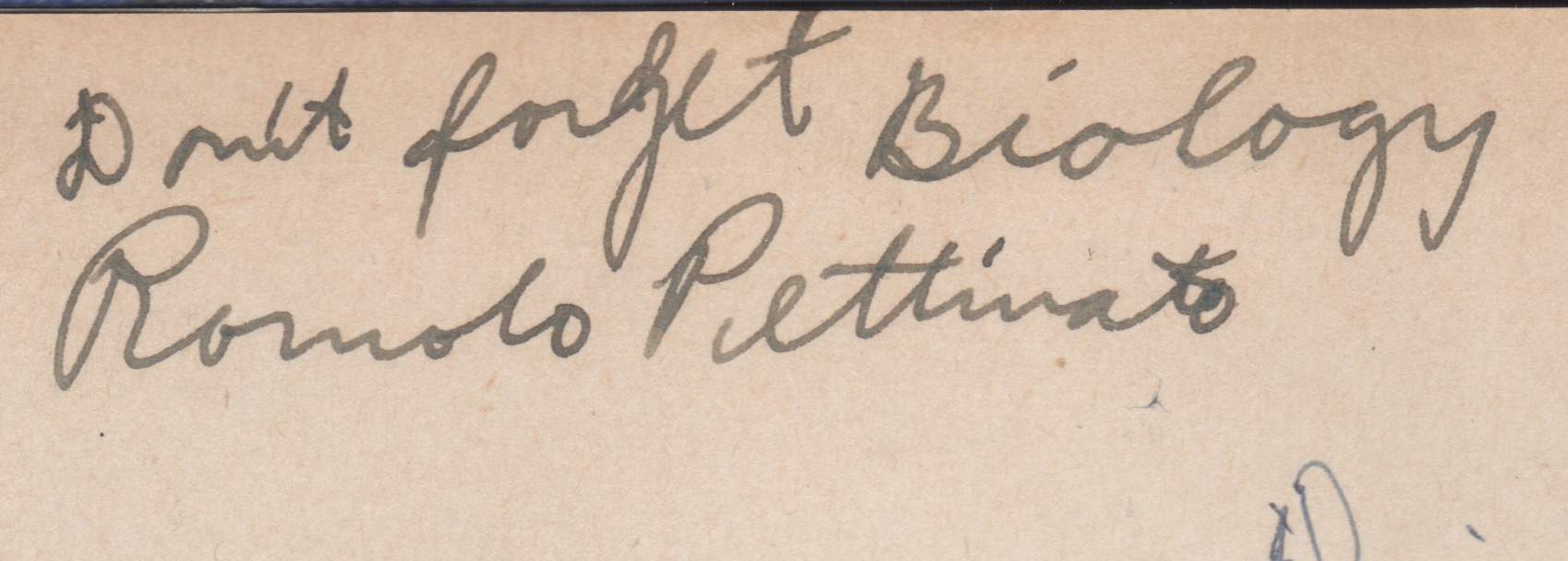
Uncle Carl Bonde’s year book in 1940. Only Romolo Pettinato is not just any kid. He was from Essex. He was destined to die in WW II. Same as Carl.
She specifically was most familiar with the two names who had written in my uncle Bud’s high school 1940 Flathead County annual: Romolo Pettinato and Leslie Cornelius. Holly was probably younger than I am, but you can never tell with women, especially physically fit professionals. She did know the families, parents, of both WW II heroes who lost their lives fighting the racist Nazis.
I began babbling about my lifelong quest to know about my lost uncle Carl Ralph Bonde, Jr., but Dr. Torbert intervened.
“Is your lip numb?” he asked.

Bill Moomey, who died last year, was a close friend of Carl’s. He credited Carl with saving his life because the 66th Division had been devastated by the torpedo that struck the SS Leopoldville Christmas Eve, 1944. The 66th was assigned to the cost of France to contain German submariners in their bunkers.
Chapter four
I can’t point to any one moment in my life when I again wanted to clear the mystery that surrounded uncle Carl Ralph Bonde Jr. My unanswered questions for decades have simmered below the surface like the way police keep unsolved murders open. Some questions merely remain unanswered to be revisited like memories that make us feel guilt. They still hurt, don’t they? But open questions like what became of Bud differ. They wait for bits of information, for opportunity.
In 1945 in the months following when the SS Leopoldville sank and 764 American soldiers died the US War Department position was that the loss was to remain secret in order to deny the Nazis the benefit of knowing the success of its strike. That year the truth also emerged from an investigation by the Inspector General that the losses could have been much smaller if rescue efforts had not been marred by delays, blunders, miscommunications, Christmas Eve revelry, and poor decisions. Even after the end of WW II, secrecy prevented embarrassment. News that had been sent to the next of kin telling the fate of the soldiers went out in small batches to minimize publicity In some cases families never learned what happened. Ever.
The government’s hole in the fabric of Army history probably got me better acquainted with uncle Bud than if everything had been thoroughly aired in a timely way. I believe I got more accurate information about him than I would have, even if he had survived.
“You know, Bud could easily still be alive!” my nephew Jon Angel said just the other day. “Just think of the camping and hunting and fishing –and the stories!”
I doubt we would have gotten stories. Pressed for more information the old guys were apt to say they just didn’t remember. That was my experience in 2006.
Well, I was able to get further details from a guy I visited as a hospice volunteer. He was a lucid 96-year-old Army veteran, but I had to trick him to get it by finding another, related, topic that would lead to the kind of details I wanted, in this case, about the influenza pandemic of 1918, the pandemic that killed Bud’s older sister Carol Catherine Bonde.
I emailed my friend Gary Williams, a professional historian in Missoula, mentioning that I was doing a history project on a lost relative. It seemed miraculous. Gary read my mind!
I got a newspaper clipping dated January 31, 1945, taken from the Kalispell Daily Interlake reporting that the Bondes had received a letter from the War Department saying Carl Ralph Bonde, Jr. was among those missing from a US troop ship that had been attacked on Christmas Day in the English Channel. The rest of the page of the Interlake had society news. And ads. I learned that Mr. Jordet went to the Mayo Clinic and visited family members in Billings. Telephone numbers in Kalispell were 4 digits long. My grandparents were friends of the Jordets.
The point is that Bud’s family knew something about his fate about a month after he died. The knowledge about Bud’s death at sea stayed in the back of my mind as I grew.
I was horrified at the thought of a torpedoed ship. Once in 1967 my friend John Herman and I listened to a Missoula poet rant about a soldier in a doomed ship in the engine room, water rising, steam hissing. “I am not there!” said the poet. Little John and I trudged uptown through the snow to Eddy’s Club for some beers bought with money that we bummed from a friend, and some smokes we rolled from my can of tobacco and some wheat straw papers. I remember feeling vaguely guilty when I heard the poem. I was not there! In fact, I didn’t even remember what happened to Bud, not exactly. Did the boiler scald Buddy?
The year I graduated from high school the Army was drafting young men for Vietnam, a senseless slaughter. Nonetheless, if Uncle Sam touched your shoulder, you had to go into the armed forces or face criminal charges. Remember the summer of Love? San Francisco? Hippies?
In 1967 the Army was drafting unlucky young men, mostly poor, mostly minorities, and sent them to Southeast Asia with weapons, then who knows after that? Television news showed shaky B & W images of helicopters with twin rotors touching down, lifting off. Soldiers raced forward in rice paddies or in fields choked with snake grass. They got shot. They got killed, maimed, burned. US Marine [Sanford] Kim Archer from Melrose, Montana, got sent home in a box. He was a feisty kid a year older than I was and he sang in the back row of Mrs. Henningsen’s English class. My classmate Danny Sanders lost some of his fingers when he was fired on by a Viet Cong machine gun as he lay on the ground, probably wetting his pants. A couple of things were sure: I had a 2-S student deferment because I was white and middle class and a student. If I were a good boy someone else would get sent to Vietnam. I was not a good boy. I was an aspiring hippie and I smoked marijuana and took drugs at every opportunity. I also kept my grades up adequately. I felt like a slut.
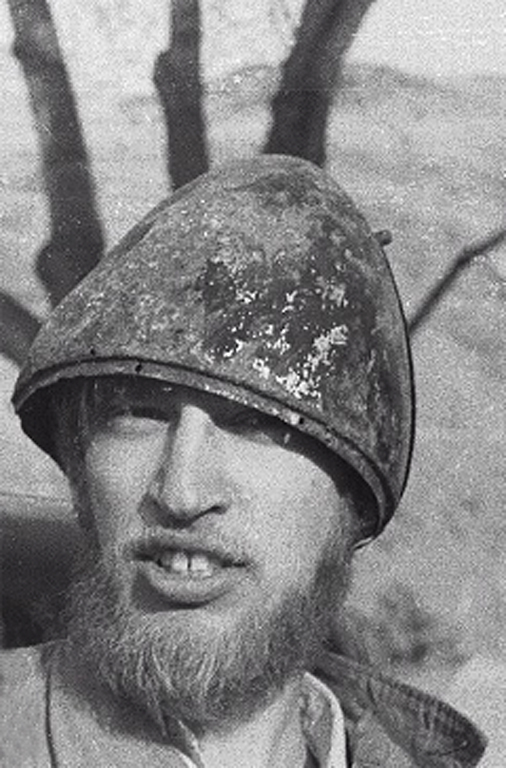
In 1968 I was a fake hippie at the University of Montana in Missoula.
One kid in my circle of friends, Bob Verduin, said famously, “Fuck the draft.” In 1968 he flunked out and last I heard, went into the Army. I was scared of the Army. Or was I? I couldn’t help but remember how Bud had been drafted into the Army, sent overseas, and killed within a short time.
Once when I was maybe eight years old a bully chased me until I was cornered. I turned, ran at him, and bowled him over. Scared him! Guess I could do that again. So I joined the Marines. People said I was stupid. Others said I was evil. Others said I was crazy. I wasn’t any of the above. I was desperate. I had squandered a lot of good karma using drugs. I was also convinced that the Army would have done to me what it did to Bud if I had just waited passively for something to happen. Also, I had ceased believing in the hippie dream.
Once in the Marines I mourned the life I had left behind. God I wished I could have been with my friends again! I hated the Marines. I expected something really great, but what I got was a whole bunch of people, something like me. Guys from all around the country, but mostly the south. Some actually were great souls. Jason Lockett was a black kid from Los Angeles who had natural talent for leadership. He said he worried about the way I moped around.
I’ll cut to the end of the story here: I got further and further out of touch with my fellow soldiers until I had to leave the aviation training station and lived in a park in Memphis Tennessee like a homeless person. Desperate, I returned to the base, got in trouble, got harangued by a Major, he asked me to hit him “If I were a man,” so I let him have it. Wouldn’t you have? Of course you would. So did I. No big deal. Just that I faced up to 10 years imprisonment.
Fortunately the Military Justice System had a sense of humor even in 1970 and they ultimately forgave my indiscretion. After all, hadn’t Major Wadell asked me to sock him? Yes, indeed.
Many years later I told this story to one of the doctors at Lame Deer, Montana, Indian Health Clinic, and he thought it was a good one. Then he said that if I had just flicked the Major’s nose with my finger, it would have carried more of a humorous impact. I had been way WAY too scared to think about humorous impact. I thought that when I socked the Major my life would be over. It was not over. In fact, the light of day started shining in my life and I felt hope for the first time in many months.
In fact, I forgot about Bud. I began writing to a young lady, Penny Meakins, in Montana, a woman I had become close to prior to my joining the Marines. Penny gave me hope again. In fact, I think the Marines got tired of confining me and reassigned me to Southern California to a helicopter squadron supply office. I continued to correspond with Penny after I got to California. After a few trips to Lewistown, Montana, we agreed to marry. That occurred January 30, 1972. I don’t believe I thought about Bud at all.
Penny and I made our home in Southern California and our babies arrived 1,2, [assignment in Japan for 1 year] 3. My brother Tom came to live with us in Tustin, California, and brought with him a family tree, he had written. In Tom’s book Bud had died In the English Channel Christmas Day, 1944. I remember focusing in on that bit of information.
Tom and I delivered newspapers in Santa Ana, California. I swear that our District Manager was a fellow named—Jesus Christ—and he had all of the self-confidence and knowledge necessary to impress us.
I heard Jesus Christ, a rather chubby cigarette smoker, listen to another carrier, a guy tell how he was going to replace the engine in his Chevy Corvair Monza with an engine from a more conventional engine-in-the-front car. Jesus Christ glibly replied without missing a beat. “Great,” he said. “Trouble with that is, you’ll have 4 speeds in reverse and 1 speed forward.” Just like that. Nobody could top Jesus Christ, a Circulation District Manager for the Orange County Register.
Bud maintained a low profile for me. One problem with Missoula when I had aspired to being hip, was that I didn’t think I would ever be able to talk face-to-face with a policeman or other straight authority figure, such as a journalist might have to do in his day-to-day work. I really hoped that being a Marine would allow me to experience a kind of fellowship with mankind. Yes and no.
I got out of the Marines and Penny and I and the family returned by truck to Montana. Missoula, that is, to return to school. The best part was living in student housing with so many sketchy people all around us. My mother died in 1976 and I felt lost again. All of the universe had rejected me once more and I was alone with my family. I wished that I could go somewhere safe and just lick my wounds like a cat.
Bud did not really enter in to my thoughts then. In order to find my position in the universe after my mother’s death, once more, I wrote a biography of my late father from the voluminous papers he left behind. This was under the aegis of working for a Bachelor of Arts degree in journalism, which I earned in ‘78. I got an A for the biography, of course. In it I stated that Bud died in the English Channel on Christmas, 1945. I didn’t realize then how that made no sense. What was the difference of 1944 to 1945 to me? That error might give you an inkling why my being a reporter was really out of reach. I applied for an internship one summer at the Daily Missoulian. On the form that asked for my professional goal, I wrote that I wanted to write a news article without any errors. I did not get the internship.
My family would not survive on my dream of being a newspaper reporter when I had almost zero ability to record and report facts. I kept getting things wrong! I could sense that if I persisted my family would disintegrate. Penny and the children couldn’t live on a fantasy any more than I could. When I was 30 and I had a good talk with myself as I walked around the block in Missoula about 4 or 5 times.
Our family stayed together. I stayed in school to be a pharmacist. Bud didn’t enter into my brain again until decades later near Busby, Montana, when I was rear-ended by a semi in 1998. Tom was dead by then and I was taking an antidepressant. I discovered the internet. I found the ship Bud died on by finding a History Channel web site that proclaimed that the government had covered up the disaster for 50 years. I immediately bought the taped episode and watched it numerous times. I wrote to a man who wrote a book, three books, actually, and he told me that Bud had died instantly from the torpedo. So much for the engine room fire.
The real big breakthrough happened when I sent an email message to a man named Allan Andrade, who wrote a book quoting many survivors of the SS Leopoldville sinking. He emailed me a short message back: Telephone Bill Moomey. He remembers your uncle.
I was alone in the house. I hollered “No WAY!” and I was already dialing the phone number.

This is my grandpa in 1940, photographed by his son, “Bud,” destined to die in the English Channel in WWII.
I thought of a new avenue for writing this blog/diary. Can’t think of what it might be. The agony of parenthood? The joys of running? Collecting things? Stories that make me cringe in embarrassment? In shame? Oh oh. I can’t go there now.
Oh yes, I’d like to explore my grandfather Carl Tosten Bonde’s background, his life. He has lots of people who have come after him since his birth in the 1880s. His branch bears lots of fruit. Funny how difficult that is to express.
Here’s what I know: he was born to Tosten and Ingabor Bonde in Nerstrand, Minnesota. He had many, many brothers and a few sisters, but not all survived to adulthood. He was way down the list of children, so he would not inherit the family farm. He went to business college, probably in North Dakota, where he was said to have studied the Palmer method of business handwriting under the author himself. He met my grandmother, Ellen Wichstrom, who had recently graduated from Valley City Normal College in Valley City, North Dakota, and they married. They were both about 20 in 1907 when they married. They moved to Sheyenne, North Dakota, where grandpa worked as a store clerk. Later, they moved back to Nerstrand, well Faribault, where Ellen had her first child, Corinne Elsinore. Grandpa worked as a store clerk in Faribault.

In 1957 Carl and Ellen Bonde celebrated their 50th wedding anniversary. About 40 people stayed at their house in Kalispell for the occasion.
That was his aim: to break into the world of commerce from his agricultural upbringing.
About 1911, Carl went into business with his brother Ben, and they moved both families to Buffalo, Montana, in Judith Gap, where they opened up the “Bonde Bros. Dry Goods Store.” The two families lived upstairs from the store and in 1912, my mother, Helen Margaret, was born at home.
Family lore tells us that Mrs. Ben and Mrs. Carl did not get along well. Carl and Ellen and the 2 girls moved back to Nerstrand. Then, while the girls and Ellen lived in Nerstrand, Carl established himself as a wholesale grocer in Kalispell, Montana, working for the Kalispell Grocery Company. Carl had gifts that suited him for the job: he spoke fluent Norwegian, his handwriting was stunningly beautiful, he was a schmooze. People liked to hang out with him.
In 1915 Ellen and the girls rejoined Carl in Montana. They rented a variety of houses in Kalispell before they finally bought a place on the edge of town. In 1916 grandma bore another daughter, Carol Catherine. In 1918, Ellen’s sister-in-law died (influenza?) so Carl’s family took in Ellen’s 3-year-old nephew Sigurd Christianson. The next year Carl and Ellen’s daughter Carol Katherine died of scarlet fever in Ellen’s arms. Subsequently, in 1920, the couple had another child, a daughter, Ruth Carol, whom they called Carol. They had their only son, Carl Ralph Jr., in 1923. All of Ellen’s children were born at home.
Parenting for Carl and Ellen was no easier for them than for me. Their oldest, Corinne, was cute, charming, and she eloped with a traveling salesman soon after she graduated from high school. Ellen was furious and had the marriage annulled and somehow got Corinne to return home. Helen, by contrast, was a “good girl” who went to Valley City Teacher’s College like her mom did. Helen got a job in a rural town somewhat near Kalispell at Niarada, Montana. She ended up meeting Robert P. Struckman in Missoula when she was taking summer education courses in the early 1930s. She married him in 1931, a union that Ellen just barely approved because she didn’t like Robert’s liberal politics, among other reasons.
In 1941 after Carl, Ellen, Ruth Carol, and Carl Jr. moved to the edge of town on Ashley Creek, Ruth Carol married Philip Hugh Judd.
Corinne became librarian assistant in Kalispell, then head librarian in Lewistown, Montana, where she met Norman B. Ackley, who was then in the US Army Air Corps. They were soon married.
In 1941 Carl Ralph Bonde, Jr., graduated from high school in Kalispell, then attended college in Missoula. Summers he worked as a fire lookout in Glacier Park on Huckleberry Mountain. In 1943 Carl was drafted into the army. After a year of training, which included a stint in the A.S.T.P. as an army college student in Grand Forks, North Dakota, Carl was sent as an infantry machine gun ammo bearer to England with Company E, 262nd Infantry Regiment, 66th Infantry Division. The division was stationed near Dorchester at Camp Piddlehinton. December 15 Hitler attacked Belgium as a surprise to everyone who thought World War II was practically over. Exactly one week later Carl and his division boarded several troopships for France. One of the ships, the SS Leopoldville, was sunk by a torpedo from U-486. The other ship landed at Cherbourg France.
Carl and Ellen received a telegram soon after that stating that their son was missing in action. Thirty days later they received a second telegram stating he had been killed in action. Their son’s body was never recovered.
Carl and Ellen lived in Kalispell on the edge of town where they gardened and entertained numerous grandchildren. Ellen liked to attend “Ladies’ Aid” and “Circle.” Carl continued to hunt and fish and schmooze with his old Norwegian cronies. He had a large vegetable garden. Ellen had a large rock garden. She dug around in her garden with an old worn-looking hunting knife. Many of the rocks were petrified wood. She and Carl used to make road trips before he got sick with emphysema. They had a big 50th wedding anniversary gathering at their house in 1957.
Carl died of respiratory failure at 72 in 1959. After that, we helped grandma dispose of most of her possessions and she moved in with me and Helen in Missoula. Grandma moved across Missoula, then to Dillon, Montana. She died there in 1967, age 80.

Carl T. Bonde caught a king salmon when he went with his son-in-law, Norman B. Ackley, probably out of Port Angeles, Washington.
Grandpa had 2 curls in the front of his wavy hair, just like his son Bud. His hair was always silver-looking, and he wasn’t terribly tall, but he was barrel chested because he puffed and puffed from emphysema. He smoked a lot. Said it was a nasty, dirty habit, but was not able to quit. He had some cigars here and there, and pipes and tobacco, but mostly he smoked boughten cigarettes, indoors and out. In those days you could smoke anywhere.
I was annoyed that he had a way of saying, “take it easy, Danny,” because I was kind of hyper. I think he liked me, but sometimes I wasn’t quite sure. I asked him about his life once and he told me that he used to be “a knight.” I had very little idea what that meant, because I was maybe 6 years old. My brother Tom had toy knight figures he played with. Of course I thought he was teasing me, but I didn’t know why.
He was fun, and that was one of his great gifts. He played a game with me and my cousins, to see who could tie his shoes the fastest. I couldn’t tie mine at all, but I pretended to. He tied his shoes, then untied them by pulling on the lace end. [we struggled with ours] He tied them again, untied them, repeated until we beat him, then he gave us each some pennies. He had an old tobacco can full of pennies, some of them were steel 1943 pennies. My cousins and I counted and recounted them. We lived out on the edge of town so money didn’t really mean too much to us because we couldn’t easily spend it.
One Christmas, soon after our father Robert P. died, my brother Tom got an English bicycle for a gift. He was throwing tantrums because he didn’t think he would get one and he was disappointed, but Christmas eve grandpa wheeled it into our house through the front door as a surprise, singing, “here comes santa clause.” It was a Hercules bicycle, 3 speeds. I inherited it from Tom when he was a sophomore in high school. The damn thing would slip out of gear and cause me to land on the crossbar with my crotch! Man that hurt!
Grandpa noticed that I sulked around a lot, and he didn’t like that. “You know, Danny,” he said, “people like you better when you smile more.” I remember hearing him tell me that on a road trip in his old green Pontiac. I remember how I felt. I did not feel like smiling more.

Grandparents Ellen and Carl Bonde in the 1920s or 1930s.
He also took a dim view of the way I appropriated as much of his property as I wanted, because I truly believed all of my grandparent’s things were mine to do with as I pleased. I’ll feel guilty if I mention all of the things I broke, like the grindstone that I first gummed up with bees’ wax. I found lots of old rusty tools, like a cultivator with a wheel and a potato planter and a bunch of bee hive boxes with wax that I could methodically crumble and wad up into bees’ wax balls. Those were some of the milder things. I tried some of grandpa’s whiskey, but it tasted really awful! I sprayed some insecticide into a small shot glass near the whiskey bottle. Why? I don’t know. I do know that grandpa lived a long time after I did that.
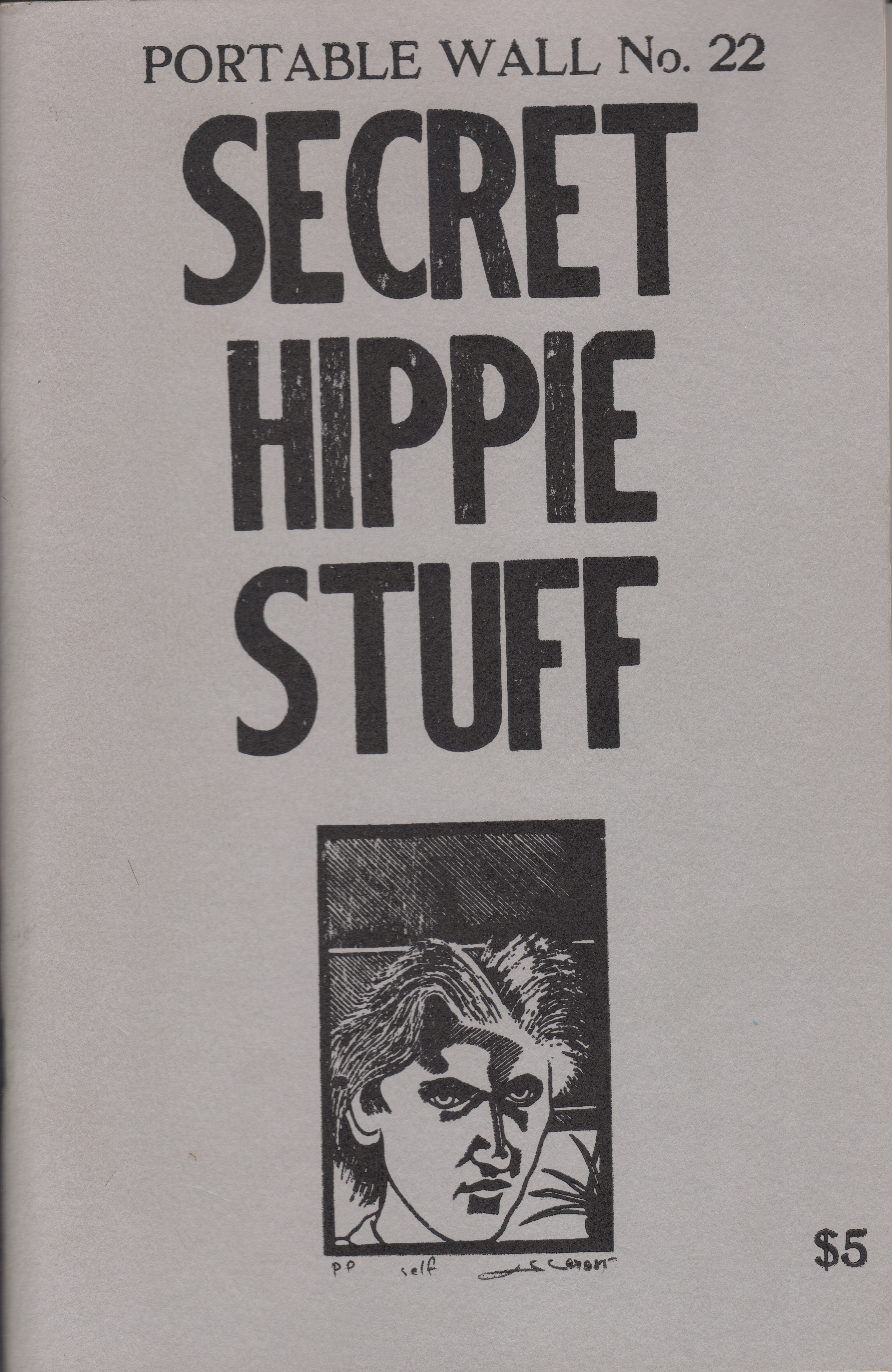
A cover from The Portable Wall. Illustration by Dirk Lee.
Our friend Emily told me about a favorite black, feminist, lesbian poet, Audre Lorde, who wrote what she called biomythography: elements of biography, mythology, and history crafted into a tale. This resonated with me because in writing about the central aspects of my life I cannot freely tell a living person’s intimate stories, not even my own.
However, for the record, I have not departed one iota from the truth. Not yet! It’s just that one day I might, in order to tell you ever more and more. However, I promise that I’ll tell you, my reader, when I do. I understand that you owe me nothing.
Can anyone, or even if they could, should they be honest about telling intimacies? Ideally, yes! But only if one were willing to suffer—and inflict on others—severe consequences. Here I’m talking about jealousies, past mistakes, remorse! I still want to get into all of the above, but without all of the painful sequelae. Mind you, I haven’t told the juicy stuff and I may never do so.
I almost did once, in 1978.
When I still published my magazine, The Portable Wall, (1977 to 1996) I discovered that freedom of the press is like so many other constitutionally protected freedoms: it isn’t.
I wrote that my late brother Tom’s painstaking effort in building a harpsichord from a kit to be a kind of “madness.” Tom was in my front room in Missoula, then, and read my remark pasted onto a camera-ready page. Without a word, he reached past me, pinched up the cold type that had been waxed onto the page, rolled it like a booger, and flicked it into a nearby garbage basket.
Angry, I stood up to tell him No fair! I had been kidding! About that time he swung a right hook to my head knocking me to the floor, my glasses clacking away. The next day I had a black, and very sore, ear. That’s only one of the bad things that might happen in publishing. Ask the cartoonists in Paris! Well, you can’t, of course.
Hence, the utility and necessity of Lorde’s biomythography. She was reaching for truth otherwise unattainable. On the other hand, I just want to share stories with my grandkids and any other interested parties. Unlike Ms. Lorde, I am still alive. More and more of the people of my generation are dying. Why tell stories? Well, what else are we supposed to tell?
I read on the internet that one should drink a lot of coffee. Today I drank a pot and a half and wrote steadily from 9 am to 2 pm, 3 hours. I wrote at the rate of 1/2 pot per hour, brewed as instructed, no breaks for lunch: I used one heaping tablespoonful of grounds, per cup, 12 cups per pot.
Reminds me of when I was in pharmacy school when I had trouble, at first, converting various units like tablespoonfuls, minims, grams, avoirdupois ounces, apothecary ounces, gallons, kilograms, liters, pounds, feet, pots, cups, and centimeters. Drops per ml? Don’t get me started. These conversions are troublesome especially on a timed exam in pharmacy school.
Suppose one teaspoonful equals 5 ml and 6 teaspoonfuls equals one ounce. How many teaspoonfuls in 1 gallon? A helpful young pharmacy student from California named Steve helped me set up such problems, thus helping me pass pharmaceutical calculations so that I would ultimately be able to earn a living and retire and write this.
He had me set the problems up so that each expression equals 1. For example, sixteen ounces/pint equals 1, and 5 ml/teaspoonful also equals 1. Also, either expression might be turned upside down without it losing its value of 1. One x one = one. You start with what is known in order to find the desired unknown’s value. Don’t forget to cancel terms!
Bottom line: I drank a lot of damned coffee today for what little I ended up writing. I still crave Kurt Vonnegut, Jr.’s writing. Emily said his book “Cat’s Cradle” is now a screenplay.
That’s the story that has the substance “ice-9,” she said.
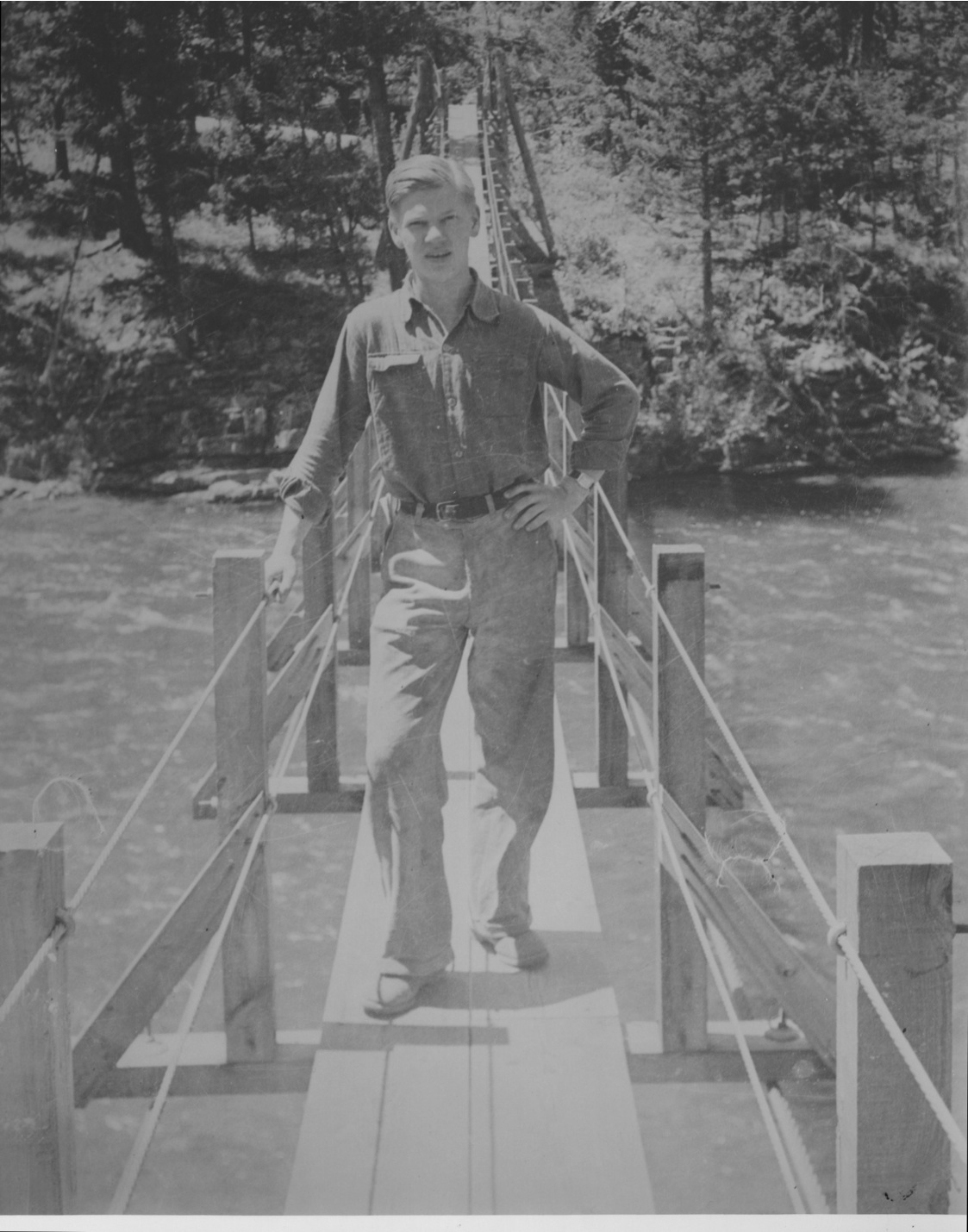
Carl R. Bonde served as a Glacier Park fire lookout before being drafted into the army for WW II
June 29, 2015
My fire lookout job had its roots in high school in Dillon, Montana, in 1967. My friend Tad told me he had a job as a lookout for the Forest Service. He was a good friend who used to get into trouble with me and my peers. Yes, I know one wasn’t supposed to do drink alcohol. Nor chew tobacco, nor smoke, but we did all of those things. Except I didn’t smoke because I didn’t know how. Actually, I didn’t chew then either, because it made me sick. Anyway, Tad showed me where the Beaverhead Forest Office was and I got an application I filled out right there. In those days the form was only a couple, maybe 4 pages, long.
I got a job planting trees out of Sheridan, Montana, in 1967. I lasted about a week. Obnoxious men, just out of the army, made staying impossible for me. Several of us were just boys, out of high school, and these others, these foul, nasty, noisy, dominating jerks filled up the silence with their card playing and cursing. I hated the way the a loud one walked around brushing his teeth. I never went back after the first week. My mother had just bought me a pair of logging boots that were hard to walk in. Well, they felt like they had high heels. My new jeans chafed and stunk after a couple of days. I was homesick, away from home, with the losers. We were all losers, I thought.
I did get a job the next year with the Forest Service on a fire crew, to be stationed somewhere in the Beaverhead Forest. I had the same problem, being unable to stand my fellow workers, but I got official USFS training! I also saw some of the other guys I had worked with before. A set of twins, named Garven and Virgil, slow talkers, overweight, but kind to each other. Oh, they kidded each other and bickered, but mostly they were kind. I learned later that they had stayed on at Sheridan planting trees. They told me that the noisy army brutes never returned to the crew after the first week either. From the way those army veterans had talked, I’d say they didn’t make it past the nearest bar where they probably drank themselves into a coma.
(I see the double standard and the irony here. Jump forward a dozen years.)
In 1976 Penny and I and the kids were back in Missoula after our hippie and USMC years fixing volkswagens and getting helicopter parts for supply. In January ’78 I filled out an 8-page employment application for the USFS. First in pencil, looking up all of the little trainings and short stints with the FS, then in ink. I checked the boxes for “any position” and “any wage” and the box for “Idaho Panhandle National Forest.” I figured anything too near Missoula would put me in competition with the forestry students and faculty.
In March I got a letter from Joe Hawley of Priest Lake, Idaho, with an offer for me to staff the lookout at Indian Mountain. I went huh? Not what I expected. (Maybe I would be an assistant to the real lookout for a year or two?) The wage for a GS-3 forestry aid was about $5/hr. I telephoned my acceptance. Joe assured me that bears were not an issue there.
The world looks altogether good from the lookout. We were young, employed, together, surrounded by nature.
In early June we sublet our University of Montana apartment and bought a bigger old volkswagen, a van. We allowed 2 days for the trip from Missoula to Idaho, slightly more than 200 miles on good highways. It’s just how we traveled then, in 2 cars, because one inevitably broke down. The 5 of us: Clara, age 3; Bob, 5; Todd, 7; then Penny and me, nominally adults, but less than 30 years old. Before we left I had Charles Seastone teach me how to use a chainsaw. I bought a plant identification book. Batteries for the radio. everyone had warm coats and sleeping bags. The kids all had leather lace up boots. This last proved to be time-consuming.
We drove 2 days along the Clark Fork river to reach the rainy, cold, mosquito-infested Priest Lake station. We had nowhere to stay, so someone told us about a slightly illegal campground near Nordman. Nordman! It was a combined gas station, store, and bar with a pay phone perpetually in use with a drunk talking on it. We drove a dirt road a few miles until we found a place to camp, an area of dirt in the woods where we could pitch our canvas tent. About 150 feet away a pickup with camper had a boy, maybe 10 years old, playing with a knife. He eventually came to our camp. Said his dad had asked him to ask us to borrow our ax. I asked him to bring his dad over to ask me in person.
While the boy walked back to his camp, we changed our minds about camping there. I took down our tent, put it in the VW. We drove to a place called Tule Bay on the east shore of Priest Lake, a spot that Jackson Miller had recommended, but it was, like, 15 miles from Nordman. We camped without any creepy neighbors. We had very little food or money. In one of the brief breaks from the rain of early June, we hiked to a meadow. We met a man without a shirt, white hair, wild look, turned out to be a philosophy professor from Hawaii. He grabbed a handful of miner’s lettuce from the ground and popped it partway into his mouth. “You can eat this! See?” he said. I reacted in fear. We made some canned chili on our camp stove for supper before it began raining again. We fixed a tarp.
Monday morning I drove the 1960 white beat up VW bug to work. The car did a strange thing whenever I turned on the wipers. It surged, quit, surged, quit, like that, in time with the wipers. Later, I looked under the front bonnet. A handsaw up behind the dash somehow shorted the current to the engine whenever the wipers reached their maximum travel. It shorted the ignition current at the switch. If the circuit had been protected by a fuse, it was no longer, because I had long ago learned to use some aluminum foil on the fuses so that I didn’t have to buy any new ones.
Because of logging on Indian Mountain the old route to the lookout was obsolete. A new logging road forked at the ridge, and each dead ended less than a quarter mile away. One ended within a half-mile of the top of the mountain, but there was no trail from there. Our supervisor had us make a new trail after he showed us the extent of each road fork.
A couple days before, at the station, Jackson Miller had asked me if I could use a chainsaw. “Oh yes, I lied.” He handed me a round file and suggested I sharpen the chain. I walked over to a bench with the saw and started in. I knew what I needed to do, I just didn’t know exactly how to do it, since this was my first time. As soon as I scooted the chain to sharpen a new set of teeth, my finger slipped and made a nice deep cut in my flesh, which started bleeding. I hid my cut by holding the edges together with my thumb, but soon there was blood on the saw bar. And on the floor. It wouldn’t quit dripping, so I asked another forest service guy for a first aid kit, in a soft voice. The other guy asked Jackson, who said to me, “Oh, did you INJURE yourself?” Then he said to the other guy, “you’d better take over with the saw until we check him out with it.” From that time forward I had no chain saw privileges at Priest Lake.
A confident freckled woman with great big broken-in logging boots named Babs had privileges, so she sawed and the rest of us dug with shovels and pulaskis (ax-hoes) to make a switchback trail through dense forest from the end of one fork of the logging road to the lookout. When we got within 100 yards of the top our supervisor had us abandon the switchback plan and head straight up. You’ll want to get straight to the lookout from here, he said.
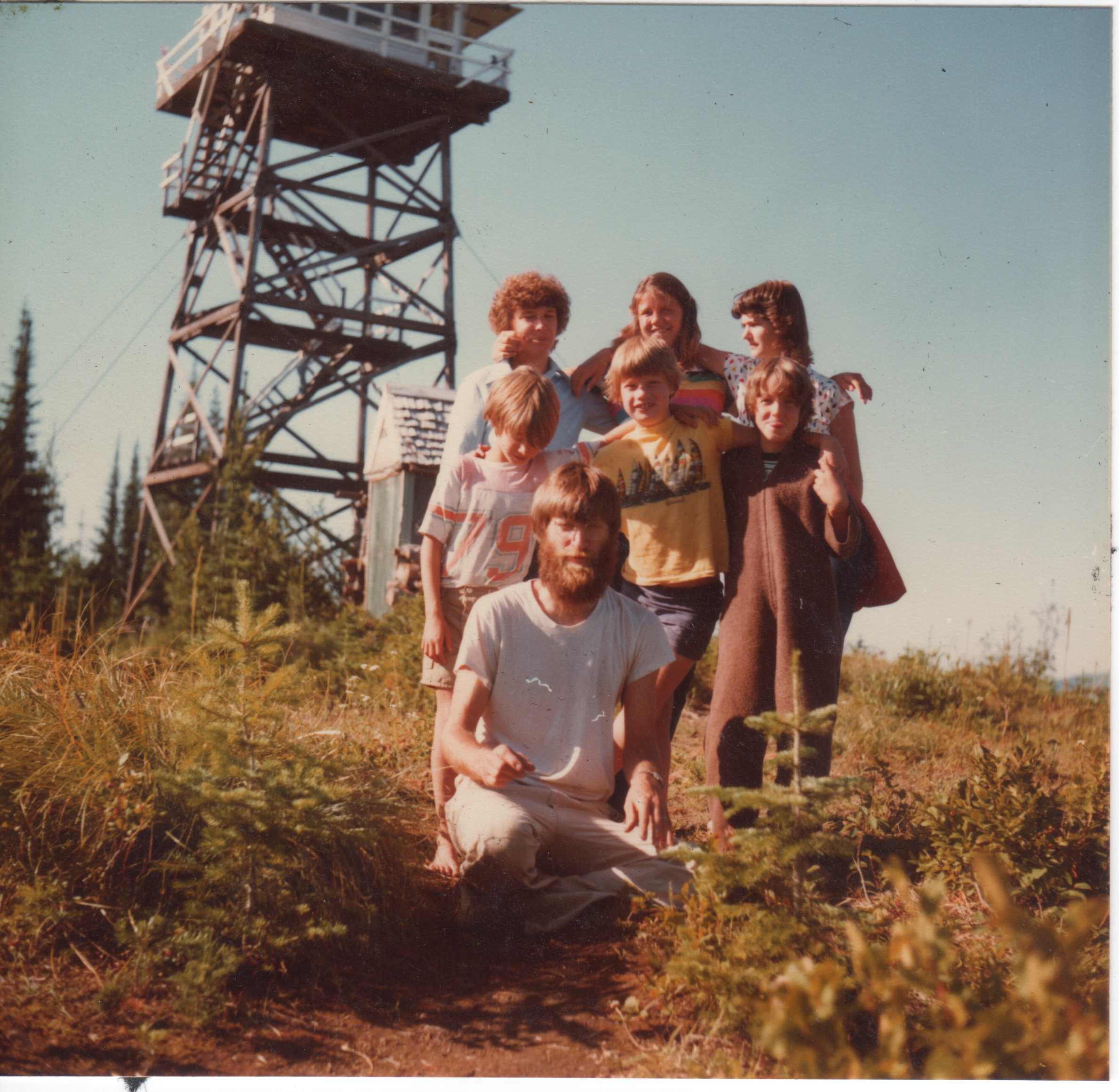
At Indian Mountain L.O. My sister Carol, daughter Beth Angel Rohrer, Carol Judd Sinclair, and our three: Bob, Clara and Todd. I’m in front. Note that one kid is wearing his pajamas. Penny must be the photographer.
Years later, in fact just last week, Penny and I struggled six miles up a mountain in Glacier Park on a well-engineered trail to Huckleberry Mountain Lookout, and, sure enough, when we were within a hundred yards of the tower, the trail ceased its well-engineered mode and instead went straight up the mountain in brutal fashion. A youngish couple ahead of us didn’t seem to mind, but we struggled and sweated. I was well-hydrated, so when I rested on my trekking poles, sweat dripped off my elbows, making dark circles on the stones in the path.
(Huckleberry Mountain was my uncle Carl R. Bonde’s lookout tower for several years in the early 1940s before he was drafted into the army for WW II and killed aboard the SS Leopoldville by a torpedo from a German U-boat just 5 miles from Cherbourg, France.)
At Indian Mountain in 1978 for the first time, after the trail had been cut but before our family moved in, our supervisor turned to me and suggested that I lead the group through the brush back to the other fork in the road. As I fought through the brush he marked the new trail with ribbons. Good thing! To my amazement, we missed the road and got lost!
That was the first time I learned an important principle of hiking up and down mountains: All routes lead to the top, but thousands of routes lead down, and very few of those will get you where you want to end up. In fact if the mountain is large, one can end up many miles from the desired place.
That’s why I always stay on the trail going down a mountain, but know it is generally safe to bushwhack up to the top.
Joe Hawley and Jackson Miller didn’t know that I would be bringing my wife and 3 small children along to the tower for the summer. Jackson told Penny he didn’t want the tower to have laundry hanging all over so that it looked like the grapes of wrath. Jackson also hobbled up (the man who had asked me if I had “injured” myself with the chainsaw had previously cut off part of his foot with an ax, but never mind!) because he said he couldn’t sleep knowing that our 3-year-old daughter was on the 45-foot tower that had only a couple of 2x4s for a railing around the outer catwalk.
Below, on the ground, I found some old window shutters that served as beds for the children. Small as the kids were I could just tuck them in on a low counter and in the corner behind the wood stove. This was such an improvement over the freezing and fear I felt at Tule Bay makeshift campsite! Penny and I slept on the bed, which we modified to make it slightly wider than a twin-size.
We five spent 3 summers at Priest Lake in the lookout tower, then one year at Seeley Lake, Montana, where I finally got checked out with a chainsaw to thin trees. Soon I strained my back and I’ve suffered the rest of my life. We lived in a tarpaper shack that was even larger than the cabin of the lookout at Indian Mountain. The 5th summer Penny got a job as lookout at Swede Mountain, so she took the kids. I got a pharmacy job in Billings.
Staffing a lookout is the best job there is. One lives where one works, and the cabin is a work of art. It is simple carpentry, but excellent. It has built in cabinets and small-stature appliances around the periphery. The ceiling had a trap door with storage above for wonderful old relics from the days when lookouts communicated by telephone with fire dispatchers and other towers.
The view from the lookout would be envied by anyone, since it has a full circle of blue sky, lakes, creeks and rivers, other mountains, beautiful valleys. The world is quite blue up there, and the view addicting. I used to look until my eyes watered and I couldn’t get enough.
We got paid to look out the window and to report by FM radio telephone to the fire dispatcher four times a day. First Hughes Ridge, then me at Indian Mountain, then Mike Farmer at Gisborne Lookout. The rest of the day we watched for fires, or did any other chore we could dream up: paint, chop wood, build a shed, fell a tree that blocked the view, like that. We got paid for 8 hours, but if a lightning storm moved in we would get overtime.
Sundays the air patrol fire lookouts brought us a newspaper. They buzzed the tower and dropped the paper on the second pass. It was the Spokesman Review, wrapped in plastic and masking tape, with some orange ribbons trailing behind. The kids searched in the alder bushes for the paper and it wasn’t always easy to find. The person dropping the paper always seemed to drop it too late, but we devoured the paper and we felt special, which was best of all.
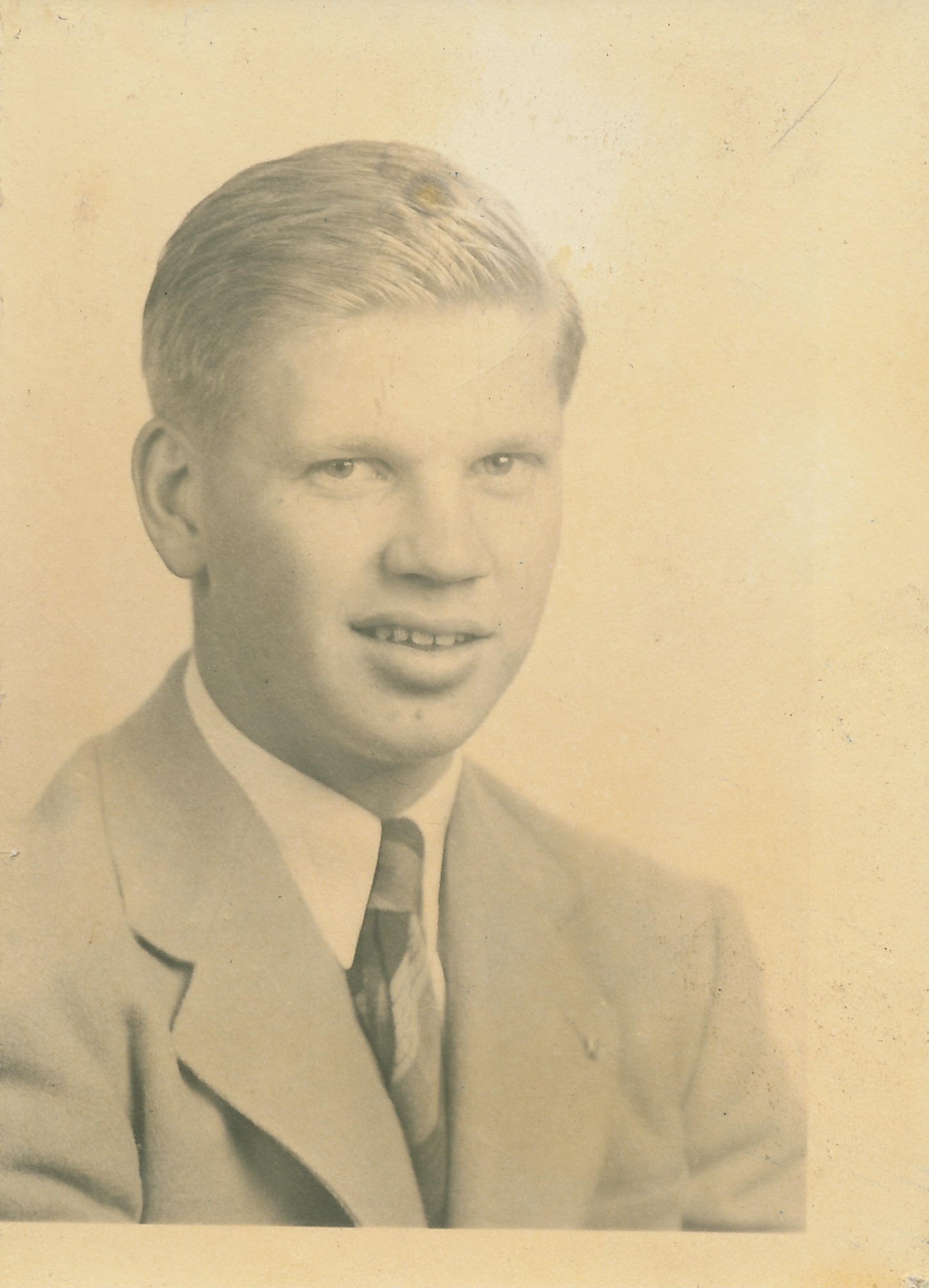
Carl’s high school graduation picture, 1941.
I imagine my uncle Carl felt special too. He knew he was smart, because he took army tests and they told him he was. He could hike long distances. When the men were training in the deep South, in Arkansas, their captain made them hike more than the 10 mile/day limit by having them hike 10 miles until midnight, then having them hike a second 10 miles after. Carl and his buddies infuriated the older, less educated, soldiers by keeping up a bridge game on these arduous hikes. According to Bill Moomey, the guys kept their hands in their back pockets, then during rest periods and meals, would pull them out and do the bidding and playing. They’d shuffle and deal again, and put the cards back into their pockets.
Bill Moomey, who died last year, was a close friend of Carl’s. He credited Carl with saving his life because the 66th Division had been devastated by the torpedo that struck the SS Leopoldville Christmas Eve, 1944. The 66th was assigned to the cost of France to contain German submariners in their bunkers.
Carl was no doubt changed by the view from Huckleberry Mountain, which allows an overlook on three sides and the access ridge on the forth, the one to the east. Bill Moomey told me that Carl would rattle off a detailed description of the Mission Mountains and Flathead Valley whenever someone asked him where he was from. I was in the USMC about 20 years later when we still used WW II weapons and camping equipment, and I can vouch that a common question was to ask where are you from.
Goofy high school kid autographs my uncle Carl Bonde’s year book in 1940. Only Romolo Pettinato is not just any goofy kid. He was destined to die in WW II. Same as Carl.
June 26, 2015
I’m still in search of “Bud” Carl Ralph Bonde, Jr.: Penny and I drove into Glacier Park to the trailhead for Huckleberry Mountain Lookout. The guide map said the trail was 5.6 miles. Why walk to this particular lookout?
Carl was employed as a fire lookout, according to his sister Corinne, for several summers in 1940 or 1941 or 1942, even, at Huckleberry Mountain. My first impression of the trail was that anybody who hiked through this splendor would eventually want to be a forester. Gorgeous. Ferns, mosquitos, wildflowers, spiders, dirt, rocks, lots of conifers. Forestry. In fact, that was Carl’s major at the university in Missoula for the year and one quarter he went before being inducted into the army for WW II.
That’s why I was so excited, even though I am 66 and tired and retired. And kind of lazy and weak. I’ll tell you I was more worried that I wouldn’t have the physical strength for the long hike uphill. The official sign at the Huckleberry Mountain trailhead said “6 miles.” P. and I. ended up walking 12 miles today. Same as what Carl would have done for work, only he would have stayed up on top until the end of the fire season, some time in late August, early September. In 1940, +/- a year or two. I don’t know!
Best of all, in my imagination, we would be arriving at the top of Huckleberry Mountain to encounter a lookout who could say, yes, here are the lookout diaries dating back to 1906. Which one was your uncle? Carl Bonde? Oh. Here are his, right here and here and here. His lookout structure burned in the mid-1940s, but his books survived. No they didn’t. Or maybe they did, I still don’t know. The lookout was there, just nobody in it.
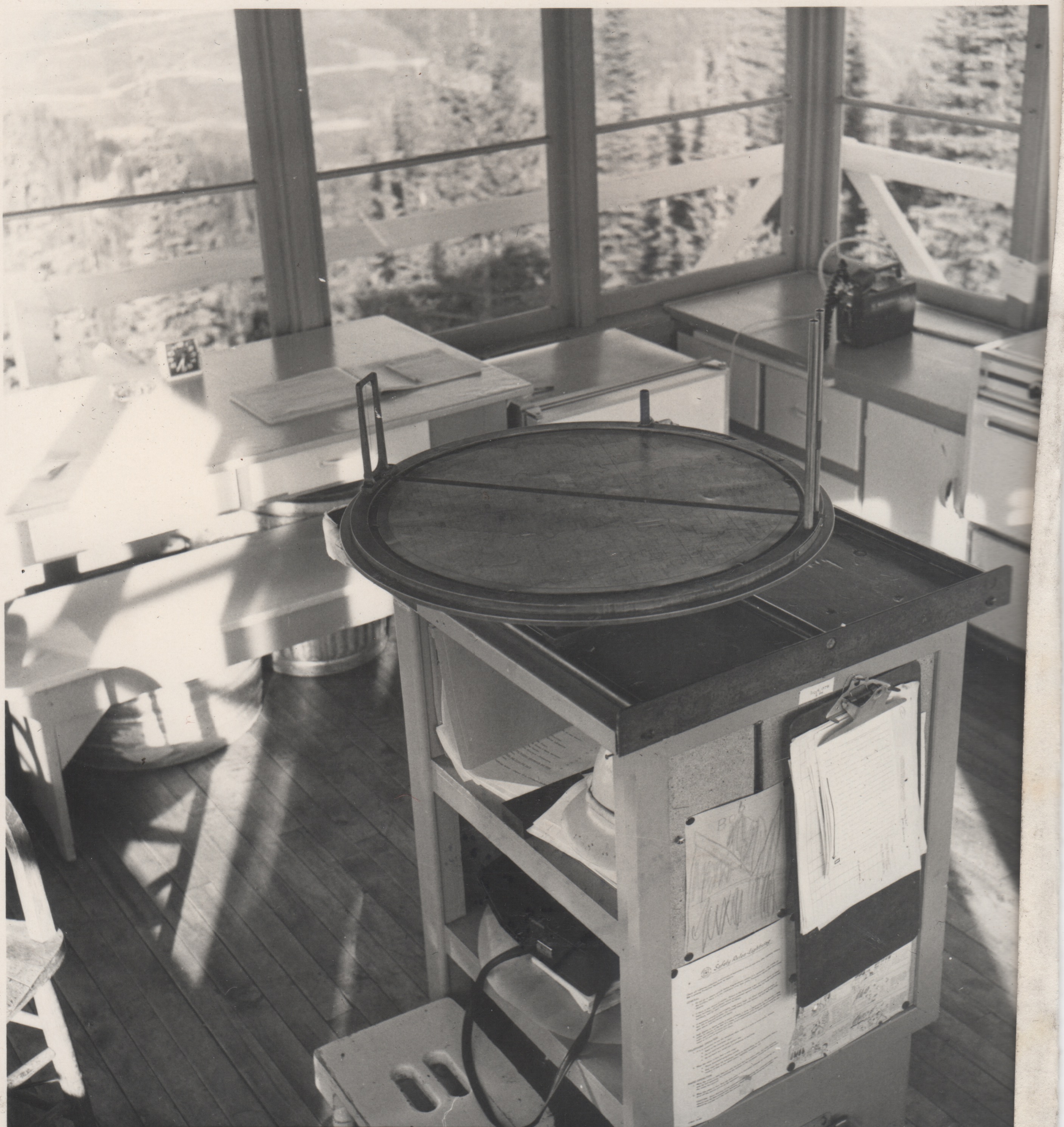
No lookout person. It wasn’t really a tower, just a cabin (seemed a bit smaller than the one we spent summers in—maybe 12×12 feet—but with lots of windows), complete with catwalk and interior with firefinder, atop a smaller storeroom with a padlocked door. I marveled that the tower was fastened down with short guy wires. Also the outhouse was fastened down with a cable (high winds???). P. and I looked through the windows, then returned.
We spent about 4 hours struggling up Huckleberry Mountain, 3 hours hobbling down. Saw two deer. Not white tails. They didn’t spook. P. and I were too tired to scare them. We just trudged past them. I got kind of worried about bears at that point, but we saw no blacks, no griz. We saw very little wildlife. We saw lots of wildflowers and plants, including the huckleberries. I can’t remember all of the flowers, so now I am seeking a guidebook.
When Penny and I arrived at Izaak Walton Inn at Essex we were pleasantly surprised that we could get a room without a reservation. Then I saw the brass plaque on the wall with the list of World War II dead. I immediately recognized some of them as being high school classmates of my uncle Carl. I copied the names:
Ross Armstrong,
Leslie Cornelius*,
William J. Gee,
Allen W. Havens,
Paul D. Havens,
Fred C. Huggins,
Everett Page,
John Page,
Russell D. Page,
Filbert Pettinato,
Frank Pettinato,
Romolo Pettinato*,
Russell Pettinato,
William R. Schultz,
Jack C. Scott,
Owen Wright,
Robert Wright.
I posted Romolo Pettinato’s inscription at the beginning of this piece. Here is the one from Leslie Cornelius:
You see, my quest has expanded from being strictly about my uncle Carl, to being about his high school classmates. Consider the Pettinato family that lost four young men.
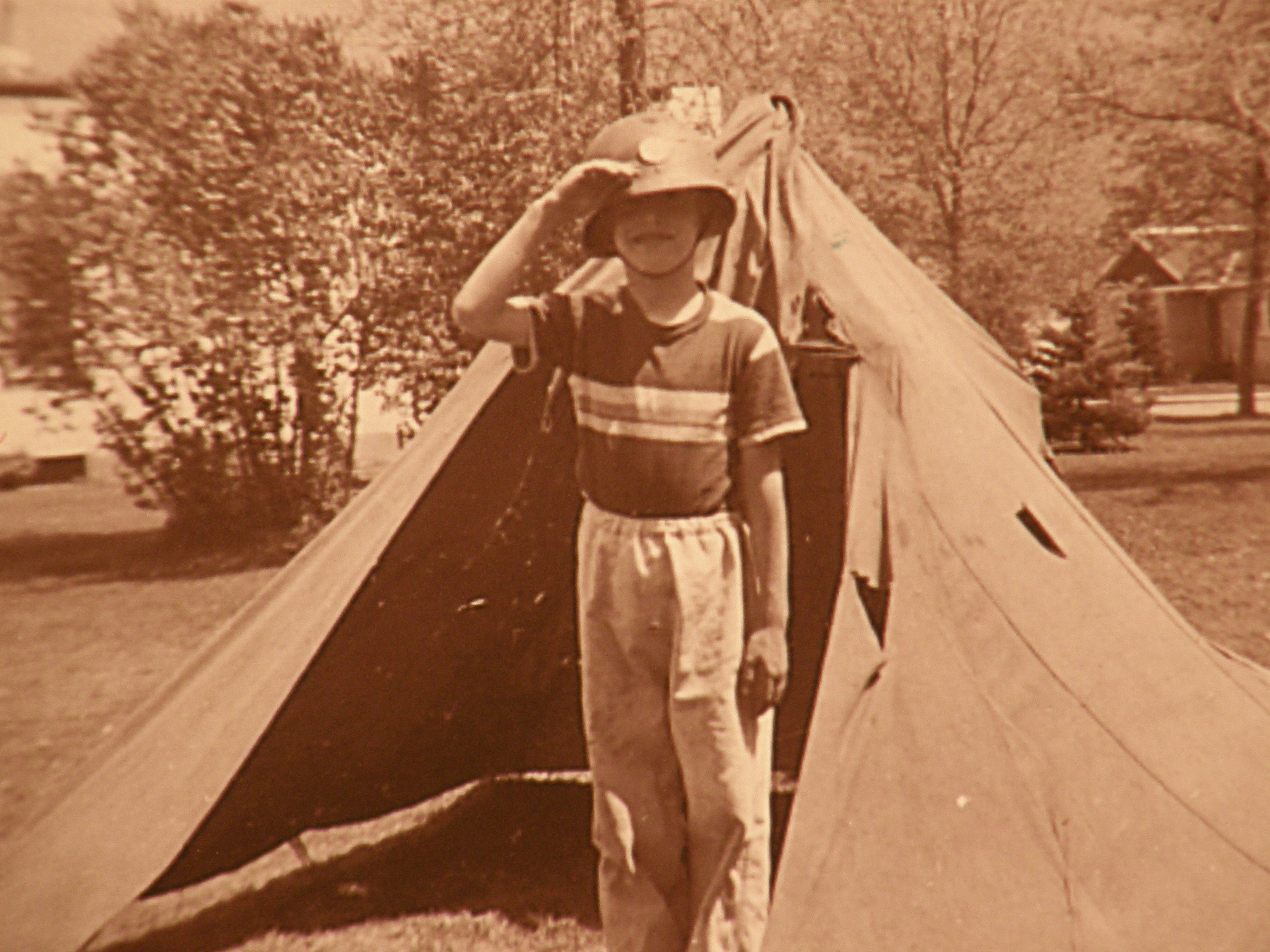
We played army, growing up in the shadow of WW II.
My grandparents were silver and beautiful. In Missoula in 1957 I wanted to impress grandpa that I played little league baseball.
I did not really play little league. I stole my brother’s mitt. I got signed for a team up thanks to my neighbor on the block, Jimmy Gaul, who did play. Jimmy tried to play catch with me but his baseball was hard and it hurt me when it hit me, bouncing off the right-handed glove that I tried to wear on the left. Into my face.
I didn’t like to play with Jimmy out in the hot sun where he hurt me with the hard baseball. I liked his sister Martha better, but Jimmy didn’t let me play with her. Also, Jimmy’s little brother Billy was too young to play. Jimmy was very good at baseball.
Here’s the rub: my silver grandparents were my late Uncle Bud’s parents, the ones who never talked about him, the ones who didn’t know what happened to him, other than he was lost when a ship was torpedoed in WWII in the channel. Here’s the rub: I now know more about Bud’s fate and his final months of army experience than his parents ever did. I’ve been to Cherbourg out in the channel in 2007. I’ve talked to his friends in Sarasota Florida in 2006. Finest guys I’ve ever met.
I didn’t stay with little league baseball more than a few weeks. My friend Jimmy Gaul broke the news to me that I was cut from the team.
“Don’t cry,” he said. I was nowhere near tears. I simply didn’t care and I was relieved that I would not have to go stand in right field near the fence any more. A kid who played on the team announced that his socks were rotten. I thought “that is what real players say.”
Ultimately I found Jimmy’s obituary. Sadly, in the Spokane paper.
8

June 21, 2015
Solstice. Gary Snyder’s poem listed some essentials for his children. “Stay together. Learn the flowers. Go light.”
Yesterday with a group: Lori, Grant, Cathy, Penny, and Steve, we hiked through an area just east of the Beartooth Range that had tens of wild bitterroot in bloom, wild clematis, death camus, arrow leaf balsam root (not many), forget-me-not, gentian, some in bloom, persiflage, penstemon, sage, chamomile (in the parking area), sticky geranium, roses, and many, many more wild plants that I can’t remember. I’ll mention the ones that come to mind later.
Grant showed us a rare and protected plant, perhaps 2 inches high, Shoshonea parvulum. Grant said it lives only in the Beartooths and the Pryor mountains. I crouched down, laid on the ground actually, and looked carefully. Its petite and downy length was said to resemble a carrot. I didn’t think so. It had complicated yellow…
View original post 809 more words
June 21, 2015
Solstice. Gary Snyder’s poem listed some essentials for his children. “Stay together. Learn the flowers. Go light.”
Yesterday with a group: Lori, Grant, Cathy, Penny, and Steve, we hiked through an area just east of the Beartooth Range that had tens of wild bitterroot in bloom, wild clematis, death camus, arrow leaf balsam root (not many), forget-me-not, gentian, some in bloom, persiflage, penstemon, sage, chamomile (in the parking area), sticky geranium, roses, and many, many more wild plants that I can’t remember. I’ll mention the ones that come to mind later.
Grant showed us a rare and protected plant, perhaps 2 inches high, Shoshonea parvulum. Grant said it lives only in the Beartooths and the Pryor mountains. I crouched down, laid on the ground actually, and looked carefully. Its petite and downy length was said to resemble a carrot. I didn’t think so. It had complicated yellow flowers.
We saw orange lichen and puff ball mushrooms. Lupines (just a few). Cinquefoil (yellow. I thought they were buttercups). Wild roses. Like G.Snyder, I love to identify plants. I used the wild plants near the trail as an excuse to ask Lori their identity and to hike uphill slower and to rest because we gained 1,700 feet on an old switchback trail. I had a hard time with the climbing.
Lori is a healthcare professional so she asked me annoying open-ended questions. I hoped my brief terse answers would make her think I was a grumpy old guy and would fool her into thinking I was in better physical condition than I was. Perceptive, she probably was not fooled.
I stopped to use the bathroom as the others hiked ahead. I thought about bears. After I had finished burying my business, the other hikers watched me catch up to them when, lo! they saw a black bear trot across a meadow uphill from me, perhaps 400 yards across the draw from them. They said the bear was “black and distinctive.” Lori made a photograph with her smart telephone. The light made viewing the image somewhat tricky, but I saw a bear, all 4 legs, built like the Mercury Space Capsule, only bearlike and black. It had a large round butt, pointed snout near the ground. The tall brush by the trail kept me from seeing it. Some in our party saw a bear in the same meadow when we returned.
The tansy we walked on smelled deliciously sweet.
We hiked 10 miles. We were all boomers. One of us was near exhaustion, with blood blisters on his toes from the 5 mile downhill to the car. Home, I drove 4 blocks to a restaurant for supper of soup, burger and beer. I was in pain. Later I considered the consequences of turning over in bed, an effort. My toes felt like a row of painful bubbles. Today I am much better. In fact, we walked about a mile for ice cream down town. I had a single cone of espresso heath. I did not share it with my nephew’s daughter.
Surprised me that about half of the hike had been through the Sunlight Ranch. That’s where we saw the bitterroot flowers and a diverse lot of wildflowers. We saw one noxious weed, 2 bunches of early sprouted spotted napweed, which we pulled. Turns out Sunlight Ranch is immense and well-managed. I was surprised that Grant and Lori, our Montana Wilderness Association guides, did not talk about threats to that area. Well, it wasn’t wilderness, although about half of what we hiked on was BLM or Forest Service land. Grant did say that he opposed any chainsaws in the wilderness because of erosion of wilderness values. He said that any exceptions to the rules could, in a generation or two of such, result in too many.
We saw a grizzly paw print. Grant explained that the straight line and the claw marks made it probably that of a grizzly. All of us except P. had bear spray. I tempered my guilt (for being afraid of bears) and resolved never to use the spray on any black bears. We saw plenty of rocks that had been flipped, presumably by a bruin looking for grubs. I thought about bears. A lot. I did not see any trees that had been stripped of bark by a bear.
Lunch. We ate our sandwiches when we reached a treeless saddle with a great view of a geology lesson a mile or two away, on the east side of the wilderness. It looked like a mountain in cross section. We saw no other hikers, or even any recent human footprints. The area was good elk and grizzly habitat, with grassy expanses, timbered draws, and high timber with canyons and creeks. I don’t know what species of plant the tall brush was, but it wasn’t the kind in northern Idaho, alder I think, that takes over when an area is clearcut.
Water. P. and I were the ones without “camelback” packs and tubes for drinking. I had five 12-ounce plastic bottles and P. brought along 4. Just right for her, I ran out of water a bit early. All of us except Grant used trekking poles. All of us except P. wore boots. She wore running shoes and did quite well, except she stepped in mud that got her shoes dirty.
Weather. Perfect, mid-60s, partly cloudy.
Birds: mostly we heard, didn’t see. Grant saw a mountain bluebird. I heard a crow. We heard some other common sounds but I don’t remember what birds make them.
Small mammals. One dead vole on the trail. No squirrels, chipmunks, rabbits or mice.
One small snake retreated in nervous fashion. Looked like it went in reverse. Hard to tell. Grass.


 insearchofbud