
March 5, 2024
The problem: my muse is an asshole. There. I’ve said it. I’ll dork around without inspiration. Nonetheless, I’ll tell my story, which is, frankly, dull. Well, depending on your interests. I am keenly interested in Gunther’s bowel movements (always in a wholesome way). See, we worry about the little fellow’s quality of life. That’s why we took him on a walk today to Riverfront Park, here in Billings. I love the parks here. Billings may have a dozen parks nearby, some with miles of trails. Sometimes wildlife.
P. drove us to Riverfront about 8 this morning, earlier than usual. Frost on the car. Snow gone. Morning traffic. We drove downtown first to mail a bunch of my books to Todd, who paid for the last printing. I sent another book to my late cousin Dick’s son, who lives in Tacoma. I was the only customer in the post office. I folded my receipt. Postal receipts, these days, print the address you’re sending to. I like that.
Anyway, Riverfront was quiet, except one man whistled for his dog and a flock of Canada geese took wing when Gunther trotted toward them. Mallards, probably 10-15, swimming east. Some of the lake was frozen. We hiked between several ponds with lots of cattails and rushes, but heard no redwing blackbirds. I heard a familiar bird, though, but I can’t name it. No robins. No deer. A man with a dog. Gunther and the dog drew close, but the other dog was larger than Gunther, and he shied, ran away. The old man with the dog said nothing, and neither did I, but I think both of us were glad the dogs had a sociable episode. Circling the lake, we walked about a mile and a third.
It’s been a quiet day. I napped and P. baked bread. About five we opened the 4th Avenue door of the First United Methodist Church, to put homeless families up for the night. It’s a hell of a lot more complicated than that, but we do help shelter families who would otherwise have to sleep in their cars. Many nights this week P. sleeps at the Methodist church as a chaperone. I spent a night there too. Several good friends from the nearby First Congregational Church have also volunteered to sleep over as chaperones. I must hastily add that we strictly avoid any proselytizing, or even any mention of religion, icon, writing, symbol, grail, shroud, or temple. Instead, we talk about writing, poetry, jobs, transportation, literature, basketball, military service, and stuff like that.
Last night, I was in the church kitchenette, I think you’d call it, and speaking with Paolo and Nancy. A youngster darted in and out. I mentioned how pleased I was with the youngster because he could “climb around the stair banister and railing like a monkey!”
Paolo smiled. “I delivered him a few years ago, you know.” In fact he is an OB-GYN and Nancy is an OB nurse.

February 26, 2024
Several people told me they’d like to write a book.
“Ahem.” Now that I’ve gotten one into print, I’ll briefly share my experiences with you. Writing and editing and printing my book took about a year, but of course the stories came about over a much longer period. Years. My older friends, such as you are, all have a lifetime of stories. I call that material the mother lode that can be mined. Such a pleasure to dig them out.
I don’t write fiction well. I’ve tried making up stories and I’ve seen how the listeners disappear to do something else.
They seem to enjoy the ordinary truth, the deaths, loves, adventures, the injuries sustained.
Therefore, if I want a reader, I must write the truth. Wish I could say that I was not fearful of consequences. Many times I was, tossing in bed, bad dreams. Are you still with me?
PHASE ONE
I guess phase one requires reflecting on life. Going through old photos and letters helps. Talking with the people in the photographs is a boon. They are apt to remember the obscure details, the jewels that make the story vivid.
Here’s an example of a story.
In 1967, we were seniors in high school in Dillon, Montana, restless, physically strong, intentionally inscrutable. We loved to do the forbidden, freely using alcohol and tobacco, climbing up and down the mountains in the Pioneer range, doing pranks in town, trying to write a comic book of our own. We made 3-4 8mm movies from scripts we scribbled the night before. The super hero comic book would have been printed on an A.B. Dick stencil duplicator. We did a couple of pages before our plan fell apart.
That February, Tad Henningsen and I were into climbing. Rocks, buildings.
During the week, we scouted downtown for buildings to climb. Skeet’s Cafe had a sort of tower over the front door. It probably still does. We selected a route to climb to reach the rooftop pinnacle, starting at a nearby building, mounting a wooden stairway on the alley.
As we started the route, I had to pee. At the top of the wooden stairs I peed on the back steps of what turned out to be a rooming house. In those days Dillon had several blocks of buildings with rooms to rent. Homeless old farm workers and ranch hands lived in them if they had the few dollars to pay.
Turns out the route up the back stairs didn’t lead to any route to the roof, so we hustled down to the alley again.
A woman burst out the door I peed on. “Go in the alley,” she shouted. “Don’t pee on my back steps.” Tad and I looked at each other. We yelled some double-talk we’d been practicing: “Odd’n guy’n yank ’n took ’n sissler off my bubble,” we shouted.
“That’s no excuse!” the woman shouted. (We jogged away, giggling.)
The details, the jewels: the barbed wire someone strung to keep us from jumping roof to roof. The injury to my first finger from the barbed wire. The night time visit that trip to Dr. Seidensticker to have my finger stitched up. The jokes Dr. Seidensticker told us. (Why is a turd pointed at both ends? To keep your asshole from slamming shut.) Dillon is at high altitude; February can be brutally cold and windy. We were invincible teenagers. I didn’t own an adequate coat. I had a vest I borrowed from Les Gordon that looked like a gorilla. Our Converse All Star shoes had holes in the tops over the toes. We studied the art of “not caring.” Except we did care. We wanted to seem to not care, in order to escape the adults in our lives. We wanted to be outlaws then.
Stories. We all have them. They are good and necessary to tell.
Thus, we have the raw materials. How do we turn those incidents into stories?
Answer: find a kid. Nephew. Grandchild. Any audience will do.
Sit them down. Tell them what happened in a straightforward way without much elaboration, except for those golden details. Like the barbed wire. Perhaps mention the Redwing Irish Setter Boots with Vibram soles you bought for rock climbing. If the kid clambers for more, keep telling the tales. Show respect. Stick to the truth. At your age, you don’t have much to lose.
You need a platform to share your writing. I recommend WordPress. You can start your blog at no cost. Link your entries to your Facebook page. That way, you can develop your voice. People know when you tell them the truth. That’s your voice. It is your only salvation. Nothing else will do.
I think you need a group, or at the very least, a coach. You need someone to kick you in the rear and get you writing when you don’t feel like doing it. Coaching costs money. I’ve paid $25-$50 an hour for sessions, in which we talked about writing. Less money gets you the same result. You can get your coaching on the phone from any licensed counselor. This coaching works because you don’t want to waste your money. If you don’t write, you betray yourself.
Nine years ago I signed up with noted Billings author, Russell Rowland, who led a writing group of about twelve. He had us meet once weekly, each of us submitting a manuscript. We took turns reading to each other and criticizing. I attended two of Russell’s excellent 12-week sessions. I’ve made friends with most of the other attendees. I recommend joining such a group. Helps you find your voice, which I said before, is the chief thing. I remember when I wrote a story about the first time I experienced sexual intercourse, I felt so ashamed, that I was afraid to attend the next group meeting. I showed up the following week, but I felt chastised by the group for withholding my story. Nonetheless, I eventually shared with the group. Afterward, I didn’t feel unique, because all of the others (I think) could have told a similar narrative regarding their sexual adventures.
You will continue to write your stories, paring them down, bolstering them with great details. Once you collect the stories, you can start your research, by far the most enjoyable stage.
For me, research was picking up the phone and calling old friends. I told folks what I was doing. I learned people don’t necessarily want to be portrayed as teenage criminals. People, like us, were obtuse and foolish. Your old friends will help you moderate your language.
I kept a yellow pad at my elbow to take notes of what my old friends said.
I’ll admonish you not to be afraid of telling your stories. Aloud, I mean, even if you’re thinking of writing a book. I believe that is good advice. You might hesitate to tell your best stories, perhaps fearing the story will have been used up, like a joke you wanted to tell. “Stop me if you’ve heard this…”
Instead, I want to assure you that repeated telling of a story can help you pare the tale to its best version. Tight, terse, telegraphic.
We’ll talk more, later.
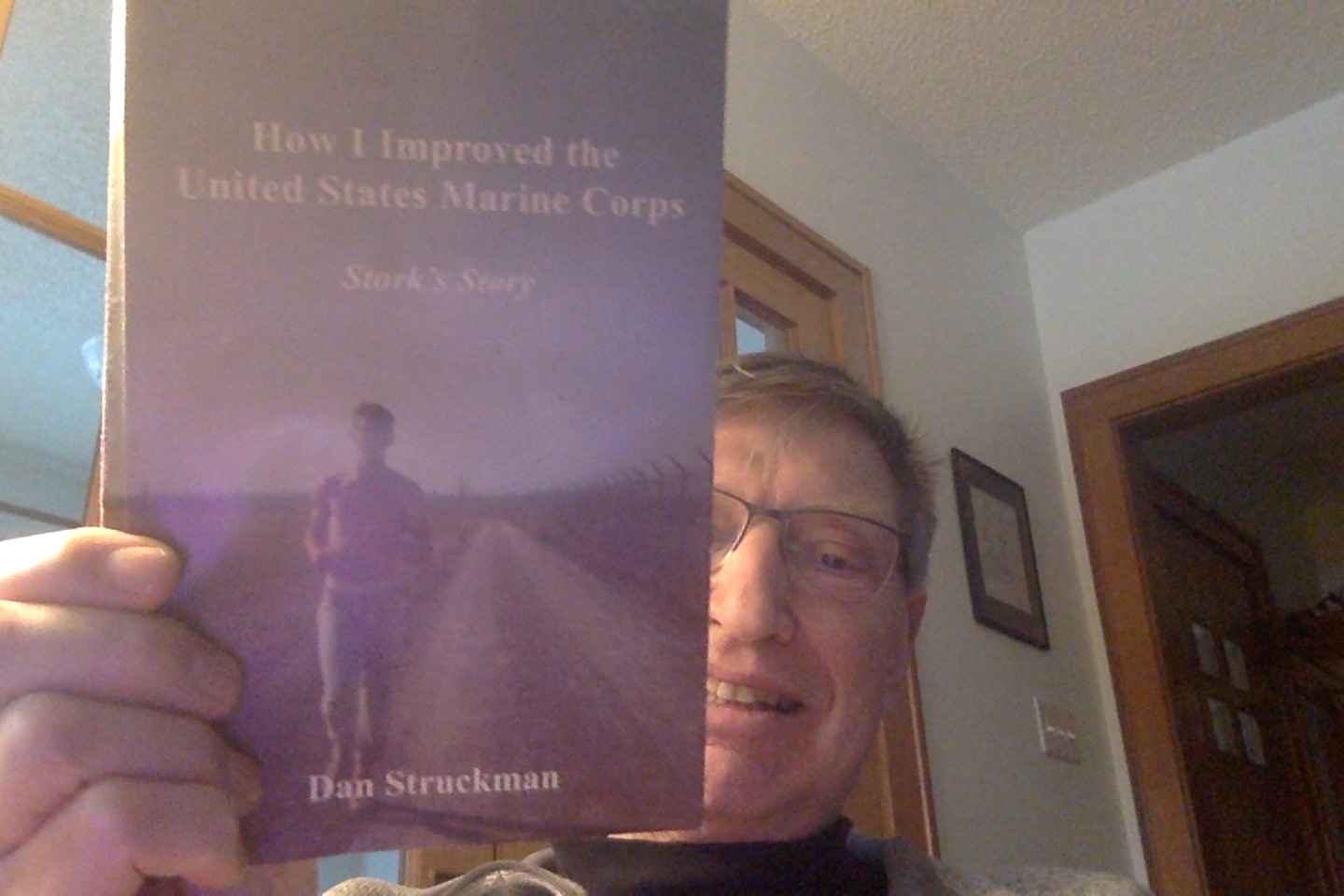
Pictured is my memoir. No. Me holding the cover of my memoir. I’m attempting to smile, sort of.
Two women and I gleaned stories from my blog, “Insearchofbud,” arranged and rearranged them into a sort of timeline, then edited the hell out of them until every last comma, semicolon, and dot had been scrutinized and chased from one clause to another. Even then I misspelled the word “excreta” (but we caught it before press time). We finally agreed it was done. Well, almost agreed. Actually, we disagreed.
Publishing a book has been like . . . sitting with a laptop for many evenings, summer and winter. Making diagrams on a yellow legal pad. Researching by phoning and emailing old friends. Good times, really.
Who cares about the life and times of an anonymous pharmacist (like me) in eastern Montana? I kept asking myself. On the other hand, who much understands the answers to the deep questions. Sex, mainly. Dogs, too. And women! What is common sense? We have way more questions than answers. Why do I have such persistent feelings of depression?
More and more God looks like a wise old black woman. The Book of Changes tells me the Creator’s image is the sky, or a strong horse, or a dragon, permeating everywhere, all the time. I’m good with stopping at “the sky.” I’ll take a rain check for the others. What is the nature of reality?
Who cares about the life and times of a retired, anonymous roofer in Phoenix? Truth is, he’s way more than just a “retired, anonymous roofer.” I’d like to tell his story next. Also of his dog, and his guitar collection. I mean to tell about his friend who took our hero’s ten dollars for an ounce of weed, and forty years–no fifty years–later, no weed. Not even an apology!
My friend in Phoenix is a Trumper. He started out like me in Dillon Montana, was a hippie, played rock and roll music, liked cannabis, hated the thought of hurting another person, so successfully became a conscientious objector during Vietnam. He is the same good friend as before, but his reality and mine are poles apart.
He claims to have forgiven our friend who absconded with his ten dollars. But neither of us can forget what may well have been a small lapse of memory, inconsequential. Well, not inconsequential. I went from Seattle to Fairbanks with only ten dollars and my charming wit.
My book. I’ve been through it so many times, I hope you can find something new in it. I don’t have it yet. The printer said it’d take 10-15 days. Business days, then they’ll ship it to me if I send them hundreds of dollars. It’s good.

Leslie Fiedler wrote:
This world is the only reality available to us, and if we do not love it in all its terror, we are sure to end up loving the “imaginary,” our own dreams and self-deceits, the Utopias of the politicians, or the futile promises of future reward and consolation which the misled blasphemously call “religion.” The soul has a million dodges for protecting itself against the acceptance and love of the emptiness, that “maximum distance between God and God,” which is the universe; for the price of such acceptance and love is abysmal misery. And yet it is the only way.
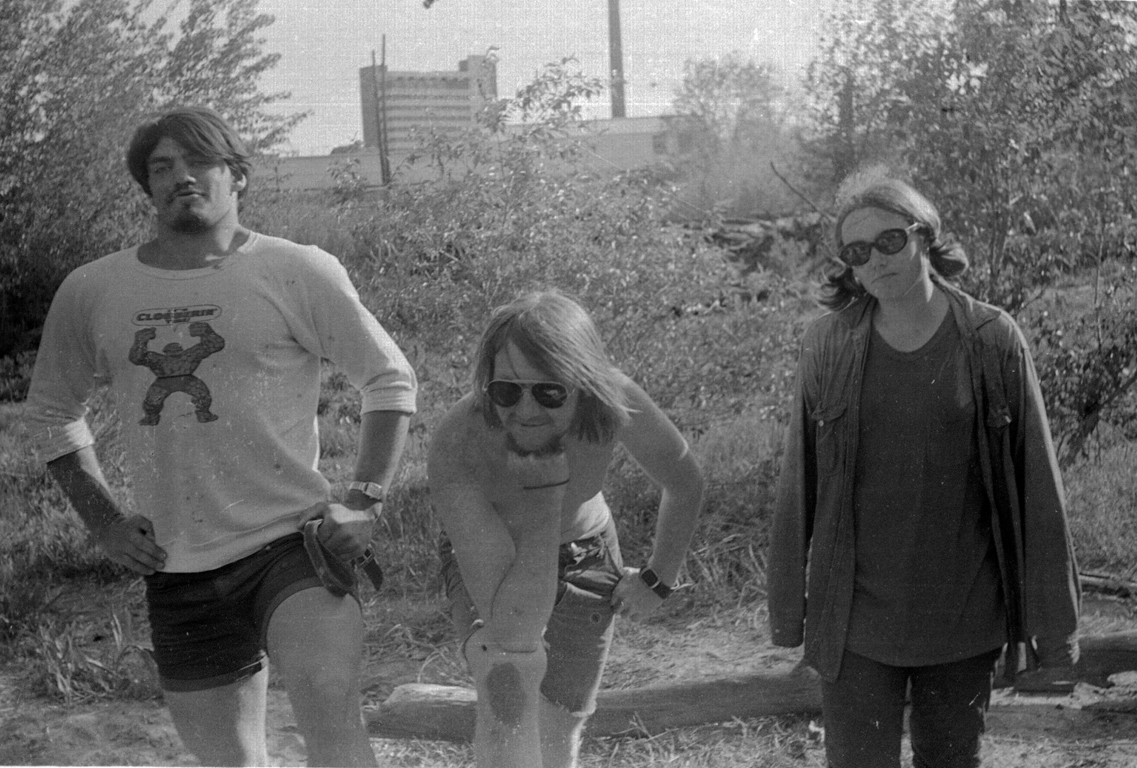
Duck stands next to Steve the Star and Becky Home Eckey.
January 8, 2024
Phoned Duck today to ask him if I could write about his life. He and I are on opposing political sides at this late stage of our lives, yet in the seventh grade we were tightly aligned. We were good friends. We still are. Duck is a Trumper. This put me in such a depression that I couldn’t talk about it. I still feel ill in my stomach. The trouble is, I love and admire Duck. We grew up together, although for many later years, we’ve been far apart geographically and politically.
I told Duck I wanted to interview him because I am fundamentally certain of his good will and his personal honesty. Along with our deep roots together on this globe, somehow he is on the north pole and I am on the south.
“But we’re on two ends of the same earth,” he said.
I ended my pitch noting that I thought if I could understand his view of the world, of the universe, it might make sense and I would be better off somehow.
Imagine a world of bubble people. Each one projects a unique mental “reality” superimposed on the world as he experienced it. This model includes the concept of (1) an ultimately true phenomenal existence (reality). And (2) many people who experience that the world differently, based on the above mentioned mental states. The potentiality is called an “entelechy” in the I Ching.
I’m exploring the basis of our differences.
He felt sorry for me when I first moved to Dillon, Montana, because I was alone and Kirk gave me the daily “Struckman treatment” whenever we walked home from school. Jim Feathers was another who walked with Duck and me. I don’t even remember what the Struckman treatment was. I’ll ask Duck about that the next time I call him. Duck said he didn’t like that I got the “treatment.”
We talked for about an hour. Finally, Duck told me his dog, Louie, that he’d feed him soon. In favor of Duck feeding his hungry dog, I excused myself and hung up.
I mentioned that I long admired Duck for his truthfulness. He said something happened to him before puberty that made him want to tell the truth. He declined to tell me until later. I thanked him for that.
The way Duck mentioned the “Struckman treatment” and his regret that he didn’t protect me, made me think maybe Duck has thought about it since with repentance. I barely remember it. I think I was bullied.
Duck remembers when Jim Feathers, he, and I were exploring the buildings at Western Montana College in Dillon in the 8th grade. He noted the custodians had trouble with us. Duck said we were hiding in a men’s room from the custodians. Suddenly, Jim made noise and ran to a window and wriggled out. Duck and I followed him, he said. (I have a slight memory of this. Did it happen that way?)
He suffers from chronic heart failure bad enough that he is short of breath. Also, emphysema, but not severe enough to require oxygen. He said he monitors his vital signs and weight fairly closely. He has to. He also complained of gynecomastia. I observed that I have large breasts too. I told him I wear a bra. Then I told him I lied about the bra. I’m thinking he lied about the gynecomastia also.
I enjoyed speaking with Duck today. He played his bass guitar yesterday at church. He played his fretless bass, not his five-string. He mentioned that he has only six guitars.
His brother, David, visited him several weeks ago at his home in Phoenix. Well, a little north of Phoenix.
We reminisced about Jim Feathers and Larry Felton, two acquaintances who became archaeologists of renown. Also, people from our hippie days who continued to make music. Bob Bartmess and Doug Sternberg, guitarist who played a red Epiphone, then bought a gold Gibson Les Paul. Both Bob and Doug have died.
This is what David Lenhart posted in an email or text. I can’t remember which.
Timeline of Drummer Dave
Mr. Mirage and the Illusions: Dillon, MT 1966
David Lenhart, Crest drums
Steve Elwood, guitar & vocals
Ed Moony, guitar & vocals
Brad Briggs, bass (started with playing bass on a reg. six string guitar until he got a bass guitar and amp. He had to quit a short time later as his dad wanted him to concentrate on other things [Mormon upbringing]).
The Phyne Lyne: Dillon, MT 1966-7
David Lenhart, Ludwig (Oyster Black Pearl) drums
Steve Elwood, guitar & vocals
George Miller, guitar & vocals (replaced Moony)
John Walker, bloody keys piano, and then electric piano
Mike? , bass, preacher’s son from Deer Lodge, MT
Osprey: Helena, MT, 1968
David Lenhart, Ludwig drums
Doug Sternberg, guitar & vocals
Bob Bartmess Weaver, bass
3 Farthing Stone: Missoula, MT, & 1st time to Richfield, ID, 1968
David Lenhart, Ludwig to Double bass set Slingerland (Champagne Sparkle) drums
Doug Sternberg, guitar & vocals
Bob Bartmess Weaver, bass
Manager: Steven Spoja (Spoge)
Then we added a 2nd guitarist;
(can’t remember his name) guitar & vocals (Ralf’s friend from Miles City),
and changed our manager to: Ralf Compton
Hornbeam: Missoula, MT, 1968
David Lenhart, Slingerland drums
Doug Sternberg, guitar & vocals
Marilyn Sternberg, guitar
Doug Pollard, Hammond keyboards
Bob Bartmess Weaver, bass
Blackfoot River Family Band: Missoula, MT, up the Blackfoot River (cabin/tipi living), 1968-9
David Lenhart, Slingerland drums
Doug Sternberg, guitar & vocals
Marilyn Sternberg, guitar
Doug Pollard, Hammond keyboards
Bob Bartmess Weaver, Bass
Jack & Lillian Sturgis, back-up singers and roadies
Wayne Silversonic and the Cranistones, Missoula, MT & Seattle, WA 1969-70
We played several gigs at The Univ. of Mont., Missoula, MT; 1st billing under Eric Burdon and War at Montana State Univ. in Bozeman, MT; Sky River Rock Festival 1969, WA; and Eatonville Rock Festival, WA in 1969 or 70.
David Lenhart, Slingerland drums
Steve Leach, vocals, lead guitar, flute
Leon Gulbro, vocals, 2nd guitar
Bob (Bartmess) Weaver, bass
Don Gilbert, Hammond keyboards, xylophone
Michael (Milo) Carbis. Technician
1970: I left Wayne in Seattle, moved to Yakima to again be with Doug & Marilyn Sternberg, Allen Lenhart & Doug Koontz. No real performing band was developed. A group of people (Doug & Marilyn Sternberg, Jack Cheshier, John Gooderl (RIP 2014), Stanley D. Hooker, Allen and I moved to the old Richfield Hotel in Richfield, ID . The first few floors had been converted into a gymnasium. There was a basement and top floor for living quarters. Vern Webster of Pocatello, ID was the owner. Lots of good times there and then boredom set in. Our only real guitarist, Doug Sternberg, had lost the will to play for a time.
2nd time to Richfield, ID, 1971
Allen may know what we called ourselves. I remember playing a one- nighter in Sun Valley during the summer and another at a bar near a University. A big fight broke out there and we played “Give Peace a Chance” until the fight ended and we finished the night out.
What was the name of this band? Missoula, MT, 1972-3
David Lenhart, drums
Ron Taylor, lead guitar, vocals (from Livingston, MT (my local postmaster in Cowiche, WA was his groupie in their younger years.
Barry Walden, guitar, vocals
Mike ?, bass, vocals
I then moved back to Yakima, WA. Why you ask? To find work in the fruit industry and play on the side.
I joined some hic country band in Yakima and lastly,
The Arkansas Travelers, Yakima, WA, 1979-80
After 15 years of being a starving musician, I retired from playing at 30, got a steady job, married my
love, Jeanne (Summer) Kezele, and raised a family. YES! I was now comple
No more procrastinating. This won’t be as good a letter as the one I wrote a couple years ago, but it’ll have to do.
Good news. Hmm. We have a young man living upstairs. He sometimes comes down to socialize, and that is good. His aunt recently gave him a new pair of basketball shoes, so he is pretty happy. He’s also gone to visit his dad from time to time and they have gone hunting, successfully getting deer. I don’t hunt, well, I went once, but I haven’t gone since. It’s a long story. I never liked venison very much. Or lutefisk, of course. I’ll make some lefse today with Jon, my nephew.
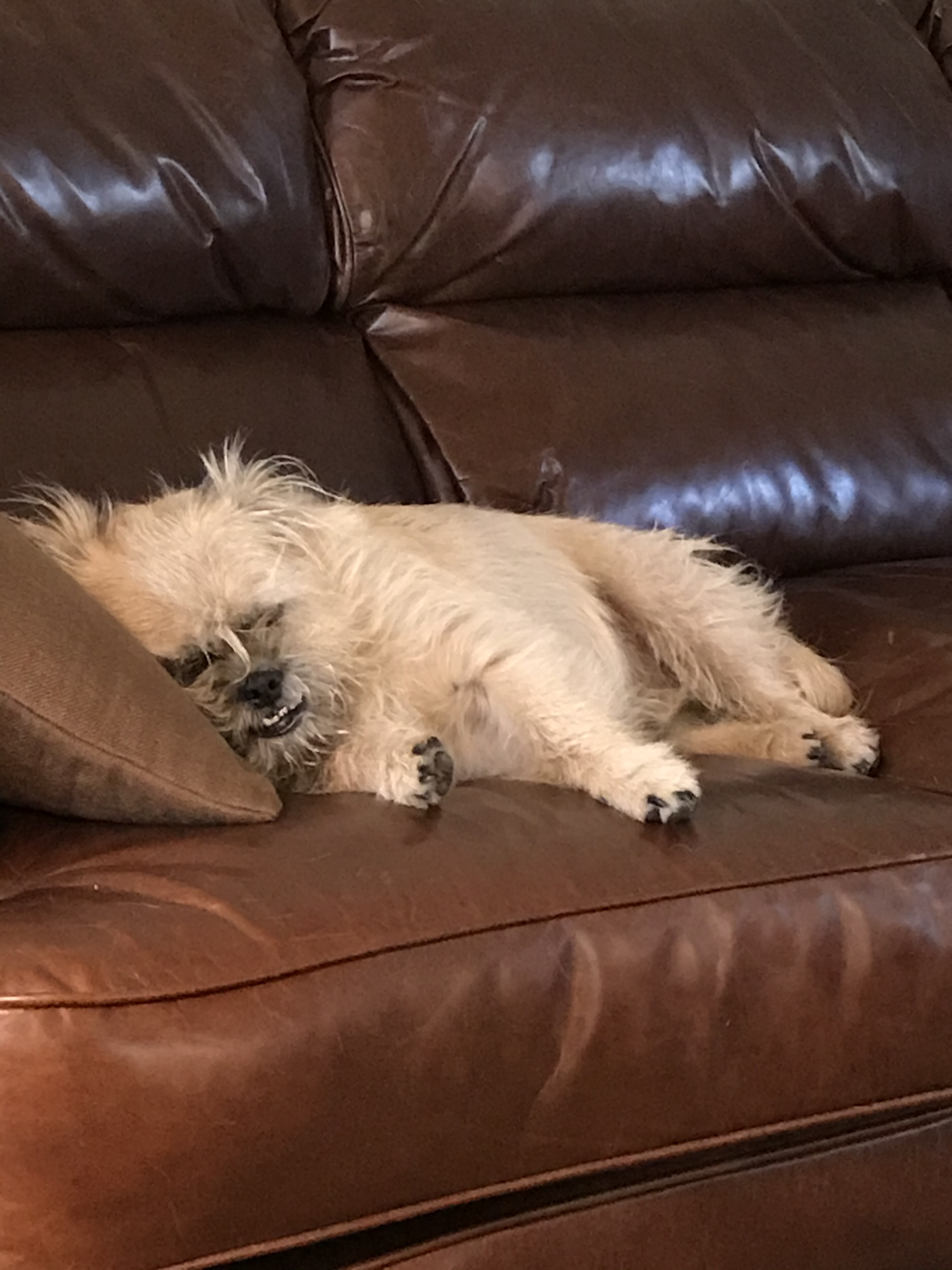
Gunther is a damned good dog, but he started drinking lots of water, then urinating in the house about a year ago. I took him to the doctor who diagnosed diabetes. Now I give him two insulin shots a day of special veterinary insulin. Gunther comes when I ask him to get his shot. Isn’t that sweet? Afterward he likes to sit on my shoulder and cuddle. He doesn’t urinate in the house any more, but he vomited and shit on my rug a couple days ago. Unusual for him.
Gunther is sick more often than P. or me. He still likes to eat garbage and roll around on dead squirrels. Not us.
We are healthy. We visited Todd and his family in Minnesota, Clara and her kinfolk in San Diego, and we spend time with Robert and his familiars here in Billings. We’re through traveling until next spring. We put the camper van in storage.
We have developed strict morning routines.
Typically we get up early, grab our phones, do “Connections,” “Wordle,” and “Spelling Bee” puzzles. Only then do we dress and eat breakfast. We spend part of our time volunteering here and there. We will have been in our house 40 years January first. We’re used to it.
I love singing with my friends. Recently I had a small part in a play, a musical “A Christmas Carol.” It’s available on Youtube. I like theater folks a lot.
Clara is helping me write a memoir about my topsy-turvy life when I joined the Marines. I was a pretty poor soldier, in truth, but I met up with a few people who helped me cope. I joined when Vietnam was raging, but I never went there. Instead, I spent years in California fixing Volkswagens and delivering newspapers. Eventually, we saved enough money to leave California and return to Montana.
Boring, but okay, really. We learn new things from our fellow citizens daily. It’s only snowed once or twice in Billings this year.

December 21, 2023
Worked steadily the past two days. Volunteered with Catherine Card’s program of providing showers and sometimes clean clothes to people who live on Billings’ streets. Catherine, an old friend of Mark Fryberger’s, said locally, at least 200-400 people have no house, no apartment. The Rescue Mission has rules and restrictions that prevent entry for some folks. The people I met were top notch.
A fellow named Matthieu told me he teams up with several others to watch each others’ possessions. He noted how difficult it is to have to carry more than two pieces of luggage everywhere he goes. They can put all their packs and bags together, then take turns watching them. That way they can get a chance to go in a restaurant without all their stuff.
What if there were lockers where people could store stuff during the day? They don’t seem to exist. In my day bus stations had lockers. You put in some quarters, stowed your gear, and kept the key to retrieve the stuff later.
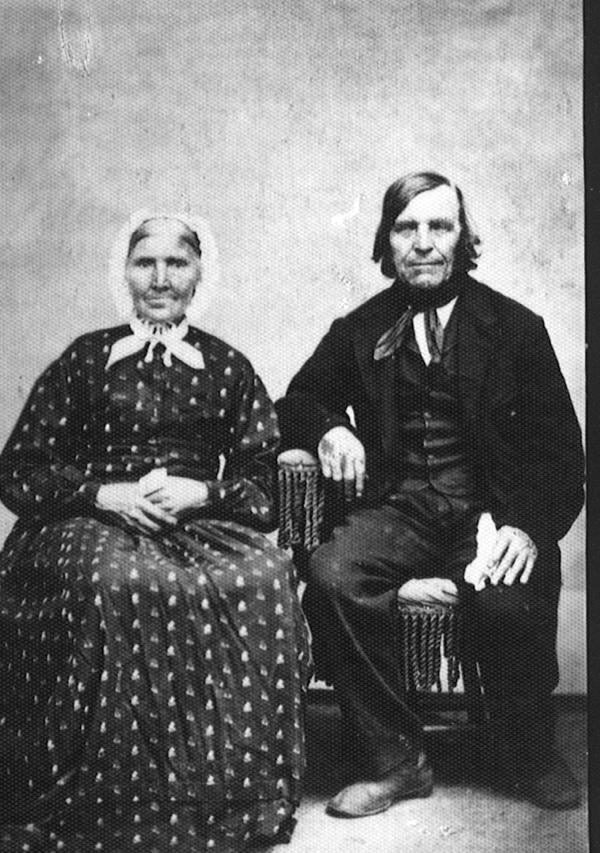
Berit Bunde 1801-1877 with Einar Halvorson Groven 1800-1875
Long, long ago, our ancestors had pretty much moved from Africa to a large area of unforested grassland of Asia to learn how to herd sheep and oxen. Things probably went well for many generations, once they got used to the weather.
Eventually, they got raided and beaten up by a variety of horsemen and other savage types, like Tartars, who stole their land, drove them off.
The sheepherders who survived rode their horses north of the Black Sea, and west into the mountains.
They eventually got into the area north of the Danube River, to the woods. No doubt they encountered people who were already there. Did they then steal their land and drive them away?
Did they raise oats, wheat, and livestock? This is a recurring theme in our family’s history.
I suspect they made friends with some Neanderthal types. Our son Bob said we have some DNA. Some Neanderthals might have been more than friends. Friends with benefits.
They eventually settled down, learned how to spin wool and flax and grind grain into flour. They ate bread, but otherwise they didn’t eat well, unless they killed a deer or a neighbor’s ox. People only lived to be thirty, give or take.
Early on, they had to avoid the Roman military. The Danube kept the Romans away for a long time. But not indefinitely. Only until the Romans invented the bridge.
In the middle ages, Germanic tribes ran away from Rome; from the mountainous areas of Eastern Europe north, to what is now Scandinavia: Denmark, Sweden, Norway.
In Vang, Norway, Berit Olsdatter Egge was born on June 24, 1801. Her parents were Ole Gulikson Egge and Ingri Osteinsdatter Kjos who descended from a long line of farmers in Vang.
There is the twelfth-century stave Hore church in Kvien, in the Vang parish, repository of records. It is still in use. We went in there once. I saw the name “Bonde” on the end of a pew.
The original Vang stave church was relocated to Poland, thanks to a wealthy guy who wanted it preserved.
Berit was my great, great grandmother. She married Thorstein Osteinson Bunde and they farmed the stony soil of Vang. The couple had four children: Ostein, in 1820; Ole, in 1822; Kari, in 1825, and Ingri, shortly thereafter.
In later years the name “Bunde” changed into “Bonde.” Sometimes it is spelled “Bondy.”
We visited Vang two or three years ago. The land had a lake surrounded by nearby mountains. This was late March. Easter, actually. We stayed at a bed and breakfast owned by Arne and Berit Nefstad.
I didn’t see any houses near the lake. In fact, Vang looked sparsely settled.
Bob and his wife Heather, and their daughter Olivia, along with Cyrus and Roland (Todd’s boys), and Penny and I drove there by rented car from Bergen, a port city on Norway’s west coast. Vang doesn’t even have a gas station, but it has a modern-looking school back in the woods.
Back to telling about G-G-Grandmother Berit.
Thorstein Bunde, considered gifted mentally and physically, was unsuccessful at farming. He had to sell the farm and leave his family behind. The farm was not large, but it was good, and he got four hundred specie dollars, a good price in those days. He got a log house for Berit to use for life, along with a small annuity for her and the children.
Berit Bonde’s log house is still there, although it is no longer in use, and still stands erect and has a good roof. Good condition for a place nearly 200 years old.
Because Berit Bunde’s husband Thorstein had “costly litigation” trouble such that he couldn’t stay with Berit and her children in Vang, he went to Lillehammer to find a new life. He died a few years later in his twenties or early thirties. I don’t know how word got back to Vang of Thorstein’s death, but I imagine horse-drawn trucks and sleds carried supplies and news throughout Norway.
A present-day informant (Arne Nefstad) said word back in Vang was that Thorstein was alcoholic and drank himself to death. Alcoholism seems to run in our family, as does mental illness.
Back to the story of Berit Bonde. The 1820s and 30s.
Remember? Berit had four children from her marriage to Thorstein. Her daughter Kari and her husband, Thomas Veblen, emigrated to the United States in 1847 via Quebec. Kari is said to have inspired Berit to do likewise.
The Veblens originally settled in Mount Vernon, Wisconsin, before relocating to Nerstrand, Minnesota.
Kari and Thomas’ son, Thorstein, studied at Carleton College in Northfield, and became a famous social theorist and economist. In Vang, Norway, we saw a roadside monument dedicated to Thorstein Veblen. A sign in English and Norwegian proclaimed him the world’s greatest economist. I remember wondering who in Vang would dispute it?
The farmland at Vang is limited by the lake and by rocky outcrops. Arne told us the land wouldn’t support the farmers’ increased numbers of children.
After five years of widowhood, Berit Bunde married a neighbor farmhand, Einar Halvorson Groven. He took Berit’s last name because they lived on the Bunde farm. Berit bore five more children there over the next 14 years. Einar Halvorson Groven, starting as a neighborhood laborer, had become a Bonde family patriarch.
Their name morphed from Bunde into Bonde.
Three of Berit’s children didn’t survive long. I know only the names of the two sons who did: Halver and Tosten. There was a third child who perished before the family arrived in America.
Like I said, Berit and Einar and three small children left their farm in Vang. They traveled 237 km (142 miles) to Oslo with a few belongings. One child died on the road. In 1849, they got on a ship to Germany, then sailed to Quebec, same as Kari and her husband had two years previously. They and their sons, Halver, age four, and Tosten, age six, survived the harsh traveling conditions.
Einar and Berit and the two boys traveled by boat on the great lakes from Quebec, settling in Port Washington, Wisconsin, on the southwest shore of Lake Michigan. They were farmers and they had very little formal education.
The Port Washington area was originally inhabited by the Menominee, Potawatomi and Sauk tribes. The US government forcibly removed these indigenous people in 1832. No. It was worse than it sounds.
According to a website hosted by Native Americans in Philanthropy, history through a Native American lens:
Black Hawk, a Sauk Chief, returned to his territory for corn planting season, only to find it overrun by American settlers. The settlers refused to move, noting that they had supposedly bought the land. The state militia came and drove the Sauk out of the territory. Surrounded by 11,000 state militia, the Sauk flew a white flag of surrender but were then massacred by the militia. Black Hawk was captured, and the Sauk were forced to cede the eastern portion of Iowa.
The first white settlers arrived at Port Washington in 1835.
Thus did the Bonde family, like the other immigrants, live on land freshly stolen from the Indians.
According to Wikipedia, the population of Port Washington was 2,500 in 1853.
Five years later the Bondes left Wisconsin for Winneshiek county, in the extreme northeastern part of Iowa.
Then, in 1855, Berit and Einar were granted a 160-acre farmstead by Congress in Wheeling Township, in Rice County, Minnesota. Einar built a log house of hardwood. It’s still there. I’ve slept in the house attached to it.
Native Americans called Minnesota home for centuries. Stone tools have been found that date back more than 10,000 years. The oldest known inhabitants of the area were the Mound Builders, most likely the ancestors of the Dakota and Iowa Native Americans.
Wahpekute, a tribe of Dakota, were the group that lived on the land that is now Rice County. Wahpekute meant the Leaf Shooters or “The Shooters Among the Leaves.” In the winter months, the Wahpekute lived in teepees made from American bison hides. During the summer they lived in elm bark lodges near the lakes and streams fishing, hunting, and raising crops.
Earl Bonde, Einar and Berit’s great grandson, eventually restored and added on to the log house. In 1985, Earl showed me how he made a concrete foundation for the log structure, located next to a soybean field near the edge of Nerstrand, Minnesota.
Einar probably raised wheat, oats, and hay to feed his cows and horses on his 160-acre farmstead. Berit kept house, took care of Tosten and Halver.
After the American Civil War started, Congress implemented the draft in 1862. Halver Bonde was 17 years old. After serving the Union in the Civil War, Halver married Margaret and farmed in Rice County for a short time.
Halver and his wife subsequently settled in Swift County, Minnesota, in the western central part of the state. They arrived in the wake of more brutal warfare between settlers and Natives.
According to Wikipedia, “Scandinavians and Germans were in a decided majority among the early settlers of Swift County. A number of them came with the honor and privileges of Civil War veterans.” Including Halver Bonde, probably.
The Bondes arrived to farm in Swift County a few years after the following occurred in 1861-62:
In exchange for having been pressured to cede great tracts of land in Minnesota, the government promised annuities to the Natives. The tribes reluctantly moved to a narrow reservation twenty miles wide. In 1861 Dakota and Santee Sioux tribes had a tough time because of a harsh winter and depleted game, and the promised government payments did not arrive. Shopkeepers were not willing to extend credit to the Indians, partly because of doubts of the solvency of the federal government because of the ongoing Civil War. The starving Santee Sioux wanted to drive out the white settlers. A battle ensued in which both sides suffered many casualties.
The army intervened. About 300 Indians were sentenced to death, but Abraham Lincoln pardoned all but 39. One was spared at a brief trial, and 38 were hanged at Mankato, Minnesota in 1862.
After that, history is silent about Halver and Margaret Bonde. I even asked Helen Lodmill, one of Oscar Bonde’s daughters and a reliable historian.
After years living in an old soldier’s home in San Francisco, Halver was eventually buried at Presidio, California, November 7th, 1931, 86 years old.
Halver was my grandpa’s uncle. Tosten was his father. Grandpa spoke fluent Norwegian. Grandma looked angry when he and his friend Nils chatted in Norwegian in her kitchen.
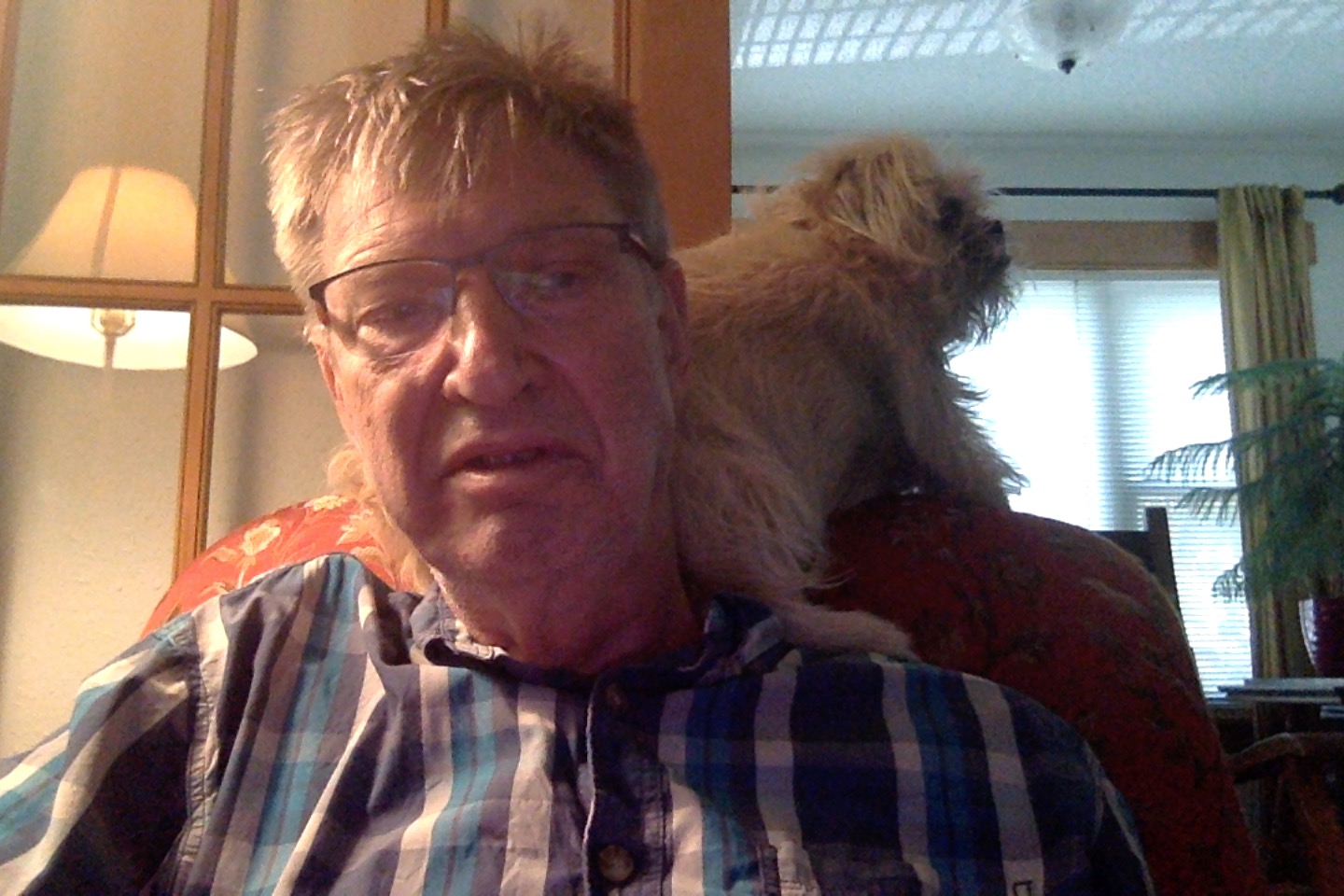
August 21, 2023
Researching my memoir, which I’ve been writing for our children and grandchildren, I’ve been interviewing people:
Larry Felton, to untangle the events of our hippie years 1967-1974, but particularly 1969. That was at the year many of us broke free of the University of Montana in Missoula to try for a pure education. Larry unearthed documentation of our comings and goings to Seattle and back to Missoula during 1969, and other years. Larry sent me four copies of a 1969 Missoula hippie newspaper, Chief Joseph. It extolled the band, “Three Farthing Stone.” I learned the lead guitarist, Doug Sternberg, died last year. Drummer David Lenhart is still around here somewhere.
Larry turned me on to a book Bill Yenne’s father wrote about being a Glacier Park Ranger in the 1920s. Title is Switchback. Our friend is William P. Yenne. His dad’s name was William J. Yenne.
Carol Struckman-Hotchkiss, my sister, who is my best source for the years 1939-1962. This includes stories of freedom-loving children at play at Fort Missoula from 1946-50. She is also one of the few living people who remembers my uncle Carl (Buddy) Bonde, Jr., the one who perished in WWII when a U-boat torpedoed his troopship, the SS Leopoldville.
Brenda Flemming-Skornogosky, a central figure in the hippie culture of 1967-69 at the University of Montana. Larry remembers being invited to sit with the hippies in the Lodge cafeteria by Brenda.
Kim Thompson-Irons was one of the most important of the hipsters. She worked in the cafeteria scooping ice cream, developing strong forearm muscles. She gave her friends more ice cream than usual.
Mark Fryberger, an old friend, furnishes important details. A creative person, a philosopher.
Jim Grady, author of the popular novel, Six Days of the Condor, was one of the non-conformists in or near our group. Jim confirmed that he, Brenda, and Mark Fryberger smoked pot on the roof of the Lodge at the university. Jim said he didn’t get high that time, but reached that level later with the late Alonzo Spang, destined to become President of Chief Dull Knife College on the Northern Cheyenne reservation.
Todd Struckman, for his memories of his childhood, especially during the summers on lookout towers and our road trip in an old Volkswagen to Alaska.
Bob Struckman, ditto.
Clara Struckman, ditto. Additionally, Clara has been fact-checking and drilling down into the information in our book.
I have written about our friend, Peter R. Koch. You can learn about his career as a printer and publisher on Wikipedia. Ditto for Bill Yenne and for Jim Grady.
Blaine Ackley, my cousin who was politically active with the Students for a Democratic Society (SDS) in the mid-to-late 1960s, mostly in Eugene, Oregon, but also San Francisco. His leadership and his tactics are to be part of a book his friend is writing. For a time, Blaine was, for a period, one of the sole distributors of Rolling Stone magazine. He told me how they picked up the printed magazines in Oakland, then trucked them north as far as Vancouver, BC, to various cities for further distribution eastward.
Michael Judd, another cousin, was a great historian for our childhood summers in Kalispell and in Seattle, and Anchorage, back in the day.
Research is ongoing. Call me at 406-694-2829 if you have memories of the hippie times.
August 15, 1988, I had orders to report to David Means, Service Unit Director of the Lame Deer Clinic. Lame Deer is 106 miles east of Billings, Montana, my home town.
I drove east. I listened to National Public Radio. The top story was the fires in Yellowstone National Park; the Army National Guard was called in to fight the blaze. Even at six, the air in Billings was smoky. Cool and smoky.
Near Crow Agency, I stopped at the restroom at the Custer Battlefield trading post. On the stall wall, I saw graffiti referring to two Cheyenne men on death row in Deer Lodge for killing a Miles City man. The men were Lester and Vern Killsontop. Years later I would become friends with their sister, who helped get their sentences changed to life in prison.
Columns of white smoke ascended the sky on the eastern horizon as I resumed driving our old Ford wagon up the hill on Highway 212.
In about a mile, I saw four dead horses piled on the shoulder of the highway. Fire burned the grassy fields of the Little Big Horn Battlefield. Pieces of burnt wooden fence posts hung from the taut barb wire. Some chunks were still smoking. Some of the guard rail posts were aflame. Here and there, the field was blackened to the edge of the highway.
Much further on, derelict cars were aligned crazily near houses along the highway between Busby and Lame Deer. A tire on a post had the words, “Arrow Salvage” in white paint.
I was apprehensive. I could see in the distance where fires burned in the wooded areas near Crazy Head Springs east of Lame Deer.
I reported to David Means, a man I immediately admired. I told him I hated the carpet in his clinic. Without missing a beat, he said it was due to be replaced.
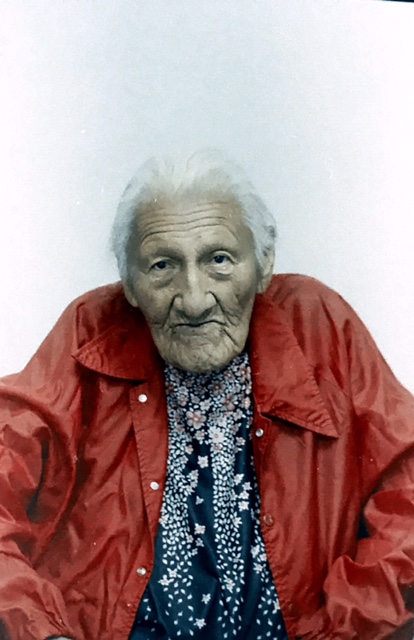
Larry (Rabbit) Hiwalker
Next day, Lame Deer had a feathery blanket of ash from forest fires at Crazy Head. I crawled out of my sleeping bag in a government three bedroom house, vacant, my home for the week until the government provided me with other quarters.
I didn’t know that eventually I’d commute the 106 miles between Billings and Lame Deer daily.
At first, a daily commute was out of the question, because in 1988 we had only the old brown Ford station wagon with close to 150,000 miles on it. The cost of fuel would have been too much.
That night, the streetlight on the cul-de-sac illuminated the ash as it fell. Looked like snow drifting to the street.
I tracked, through the ash, the three or four blocks next morning to work at the Lame Deer IHS Clinic pharmacy. Mine was a new position; all the work used to be performed by one pharmacist. Turns out they had recently hired two additional doctors so they needed more support staff.
When I first arrived, Rabbit Hiwalker asked me how I liked Lame Deer. When I responded with enthusiasm, he gave me a sideways look. “What religion are you?”
In Lame Deer, the government houses were dwarfed by huge Mormon, Catholic, and Baptist churches. I laughed.
Lame Deer is a beautiful ghetto. Frank Ridgebear told me facetiously how he grew up playing with sticks and broken glass. My memory tells me the streets are dirt, no sidewalks, no lawns. Houses mostly need repairs and paint. Poverty is grinding.
However, my view of the reservation was greatly influenced by the clinic, the way people came in, looking their best, acting their best. I quickly learned the word “aho” meant thanks, and I heard it frequently every day. I found most people to be gracious, intelligent, funny, and generous. That’s not to say that some were not racist, ignorant, and angry. Probably the same as any other Montana population.
One uncommon quality on the reservation: patriotism. Volunteering for military service was common, even during Vietnam.
Lloyd Yellowrobe, Vietnam veteran, raised and lowered the American flag daily.
The countryside looked gorgeous to me as I drove, and I enjoyed studying it as the seasons changed. Velvet green changes to gold, then white. Beautiful skies, sunrises, sunsets. Clouds.
My favorite was June. The air is cool at 6 a.m. and two hours to work is an easy drive through fertile country, Eastern Montana, hills, sunrise, traveling almost exactly east. I never got tired of the drive, and I still feel intimate with every mile. Something would catch my eye one year, and I’d photograph it the following year on the same day of the month. Or try to.
One scene that caught my eye: cowboys gathered their horses in a round corral as the sun rose behind them. The light caught the dust billowing from countless hooves. No camera, but the following year I was ready. The scene didn’t repeat, so I got off the road to drive up the ruts to a nearby butte. A twin butte, really, because I could catch the early morning light as it bathed the butte with orange light. I kept the photograph on a bulletin board in my office and people came in to visit and talk about the butte. I’ll bet several people were conceived there on its sandy summit. I don’t remember what the butte was called, but I returned again and again to photograph it. Always it looked different, depending upon the weather, clouds, time of day, whether I was in a hurry to get to work.
It’s all Indian country from Crow to Lame Deer; houses built by the government set back from the highway, connected by straight unpaved roads. Sometimes you’ll see a cluster of teepee poles leaning against a house or in the crotch of a spindly tree. The houses rarely have garages or other outbuildings. One of my friends painted a teepee on the side of his house. He said tourists often approached to take pictures, often asking permission first. He worked as a custodian at the Busby school and I have a picture of him. Somewhere. Ronald Glenmore. He was an artist. I gave him most of the photographic prints I made of tribal elders. I believe he intended to display them at the Busby school.
David Means, Service Unit Director
My boss, Dave Means, was American Indian Movement activist Russell Means’ distant cousin. Dave had the rare gift of quiet humor and self control that made him well suited to his demanding job as Indian Health Clinic Service Unit Director. He held a position of power and autonomy, but he had to answer to the clinic staff, the townspeople, and the Area Director. A balancing act, he told me.
I remember sitting in his office at the clinic. He told me he was successful because he studied theater at Montana State University in Bozeman.
We liked each other immediately, and he is the one who promoted me to be the Chief Pharmacist at his small clinic in 1989.
I’ve gotten ahead of myself.
At first I worked for another Chief Pharmacist, an officer named Dave Miller, who quit shortly after I told him I would wait for him to leave, then do everything my own way. Dave told me that Lame Deer patients lie about ninety percent of the time. He truly didn’t like Indians. He told me so. I felt sorry for him, but he had to go.
Once Miller transferred out, like three months later, Dave Means gave me Dave Miller’s job.
One of the first things I did was to get a hammer and nails and lower all of the artwork in the clinic waiting room from near the ceiling to eye level.
The clinic had been built in the 1960s, modern in its day. It had hideous orange and black carpet and orange walls. In 1996, it burned to the ground and I cried when I heard the news. I was in denial until I drove out that Sunday to see for myself.
Thirty years ago in Lame Deer, most of the doctors and nurses of the Indian Health Service lived in a neighborhood a couple blocks from the clinic. The rent was about $200 a month, but the price of electricity to heat the houses was high in the winter. Anyway, I needed to commute the 106 miles from Billings to Lame Deer because nobody in my family wanted to move from Billings. They had jobs. They were in high school.
In the beginning, I drove old cars that broke down. The last forty miles the road between Crow Agency and Lame Deer was twisty and narrow. In the winter, the road sometimes was icy. I did a 180 once, when I lost traction. Scared me, so I asked Dave Means for a place to stay in Lame Deer during the week, especially in the winter. Dave asked me to write a letter to the housing committee.
The housing committee offered me a basement apartment at the fitness center for about $100, which I took. It had one bedroom and a combined living/dining/kitchen room. Oh yes, a bathroom. My apartment was right beneath the fitness center treadmill. I remember Dave Means running on it when I went up to complain that the light fixture was about to come loose from his incessant “clomp, clomp, clomp.”
There were two basement apartments, the other was occupied by a Bureau of Indian Affairs policeman named Mike. I can’t remember his last name. Later, Mike had a roomie named Lonnie Spang, a young man who could play the guitar expertly. I let Lonnie move in with me when Mike kicked him out. Lame Deer has a truly socialist style society. Other times Lonnie stayed with the school superintendent’s family.
I was glad to move to the furnished basement place with a load of stuff that I carried in our old volkswagen van. Ultimately, the field mice that played in the walls near my bed drove me out. Turns out, Policeman Mike left a box of commodities, with split peas and such that was feeding the mice, in the laundry room.
This was 1989. At first, when I wanted to use a telephone to phone home in the evening, I had none, so I walked downtown. The “big store,” the IGA, had a pay phone out front, but there was quite a line of teenagers standing there to use it. I asked around and the only other pay phone was at the police station, so I walked over there. In the vestibule I found no competition. I called home.
In those days the Rosebud–Bighorn county phone book was thin. Even thinner was the Lame Deer section. Most of the numbers were tribal and federal government agency listings. The entire town, of perhaps twenty-five hundred people with Dull Knife College, BIA, IHS, and the Northern Cheyenne tribe, had only enough phone listings to make up one page (front and back) plus half of another. In fact, nobody knew for sure how many lived in Lame Deer. My twenty-five hundred-person figure was a wild guess. I guessed the electric company records would yield the best information.
Here is how things worked out: In 1990, I ended up quitting my job in Lame Deer when a staff pharmacist job at the hospital at Crow Agency opened up. Cut my commute almost in half.
David Means said when I told him I was quitting: “Well, fuck you then. There. I said it.” Then he smiled and we shook hands; he wished me well.
During the next five years, the BIA redid the road between Lame Deer and Crow Agency, straightening and widening. In the meantime, Dave phoned me to see if I wanted to return to Lame Deer to work in the pharmacy again. Well, I did. I missed the people there. So I quit the hospital at Crow Agency.
The Lame Deer clinic had changed. More patients, more doctors, three pharmacists and two technicians. Lonnie Spang had moved to Billings and worked at Willard’s car repair shop. I hardly ever saw him again.
Dave Means was still Service Unit Director, but about a year later, the clinic burned to the ground. Next day, we set up a makeshift clinic temporarily in some tribal houses.
A few months later, Mr. Means was arrested on a Friday afternoon on a charge that he had once, years before, molested a young lady. Dave protested his innocence. Turns out she had been to one of those therapists who help bring forth “repressed memories.” Although the charge was ultimately dismissed, Dave had to go to jail and he suffered damage to his career, his pride, his reputation, and probably to his health.
Soon we were taking up a collection to buy Dave clean socks and underwear for jail. That’s what you did. People in jail ate a lot of chicken pot pies. Turns out that being arrested in Lame Deer isn’t even a very big deal. Many adults on the reservation have been arrested at one time or another because of changing tribal politics. Oh, and before that Friday, when they took Dave away in handcuffs, Dave lived in the same basement apartment where I had once lived. You know, the place with the mice? I don’t know why he lived there, perhaps because of the chaos that ensued when the clinic burned.
By then I commuted the 106 miles five days a week. When I finally retired, we had bought and worn out a Ford, three Nissan Sentras, three Honda Civics and a BMW. Well, the BMW had almost 300,000 miles on it and still ran fine. Almost fine.
Dave still lived near Lame Deer, and he commuted five days a week to the IHS Area Office in Billings. Many mornings we waved to each other as we headed our opposite ways. He usually drove a little white pickup.
The clinic fire’s cause was never certain. My friend Lloyd Yellowrobe may have stacked too much rubbing alcohol near a faulty light fixture in the supply department. On the other hand I always thought I had left the coffee pot on through the weekend. However it happened, the clinic was a total loss. All of the medical records burned. Monday morning we met at the Lame Deer Boys and Girls Club. Linwood Tallbull offered his building to the pharmacy.
I had always been on great terms with Linwood, Community Health Representative Director, and he and his people moved out of a nearby double-wide trailer during a busy morning and allowed our pharmacy and administration to move in. The physicians were not so fortunate. They had to work a block away at first. We dispensed our first prescription within 48 hours of the loss of the clinic. Oh, I think I dumped out a bottle of Tylenol and put the prescription in there.
Remarkable how things change. I ended up lending Dave Means, the guy who hired me twice, several hundred dollars for his legal defense. Like I said, the charges were ultimately dismissed, but he had been replaced by another for Service Unit Director. A string of them, actually, before they found a strong woman, Debbie Bends, who has held the job the last dozen years. Dave eventually showed up at the pharmacy and repaid me.
Lloyd Yellowrobe got into a car wreck, broke his neck. He pretty much healed up and takes care of his grandchildren over at Busby.
Linwood Tallbull was replaced as CHR director, but now teaches traditional medicinal botany at Chief Dull Knife College, the best place to get a meal in Lame Deer. I don’t know what happened to Mike the policeman or Lonnie Spang, as I haven’t seen either one of them in ages.

Ray Brady
Ray Brady was one of the healthy people who used to visit with me at Lame Deer clinic pharmacy. We often spoke of his service in the Army during the World War II “Battle of the Bulge,” the bitterly cold winter when Hitler tried one last time to conquer France and, probably, all of Europe.
Ray Brady served during the time my uncle Bud was killed in action. Both of them had been transferred to Camp Shanks, in New York, before going overseas to England.
Mr. Brady had charisma and was neither needy nor overly profuse. He did enjoy a conversation and he was a man of the world.
Sadly, Mr. Brady died about five years after I retired from the Indian Health Service.I bought an app for my phone so I can scan color negatives to make color positive prints. I don’t know if it’s the best of its kind, so I’m not going to advertise here. The quality of the positive image is not excellent, but fairly good. Colors are approximate and the resultant image doesn’t have anywhere near the detail.
However, I quickly ran to my collection of negatives. I keep them carefully filed away with notes on many of them. My photo prints are almost useless because they are jumbled together, thousands of them. Moreover, I’ve given away most of the good images so I end up with the blurry, boring, crappy ones.
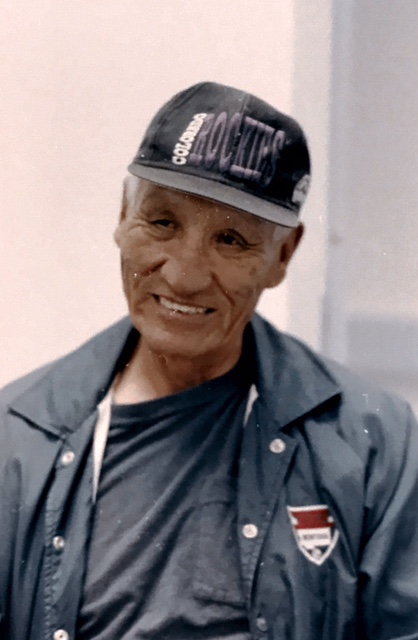
Betty Nora Flying
One photo image I liked, particularly, was one of Betty Nora Flying. She lived to be an old woman in a bright little blue house set way back from the road between Busby and Muddy Cluster on highway 212 to Lame Deer. I knew her kids.
In fact her daughter, Mary Jane Flying, was our first pharmacy technician at the Indian Health Service clinic in Lame Deer. And this was in 1988, because of the generosity of her boss, Linwood Tallbull. He allowed her to come help us.
At first, the pharmacist at the time, Bill Schuman, wouldn’t let her into the pharmacy itself, but kept her outside the door for her to dole out OTCs like Tylenol to those requesting them.
Bill worked solo to prepare and dispense the prescriptions. He prepared anywhere from 50-100 prescriptions daily. He was known for breaking telephones and strewing pills when he became enraged, although I never witnessed him doing it.
Maybe you don’t know how the IHS works. If you do, skip this paragraph. Enrolled natives can receive care, including prescriptions, doctor and dental and optometry visits, free of charge. It is pure socialized medicine. The drawback is the clinic is always poorly funded. Another drawback is the clinic is often packed with seriously ill patients seeking care. However, the mission statement has always been to elevate the health of the indigenous people to the highest level possible. Many of us tried as hard as we could.
Anyhow, Bill Schuman soon transferred to the Coast Guard and I eventually joined the IHS and ran the pharmacy, so I asked Linwood to allow Mary Jane Flying to work as a technician inside the pharmacy. Her job was to count out and pour the medicines into bottles after the computer spit out the labels. Then I would check Mary Jane’s work and give the medicine to the patients. We could get the prescriptions done more quickly, the two of us. Mary Jane was a fast learner. She was older. She liked Elvis, Texas Chainsaw Massacre movies, and Ozzie and Harriet.
Soon, Mary Jane asked for my pharmacy name tag so her mother could bead it. Of course I gave her $35 for her trouble. Then I had her make some moccasins for my newborn grandson, Josiah.
That’s how I became acquainted with Betty Nora Flying, Mary Jane’s mother.
She was willing to sit while I photographed her, and I took many photos.
Lloyd Yellowrobe
I have barely started telling about Lloyd Yellowrobe, a hero to me. Lloyd, a decorated Vietnam veteran, was honored at the Ashland Labor Day Powwow.
I remember a time twenty years ago when a gathering of Lloyd’s family and friends cried while a priest administered last rites to Lloyd. He was in Billings in intensive care after his pickup truck accident. Lloyd’s mother passed a box of tissues to me. Must have been a miracle that Lloyd survived. Esther Yellowrobe, another person I hired to be a pharmacy technician, told me all about it.
I don’t remember the first time I met Lloyd but he has always been a friend to me and he made me feel like I was working in the right place once I started at Lame Deer. Was sort of a shock for a city kid like me to suddenly start working in a rather remote Indian Health Service clinic. Lloyd was the supply man for the clinic. He supplied the pharmacy over-the-counter medications by the case.
Lloyd proved himself to be an artist. He drew a caricature of his nephew, “Rabbit” Hiwalker, that looked like a Playboy bunny. I didn’t know that I’d be destined to go on adventures with Lloyd, or that I’d keep cedar, a traditional medicine, in the pharmacy for Rabbit’s use.
Here’s an example: Lloyd always claimed to know about a huge meteor crater out toward Ashland, east of a prairie dog village. He and I drove there once, right after work, tracking up and down red dusty roads, even finding a sinkhole in a hayfield that had a log poking out, apparently to let whoever was cutting the hay know it was there. We ended up locating an irregularly shaped valley, not too convincing to me. I never did believe it was a meteor crater, although Lloyd said he saw it in an aerial photograph.
On our way back to town Lloyd had me pull over onto the shoulder of the highway, over the top of a hill, on a downhill slant. “Take your foot off the brakes,” Lloyd said. To my amazement the car backed up the hill by itself, as though a magnet were pulling it. I figured that was some sort of optical trick, but hey. Why not believe it was a magnet? I could believe in the magnet long before I’d believe in the meteor crater.
Another time Lloyd and I looked for the buffalo herd up by Crazy Head, but didn’t find it. Still another time Lloyd took me up on the big plateau on the Birney divide to the buffalo jump. We walked around down below and Lloyd found a buffalo bone with tool marks where someone had scraped off the meat. I was always impressed by the respect Lloyd had for the ancient sites on the reservation. Then we traveled onward, on the dirt road near the abandoned car maybe 200 yards down a hill.
I might not have thought much about it, but Lloyd pointed out this car at the bottom of a ravine. Lloyd knew the story of how the car got there. Did he put it there? He said he saw it as it coasted down, never to rise again. For all I know the car is there today.
That same adventure he showed me Wild Hog basin as we approached a lookout tower. Lloyd’s father used to watch for forest fires from the tower. The tower was the same kind of Chicago Aermotor Company structure that stood atop the hill near Crazy Head Springs. Those were happy times. I don’t know Lloyd’s father’s name, but his mother was Martha Wolfname. I went to her funeral in Busby when she passed away.
Lloyd lived in a blue house in Busby in those days. One Saturday we went fishing in the after bay at Yellowtail Dam. Didn’t catch any fish. In fact I don’t think we ever did catch a fish, but Lloyd pointed out a red-tail hawk to me.
Because I commuted daily to work I was free to explore other areas in the vicinity of Billings on weekends and holidays. Sometimes our kids and I went up in the Pryor Mountains.
Our daughter Clara and I weaved our brand new ’89 Nissan Sentra sedan through the sharp rocks atop East Pryor Mountain. I had gotten through before with a VW, even though the sign recommended a 4WD. The day was gorgeous! Warm, blue sky, lots of June wildflowers. In fact, vast fields of blue wild iris.
I was familiar with this East Pryor Mountain ridge. One Thanksgiving, I led a bunch of nephews, my son Todd and his friend Ian, to walk through the snow twelve miles (some said it was more than twenty) to look for Mystic Cave. At least one of my nephews doesn’t speak to me to this day. We didn’t find the cave, but we did manage to track through deep snow back to the cars. We escaped with our lives, but we suffered. Todd called it a “death march.”
Mystic Cave has long held a fascination for me.
Clara and I wanted to find Mystic Cave, one of the best-decorated limestone caverns in Montana. You have to drive a couple of hours from Billings, half of it on dirt roads, then up on top, past Big Ice Cave, then the road gets sketchier and more rugged. You drive on a broad ridge through the BLM wild horse range.
At the far end of the East Pryor ridge we eased down a steep hill but crunched against some sharp limestone. The hideous crunch didn’t sound good, so I set the brake. On hands and knees on the rocky ground I reached beneath the engine.
Hot black oil. Turns out we busted the oil pan. We were at least 30 miles from the nearest gas station. You could go ahead toward Lovell, Wyoming, or back toward Pryor or maybe Bridger. Obviously, we were stranded. I felt almost panicky.
It was maybe three in the afternoon, and what could we do? We walked back up the way we came on the ruts perhaps a quarter mile when we saw a 1950s-era Willys Jeep loaded with four people coming our way. This was barely a road. The jeep was open on top, painted bright blue.
Bill Thormahlen
I waved at them. When they stopped, I explained our situation to the driver, an older man with a big white beard. He said he was taking his three friends on a tour, but he would come back around and get us. I felt like we were getting the brush off, but heck. His Jeep was full. I could see crying wouldn’t help! I wanted to ride on the spare tire or running boards.
We were alone again, so we walked back to the car. Damn! I thought.
Oh well, it would take hours for the bearded guy to return, so we might as well look for that cave. Clara and I hiked down the road, then combed the timbered top of the ridge. We didn’t find the cave.
An hour or two later we returned to our car, only to find a second car. A Jeep Wagoneer.
This time It was not the bearded man, but another guy, who said he was a pastor from Billings. I explained our plight again. He offered to take us to Billings and I accepted.
An hour later we were back on the main Forest Service road descending from East Pryor Mountain, when a couple of deer ran in front of the pastor’s car. Right behind the deer was a six-passenger pickup with a familiar bearded face behind the wheel. We stopped and I got in with the bearded guy. Clara stayed with the minister for the ride to Billings.
My rescuer was the white-bearded man who had been in the blue jeep. Hearty man named Bill Thormahlen, and he was with another man. They had a five-gal. container of oil and an ice chest with sloshing water and lots of beer. The other guy drank a beer and Bill drove. Told me he had just returned from Alaska where he could fix anything with baling wire, silicone calk, and “hunnert-mile-an-hour” tape. I made a mental note to carry those three things always.
Yes, I felt sheepish that I had not trusted Bill to return, but he didn’t seem to notice. Instead he told me some of the recent history of the Pryors. For instance, how they had long ago used a bulldozer to create swales on the surface to catch snow and moisture.
When we arrived at our disabled Nissan the other guy, at Bill’s direction, took a leatherman tool to remove the plug to finish draining the oil. Then he closed up the break in the oil pan. I’ve since wondered how. Then he took a bunch of the silicone calk and applied it to the break. Bill said to wait 10 or 15 minutes for the silicone to set.
Then he put five quarts of oil into the Nissan. He handed me a smaller, plastic oil container that would hold perhaps a gallon. He told me to check the oil halfway to Billings and add more if needed.
Before they led the way out, I offered to pay Bill for his time and trouble and oil.
“Money?” He laughed. “Ha ha! No! No money!” he repeated, laughing again. Again, I made a mental note.
The silicone repair lasted all the way to Billings. I checked the oil in Pryor, but the Nissan didn’t need any. It did leak a puddle of oil after I parked in front of our house, but I added some more oil and was able to have the oil pan welded the next day.
I wrote about Bill Thormahlen’s heroism in my magazine, The Portable Wall, and sent Bill some chocolate candy at Christmas. I titled my piece “The Code of the West.”
In 2019, I went to Bill’s funeral service in Billings. I told Jean, his widow, the story of her husband driving up to rescue us on East Pryor Mountain. He lived to be 85, and his family told about his life as a cowboy and truck driver, but mostly about his being a generous, good-natured man.
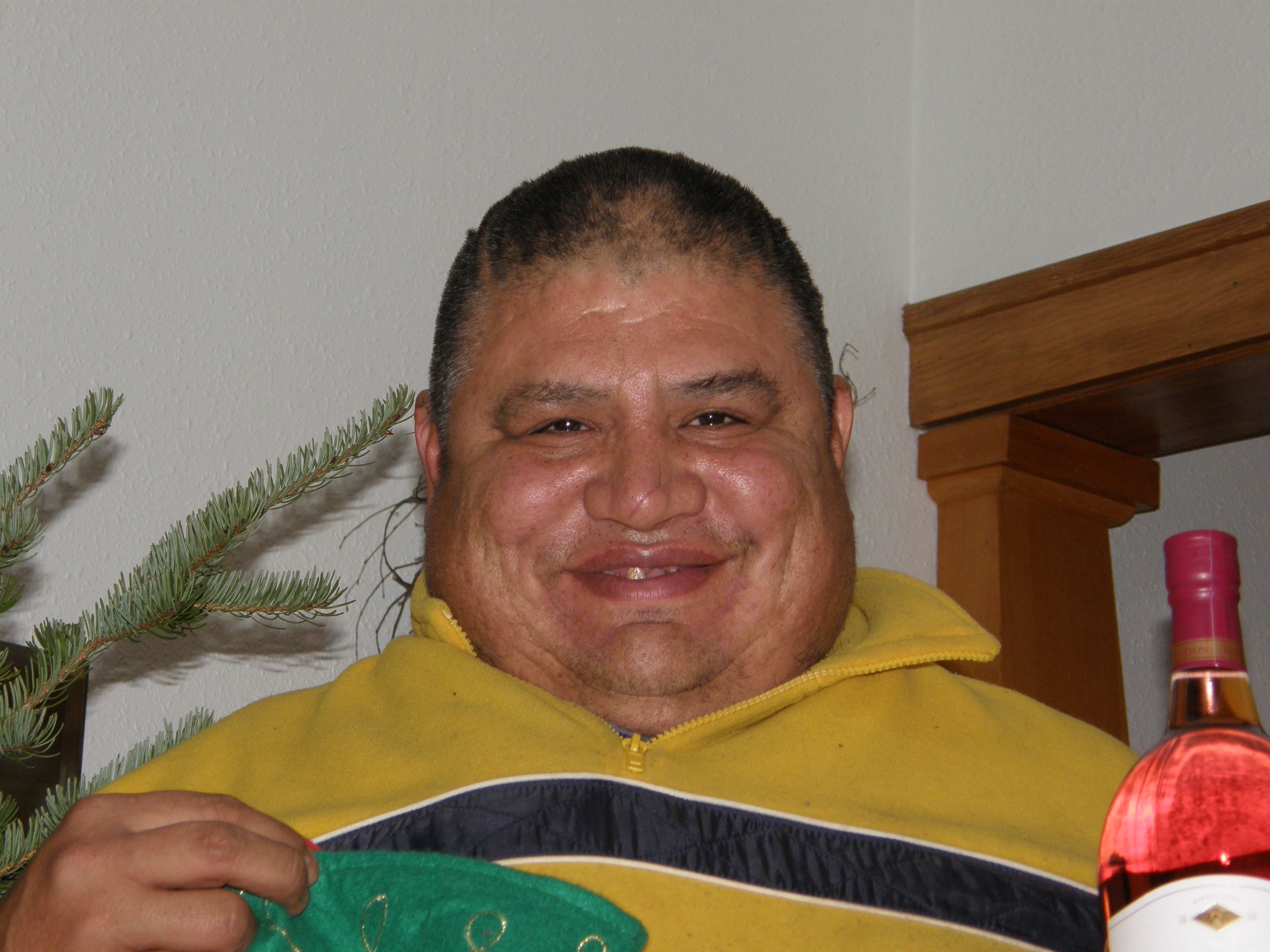
Eddie “Snow Bird” Alden
My sister-in-law saw our Christmas tree. Said it reminded her of Eddie Alden. Asked me if I missed him. Yes, I said, especially at Christmas. Eddie was a proud member of the Crow Tribe.
I have many memories of holidays with Eddie. Most people knew him as “Snow Bird,” but for some reason Eddie asked me to call him “Eddie.” I remember long ago, I was at Crow Agency with Eddie and the driver of the Urban Indian Health Clinic van. I can’t remember the man’s name, but he was older than I was. Eddie asked me for a ride back to Billings. I told him “sure.”
The driver eyed me, “You’ve got yourself a boy, now.”
Sure, I thought. I figured the driver was just being dismissive of my friend.
I didn’t know how fortunate I was to have a bona fide super hero friend. We formed a friendship that stretched from about Fall of 1992 until Summer, 2019. Twenty-seven years.
Eddie was a Crow man, frugal with paying for necessities, but lavish when he bought fireworks or halloween accouterments. At one point, when Eddie was facing homelessness because he didn’t want to pay $500/month rent, I suggested that he move under a bridge, a place he had stayed during the warmer months of 1992. I felt frustrated by his anxiety about housing, on the one hand, and his unwillingness to spend money for it.
Eddie giggled. He rented a room in the Colonial Apartments, and I visited him there, on the third floor. I don’t know the history of the Colonial, but it looked like a huge white wooden bungalow, at least three stories high, with hallways running its length. In 2003 the Billings Gazette published Ed Kemmick’s piece with great descriptions and history. Ed noted that the Colonial had a reputation for being the housing of last resort, a place where someone might soon be a victim. Some of the 28 rooms had heavy padlocks and the hall had the sweet smell of urine, according to Ed.
Some weeks later Eddie peddled to our house with his tape recorder. He said a drunken man had cursed at him. Eddie had had the presence of mind to tape record a truly foul, racist, slurred rant studded with expletives against Native Americans in general and Eddie in particular. As I recall, several of us urged Eddie to report the incident, but instead, I think Eddie moved to a basement apartment near Billings Clinic. Or maybe the one across from Goofy’s Bar. In any case, Eddie was such a hoarder he basically trashed every place he lived. He documented things carefully, with photographs, tape recordings, newspaper articles, official papers protected in clear plastic at Kinko’s, in multiple copies. Tape recorder batteries littered the small paths of floor through the trash bags of other goods at his place.
His kitchen stove was an avocado-colored peninsula amidst a sea of junk, spattered with grease, a cheap non-stick frying pan on top with a quarter inch of fat and a pancake turner. I don’t remember that Eddie got sick from his own cooking. In fact, he seemed to never get sick at all. I worried about fires, but none broke out.
I’d know if he had had a fire, but maybe I wouldn’t know if he got sick. He popped into my consciousness in his own time. Generally, whenever we had company. And his birthday. And Crow Fair. And if he ran out of money. Good times. I promised him I’d always give him money so he wouldn’t go hungry.
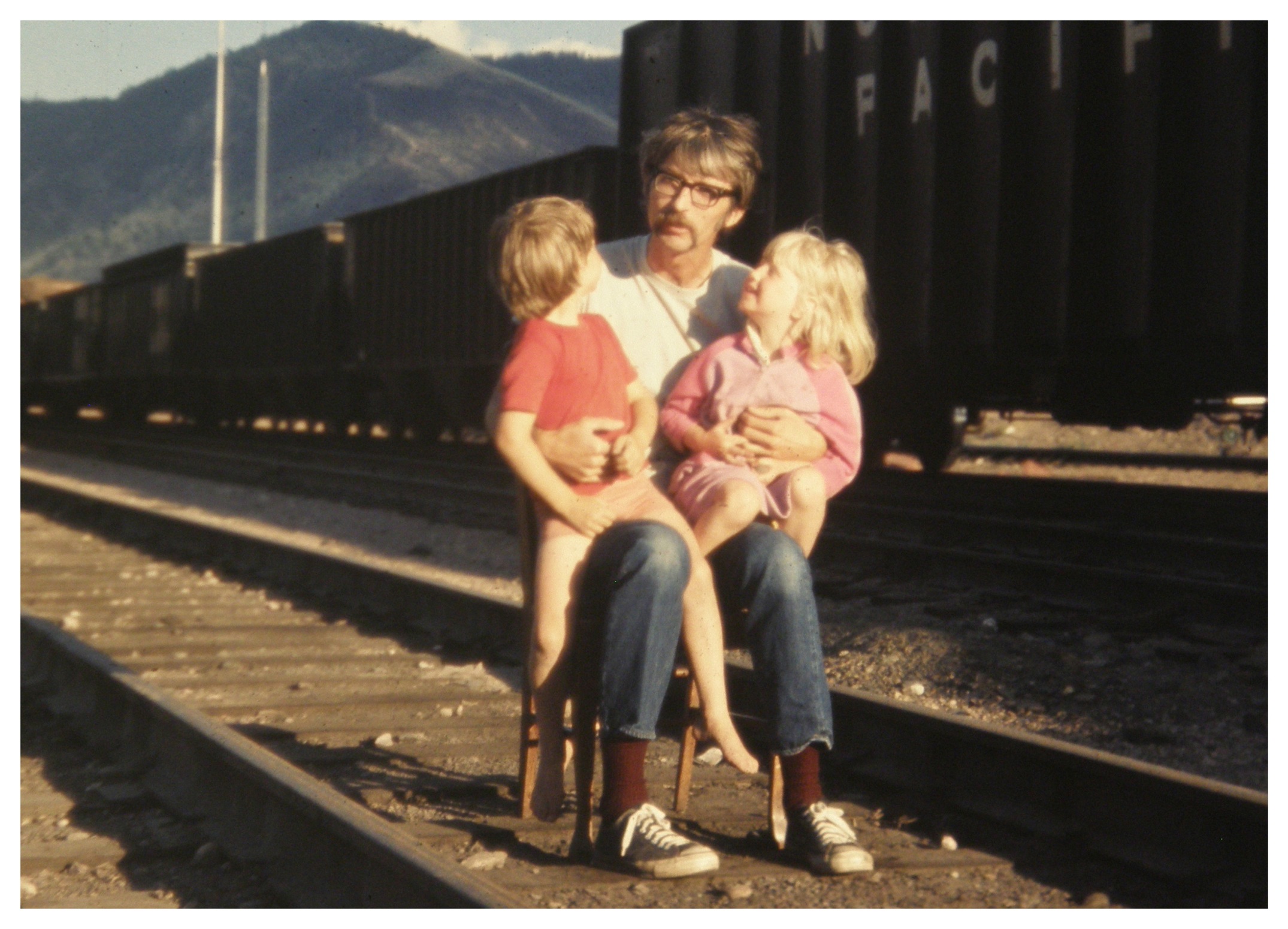
Tom Struckman
My brother Tom, who lived by himself in Missoula, and I had not spoken for about 10 years. He got tired of me: he was disabled with schizophrenia and agoraphobia, but damned intelligent, with a degree in English. He believed in the concept of “voluntary simplicity,” of living well with little money. A perfectionist, he didn’t like my pragmatic ways. He was one of the last of his bohemian generation, one of the last who never sold out. I, on the other hand, went to school, got a degree in pharmacy, and worked a career to support my family. I don’t remember why Tom finally had enough of me, but he was blunt. I was showing off a guitar solo in his small house in Missoula.
“Fuck you,” he said. I put down Tom’s guitar. My family and I stood. We filed out in silence.
We drove away from his house and although I later tried to reestablish our friendship, it never took. One time I sent Tom a message on a scrap of paper: just a scrawl telling him I loved him. He gave the scrawl back to me later without comment. We were still not friends. Another time I knocked on his back door. I opened the door and called his name. He hollered back, “what the hell do you WANT?” I asked him if he wanted me to leave him alone. He yelled back, “YES!”
In my basement, the other day, I found 31 color photos from early September, 1997. My brother Tom Struckman died then, 54 years old. Tom had severe chest pain. A couple weeks before that our nephew Geoff Angel telephoned me from Missoula that Tom asked him to return a copy of Adam Smith’s book, An Inquiry into the Nature and Causes of the Wealth of Nations (1776), usually abbreviated as The Wealth of Nations. Tom was destitute, but was interested in wealth as a social phenomenon.
Wikipedia said Smith’s book “is considered his magnum opus and the first modern work of economics. Smith is cited as the “father of modern economics” and is still among the most influential thinkers in the field of economics today.” Tom was good at using books for knowledge, for instruction. Once he reviewed a book about swimming for The Whole Earth Review. Stuart Brand paid him for it.
Tom had gotten The Wealth of Nations from a Missoula bookstore, but it was an abridged edition, so he was returning it. Geoff also helped Tom get a wool blanket for his bed to use as a mattress. His wooden bed had sublime, but simple, craftsmanship. It had a plywood deck.
Like I said, Geoff called me from Missoula because Tom had complained of the severe chest pain that had lasted many days. He told me that Tom had taken so many over-the-counter pain remedies that his ears rang. Tom had no telephone, so I phoned the Missoula police to ask them to check on Tom. I got no report back, so I phoned the police again the next day. Someone there said that Tom told the police officer he was “fine,” so the officer left.
I called back to Geoff to tell Tom that a doctor at the emergency department could treat him with a drug.
Later, Geoff told me that Tom said, “There’s a drug? Let’s go!” Soon he had been admitted for a heart attack that had destroyed about a third of his heart. The people in the ER told him that he had been misinformed about the drug. It was far too late, they said. No use giving him any hope, I thought. Anyway, I had been thinking of morphine—palliation, not a clot-buster.
Geoff visited Tom the next day in the hospital. Said Tom was hip to the pathophysiology of a myocardial infarct, but also turned on to the philosophical, wondering about losing a third of his heart, the center of his emotions. Tom dug the sound of his own heart on a doppler when he was undergoing tests.
My nephew Jon Angel spoke to Tom in the hospital by phone and he said he seemed cheerful.
I quickly telephoned Tom when I heard about Jon’s success, and Tom answered, “hello.”
“Hello!” I said, “Tom it’s me! It’s Dan! How are you?” I heard a clunk, then a dial tone. Hurt my feelings, sank my hopes.
That evening Jon told me he was going to Missoula with his 1-year-old son, Bradley, and he insisted I go along. “Well, he hung up on me,” I protested. But I went.
We got to Tom’s house on Missoula’s north side the following afternoon. I knew Tom used chewing tobacco so I bought a generous supply of Copenhagen and Skoal as a gift.
At Tom’s little house, we walked up to the back door. Jon barged in without knocking, and I followed. I sat across the room from Tom who sat on his bed and to my surprise he didn’t object to my being there. Turns out Tom dropped the phone in the hospital and didn’t know that it was me calling him. We talked. We reminisced about our days working for the Northern Pacific railroad.
Tom didn’t want the chewing tobacco I brought. “Causes heart attacks,” he said. He showed me his two medications: lisinopril and nitroglycerin tablets. Tom said he wouldn’t take the nitro because he wouldn’t need it. Tom said he tried to dig in his garden but he felt so short of breath and weak he had to stop.
I promised Tom we would come back when he felt stronger. I was amazed that he was alive after such a massive heart attack. We shook hands all around and Tom made a saluting gesture toward me as we departed. I told him I was glad to be his friend again. We didn’t embrace but we touched each other when we shook hands.
We spent the night with my oldest son Todd who was staying by himself in Missoula because his fiancé was out of town. Jon and I slept in their bed and Bradley vomited on us in the night. The next day Bradley had such a foul-smelling diaper on the road back to Billings that I nearly vomited when we stopped near Big Timber. Nonetheless I was elated.
Mark Fryberger phoned me a couple weeks later: “Tom died,” he said simply.
Mark said he had had an extra cat and wanted to check with Tom to see if he was still between cats. When Mark looked through Tom’s back door window he thought he saw a scarecrow on the kitchen floor, so he opened the back door. Then Mark called the police. I thanked Mark.
Our daughter Clara was home with me and we sobbed. Later that day Todd phoned me. He had helped put Tom’s body in a metal box with rubber seals. Tom’s body was decomposed, full of maggots, putrid smelling. Todd said he went to Tom’s and encountered a pair of guys from a mortuary who told him to go home and leave everything to them.
Todd said he started to leave, then realized he didn’t have to do as they said. In the end Todd stayed at Tom’s until late, scrubbing Tom’s skin off the floor, then scrubbing the steps leading into the cellar. Tom’s body had lain on the trapdoor.
I started to ask Todd if the body could have belonged to someone else, but he quickly disavowed me of that. Much later, I asked Todd about his experience. He said he felt it was an intimate experience with Tom and a great honor and responsibility. Perhaps that is why Todd eventually studied medicine after completing his master’s in fine arts in poetry.
Todd asked us to come to Missoula that afternoon because he didn’t want to spend a night home alone after cleaning up Tom’s house. We drove to Missoula that night.
We got there after midnight. At Tom’s some scented candles were still burning throughout the house. It had the cloying putrid smell of death. A white rubber glove lay on the ground near the gate to Tom’s backdoor. I picked it up. We snuffed the scented candles.
The next day I walked over to Mike Fiedler’s house to tell him the news. I made numerous phone calls.
We phoned lots of family and friends to tell them about Tom. Tom’s daughter, Hannah, was angry with me for not telling her when Tom had the heart attack. Lots of families came to Missoula. My sister and her family came from Nebraska. Hannah and her family from Yakima, Washington. People from Missoula. Our aunt Corinne from Kalispell. Todd’s siblings from Berkeley and Billings.
Most stayed with Geoff, except Hannah and her family stayed at a motel downtown. We ended up sending most of Tom’s stuff home with her and her husband Jason in a rented truck. Other stuff got divided up among everyone else.
The 31 photographs show what Tom’s house looked like before we emptied it. Tom had been a recluse for nearly 20 years, living with schizophrenia, untreated. He was a voracious reader. He made cassette tapes for his nephews. He raised vegetables, he made things in his wood shop. He kept meticulous lists of the songs on each of the tapes he made.
The light was on when he died. Looked like he had been applying for heat aid when he walked into his kitchen and collapsed on the floor. His body was spread eagle. We could see his imprint on the linoleum where Todd had scrubbed with an abrasive cleanser.
Tom’s life was remarkable for a number of reasons. He lived humbly, yet had a monumental ego. He told me that he didn’t believe in God’s existence, but took responsibility himself. “Isn’t that noble?” he asked. He was well-educated, not quite achieving a master’s in English from Eugene at the University of Oregon. I think I’ll write more about Tom later. He was 5 years older than I, prone to pummeling me, but he inspired many. He lived with a certain elusive feeling. Hip. Cool. He read a book about swimming, then used it to learn to swim. He did the same with drawing, skating, riding a bike, juggling, building musical instruments, carving classical statues from soap, and playing Bach on classical guitar.
The next night we prepared a meal in Tom’s kitchen to remember him. Mike Fiedler, our Aunt Corinne, Jason Wild, Hannah B. Wild, their son Jacob, Bob Struckman, and Penny.
Tom’s daughter wanted to burn Tom’s bed. Tom built the bed himself, about the size of a cot. Nobody else wanted to burn the bed because the workmanship of the simple construction was excellent. We gave it to Mike Fiedler who took it home.
Many years later Fryberger and I were searching Missoula for Fiedler near South Fifth Street. We drove down the alley and spied Tom’s bed, still in good shape. Sure enough, Fiedler was in the house and he received us with much joy.
That was the last time I saw Mike Fiedler, although we spoke on the phone. He told me he loved me.
After Tom died our younger son Bob took some of Tom’s ashes to San Francisco to a Zen Monastery where Tom had lived during the early 1970s. Bob asked to place some ashes there, but they declined to give him permission. Bob said he toured the facility — the people were friendly and helpful — and even saw the place Tom stayed and slept. I think it might have resembled some sort of cubicle or cell large enough for one person to sleep on a mat.
Bob said he dumped his portion of Tom’s ashes underneath a bush at the monastery before he left.
Those ashes, by the way, reminded me of fine gravel and gray dirt. Tom’s entire body was reduced to less than a cubic foot of ashes. I’d say the cubic box, lined with a plastic bag and tied with what looked like a bread tie with a metal circular tag, was nine inches cubed. I’m good at estimating nine inches because that’s approximately the span from my thumb tip to my little finger tip when I stretch my hand out as far as I can.
James Blackwolf
Walter Blackwolf told me several stories about his father, James Blackwolf, Hat Keeper for the Northern Cheyenne. The Hat Keeper is the position of highest honor and importance to the tribe. Only the wisest and most esteemed are so entrusted. Anyone who met James Blackwolf was impressed by his deep humility and wisdom. I met him only once, at the pharmacy. James was preceded by a well-groomed young man who got me ready to meet him. I never forgot the encounter.
Unfortunately, James Blackwolf died on one of his trips to Oklahoma. His son Walter often came to the pharmacy, and we spoke frequently.
Example of story Walter told me about James Blackwolf: A van with a Sioux drum and drummers visited James at his house. The Sioux had had many people die prematurely recently and they sought help.
The Sioux medicine man saw James from a distance, and the people in the van gave James gifts. When they got out their big drum James told them to leave it outdoors!
“Don’t bring that drum into my home,” he said.
The reason? The drum had an image of a buffalo head. James told the group that their people would stop dying prematurely if they would wash the image off the drum head with a cloth and water from a coffee can. After washing the drum head, they should place the cloth into the water in the can, put on the lid, and bury the can in a certain way. After they did these things they could bring the drum into his house.
Walter said that after a long time–months–the people in the van returned and brought even more gifts to James. They said after they had done what he said to do, the people stopped dying prematurely. Walter explained that when the drummers drummed they had insulted the buffalo by banging on its image with their drum sticks.


 insearchofbud